

Most states require warnings on AI-generated political ads, but studies show these disclosures do little to alter people’s willingness to share the content.
Most states have legislated election deepfakes by requiring a warning
28 states require disclosures on the media
Articles on US courts
Displaying 1 - 20 of 45 articles

A CIA veteran explains that a polygraph campaign is not likely to eliminate leaks, but it may divert investigative energy from essential security priorities.
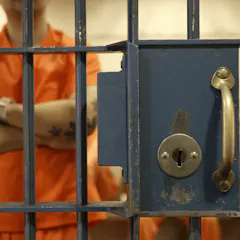
President Trump wants to punish states and cities that eliminate bail money, but releasing defendants pretrial without having to post bail doesn’t lead to higher crime rates, data shows.
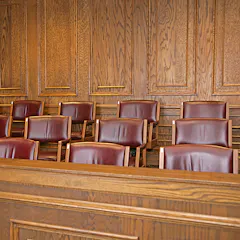
Juries now decide only a tiny share of civil and criminal trials in the US – and that hurts democracy.
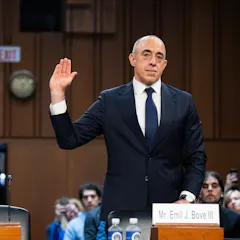
Contested nominations to the federal courts often involve ideological concerns. But a scholar of the courts says the contentious nomination of a former lawyer for Donald Trump was different.

Historically, the aggressive use of polygraphs in government is associated with weakening morale and diminished information flow.
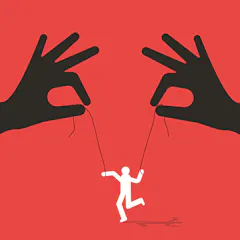
Autocrats today are polished, appear mainstream and use the media, not overt repression or violence, to gain public support and consolidate power. They govern through a ‘spin dictatorship.’
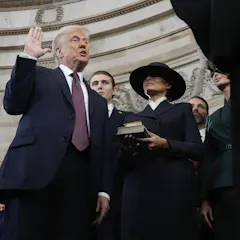
The most meaningful check on presidential power in the Trump era will be political. That’s because courts rely on the broader political system for enforcement.
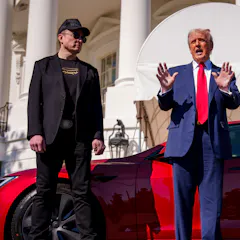
While President Donald Trump appears to govern with the flourish of a head of state, he is more invested in the job’s pageantry than the day-to-day.
The problem goes beyond the political leanings of judges to the speed of change and the administration’s apparent willingness to ignore court rulings it dislikes.

Changes in how government operates, and adjustments to rules and regulations, must go through an open democratic process whose steps and results can be challenged in the courts.
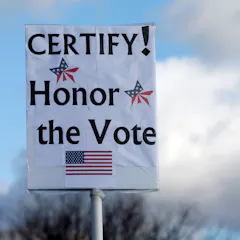
Concerns are mounting that some election officials might subvert the results of the 2024 presidential election by refusing to certify results. An election law expert says the law now prevents that.

Federal judges and bar associations have meted out punishment to the many attorneys who filed meritless lawsuits claiming – without evidence – that the 2020 presidential election results were invalid.
The retired judge says the judiciary doesn’t ‘do justice’ but follows the law and the facts, which doesn’t always mean a sympathetic or compassionate ending.
The imposition of fines and fees on people unable to pay has had a disproportionate impact on Black and Latino communities.
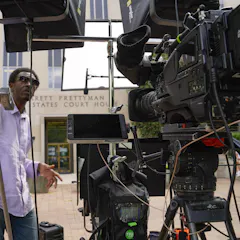
The majority of Americans support TV coverage of former President Donald Trump’s trial on charges he attempted to overturn the 2020 election.

Honolulu, Baltimore, Charleston, S.C. and several other cities harmed by rising seas and extreme weather are suing the oil industry. At stake is who pays for the staggering costs of climate change.
A new study reveals a reliable pathway to make U.S. courtrooms – and senior-level positions – more diverse.
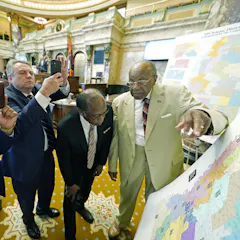
A ruling by the US Supreme Court to allow unlawful maps to be used in the midterm elections will affect who gets elected to the House of Representatives and may determine control of Congress.
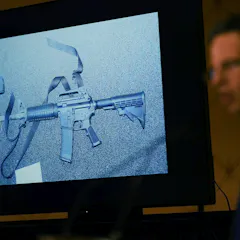
While it’s a victory for the families of the victims, the settlement leaves a key legal question about the gun industry’s liability shield unanswered.
Top contributors
-

Professor of Practice, International Affairs, Georgia Institute of Technology
-
Professor of Law, Georgia State University
-
Professor of Economics, University of Gothenburg
-
Professor of Law and Co-Director, Center on Applied Feminism, University of Baltimore
-
Associate Professor of Law, University of Virginia
-
Professor of Middle Eastern Studies and Public Policy and Director of the Interdisciplinary Studies Institute, UMass Amherst
-
Associate Professor of Political Science, Oregon State University
-
Professor and Chair, Women's and Gender Studies (St. Louis University, Fall 2022), Saint Louis University
-
Professor of Sociology and Criminology, University of North Carolina Wilmington
-
Professor of Public Administration and Policy, University at Albany, State University of New York
-
Professor of Law, Boston University
-
Professor of Economics, Duke University
-
William H. Neukom 1964 Distinguished Professor of Computational Science, Associate Dean for the Sciences, Dartmouth College, Dartmouth College
-
Master of Art in Gallery and Museum Management Program Director, Western Colorado University
-
Associate Professor of Business Law and Ethics, Indiana University