
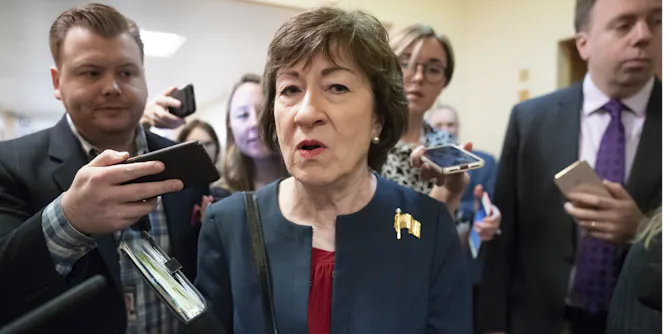
No written law or rule requires the senators to remain silent on the issues. But it’s probably a good idea, and a promising sign of fairness.
Articles on US Constitution
Displaying 341 - 360 of 431 articles
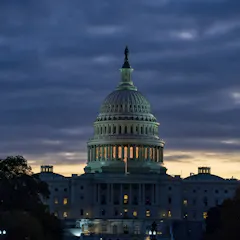
The House of Representatives voted Thursday on a resolution that laid out a process for the inquiry into the impeachment of President Donald Trump. But was the resolution constitutionally necessary?

Since the 1940s, Congress has largely let the president make decisions, while members of the House and Senate endorse or condemn those actions from the sidelines.
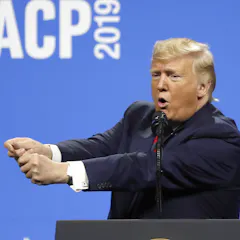
If the U.S. Senate agrees to hear the articles of impeachment for Trump, it is not because of the U.S. founders’ commitment to democracy, but rather in spite of their elitist design.
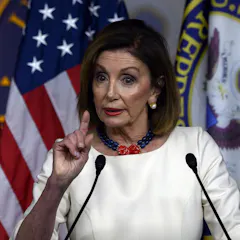
The impeachment investigation of US president Donald Trump has formally started, but much has changed since 1974, when Richard Nixon was forced out of office.
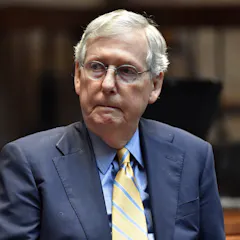
Senate Majority Leader Mitch McConnell is known as a master of Senate rules. If the House impeaches President Trump, what could he do to influence the process – and outcome – of a trial?
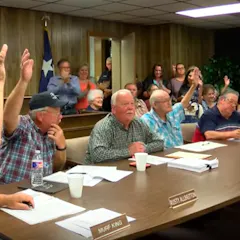
Sanctuaries that protect everything from gun rights to the unborn are popping up across the country. They challenge federal law and the shared understanding of its power and role in the US.
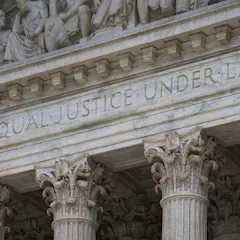
The upcoming Supreme Court session will address notable cases about the rights of different groups. The cases go to the heart of how U.S. laws protect both individual and group rights.
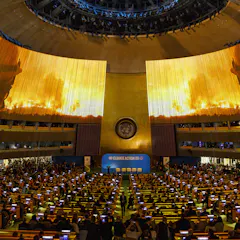
Africa has already felt the effects of Donald Trump’s climate change denialism. Recent events are also raising political issues of keen interest among the continent’s democrats.
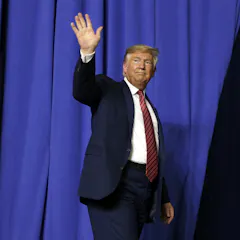
A little-known provision of the Constitution might allow Trump to be reelected president in 2020 even if he is removed from office through the impeachment process.
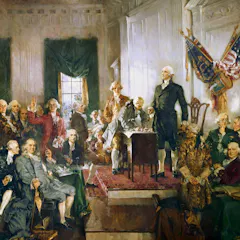
The Founders saw impeachment as a regular part of ensuring presidential accountability. A constitutional scholar offers a possible process for a rapid and smooth impeachment inquiry.
The conflict between Congress and President Trump over his dealings with Ukraine’s president is just the latest version of a long-running struggle for power between the two branches of government.
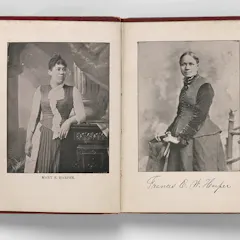
A 19th-century volume contained a mystery for two historians who combined their knowledge to tell the story of the women and their contributions to American democracy.
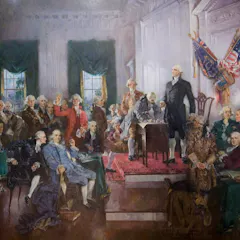
The Framers of the Constitution knew their history, and sought to learn from it – and only to repeat the parts they liked.
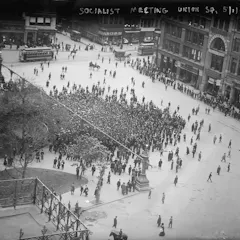
New York’s Union Square is an important site in American labor history. One scholar’s research illustrates the shifting meanings and inherent tensions of public space as an epicenter of civic life.

Conflict made its way to the Supreme Court this past session with two cases – one about the census, the other about gerrymandering. A court scholar says the two cases are intimately connected.
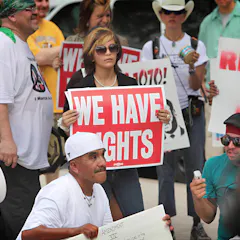
A new report on Mexicans in the US paints a troubling picture about the treatment of the country’s largest immigrant group.
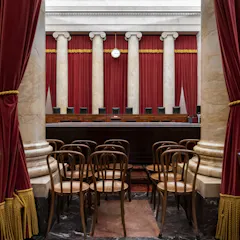
The Supreme Court has issued what’s likely to be its final word on partisan gerrymandering, saying it’s a political issue, not a legal one. That means reform lies in the hands of voters.
Many were confident the US Constitution was robust enough to check Donald Trump’s worst excesses, but the real push back has come from elsewhere.
Thanks to demographic and political changes, Democratic contenders are addressing this issue for the first time.
Top contributors
-

Professor of American Civics, University of Tennessee
-
Associate Professor of Law, Arizona State University
-
William Nelson Cromwell Professor of Jurisprudence and Political Science, Amherst College
-
Professor Emeritus of Government, Wesleyan University
-
Foundation Professor of Law and Political Science, Arizona State University
-
Joseph Panzer Chair in Education and Research Professor of Law, University of Dayton
-
Professor of Law and Director of the Center for Professional Ethics, Case Western Reserve University
-
Associate Professor of Political Science, Westminster College
-
Professor of Law and Adjunct Professor of Political Science, Wayne State University
-
Associate Professor of Political Science, Rochester Institute of Technology; Institute for Humane Studies
-
Associate Professor of Political Science, Boise State University
-
Spécialiste de la politique américaine, Sciences Po
-
Professor of law and ethics, Georgia State University
-
Professor of American History, Università di Torino
-
Professor Emeritus of Communication and Rhetorical Studies, Syracuse University