
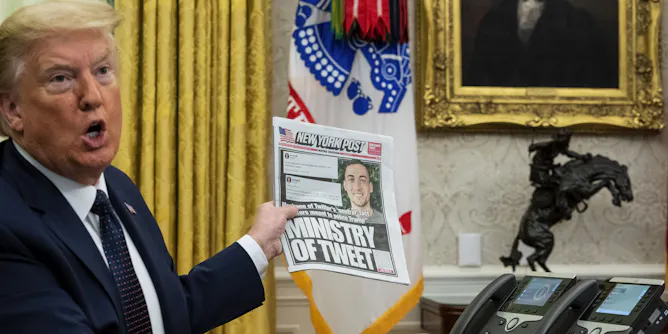
The US president is punishing Twitter for using a factcheck to point out that one of his tweets is incorrect.
Articles on US Constitution
Displaying 321 - 340 of 431 articles

Federal authorities have input, but states reign supreme – unless they decide to let local governments make the call.

Three cases just argued in the Supreme Court have the potential to redefine the power of Congress to hold the president accountable.
An analysis of the expressions used by Donald Trump to designate Covid-19 sheds light on his political calculations and on the evolution of his relationship with China in recent weeks.
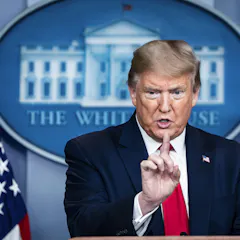
Throughout the coronavirus crisis, President Trump has made inconsistent statements about who is responsible for key aspects of the nation’s response to the pandemic. The Constitution has the answer.
The Supreme Court under Chief Justice John Roberts has reversed its decadeslong practice of protecting voters’ rights and removing barriers to casting ballots.
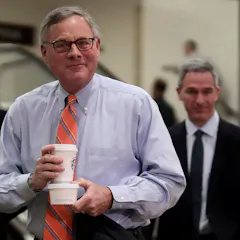
Did members of Congress illegally sell stocks after getting inside information about the pandemic from federal officials? A former lawyer for the House says proving such cases is very difficult.
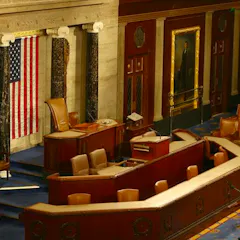
Democrats may soon propose letting members of Congress vote by proxy during the pandemic. A legal scholar says the language the Founders used 233 years ago could allow voting remotely.
Today’s coronavirus pandemic has echoes in the yellow fever pandemic of the 1790s. Then, as now, workers struggled with how to support themselves and their families. One federal agency had the answer.
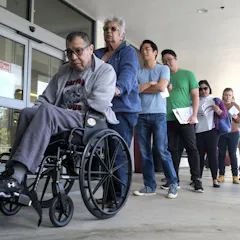
The modern poll tax isn’t paid in money, but in time – how long it takes a person to get to a polling place, and, once there, how long it takes for them to actually cast their ballot.
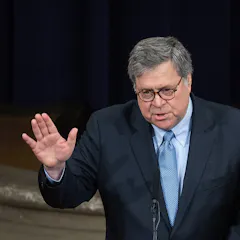
Could defiance of court orders at the highest level undermine the Constitution’s authority in the eyes of American citizens?
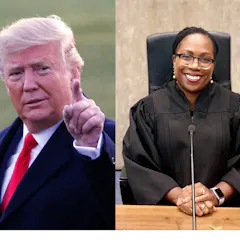
If President Trump’s attacks on the justice system are meant to intimidate, there’s one class of employees who are immune to that: federal judges who have lifetime tenure.

In 1868, during the impeachment trial of President Andrew Johnson, the Senate tied on two votes. Chief Justice Salmon P. Chase broke both ties.
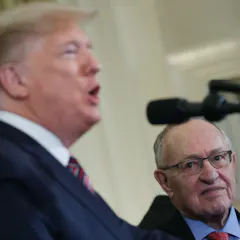
Trump’s backers say he is shielded from removal as no criminal offense took place. But this view may be at odds with the original intent of the impeachment clause.
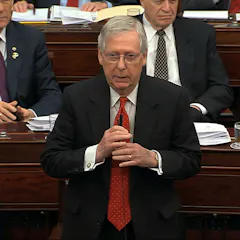
Certain words are being used over and over during the impeachment trial of President Donald Trump. One of them is ‘precedent.’ What does it really mean?
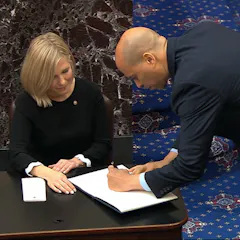
As the Trump impeachment trial plays out in the Senate, the 100 lawmakers there are required by law to abide by a special oath.
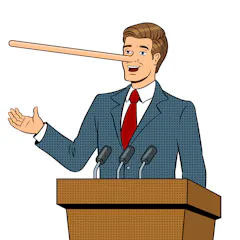
When a person or agency backed by the power and resources of the government tells a lie, it sometimes causes harm that only the government can inflict.
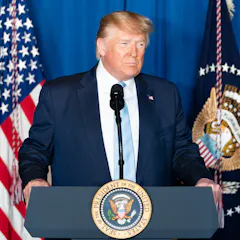
Both President Trump and President Obama used military force without informing Congress, or getting its approval. But the differences reveal more than the similarities.
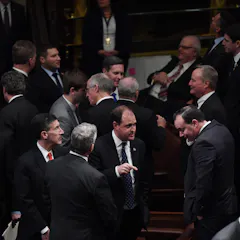
An expert on Watergate says that today’s House Republicans have taken precisely the opposite position than the GOP took in 1974 on the president’s power to withhold documents from Congress.
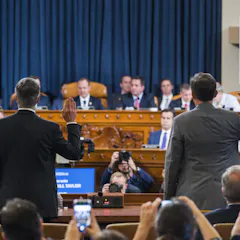
The first day of public impeachment testimony was defined, in part, by strongly worded statements from Representatives Adam Schiff and Devin Nunes.
Top contributors
-

Professor of American Civics, University of Tennessee
-
Associate Professor of Law, Arizona State University
-
William Nelson Cromwell Professor of Jurisprudence and Political Science, Amherst College
-
Professor Emeritus of Government, Wesleyan University
-
Foundation Professor of Law and Political Science, Arizona State University
-
Joseph Panzer Chair in Education and Research Professor of Law, University of Dayton
-
Professor of Law and Director of the Center for Professional Ethics, Case Western Reserve University
-
Associate Professor of Political Science, Westminster College
-
Professor of Law and Adjunct Professor of Political Science, Wayne State University
-
Associate Professor of Political Science, Rochester Institute of Technology; Institute for Humane Studies
-
Associate Professor of Political Science, Boise State University
-
Spécialiste de la politique américaine, Sciences Po
-
Professor of law and ethics, Georgia State University
-
Professor of American History, Università di Torino
-
Professor Emeritus of Communication and Rhetorical Studies, Syracuse University