
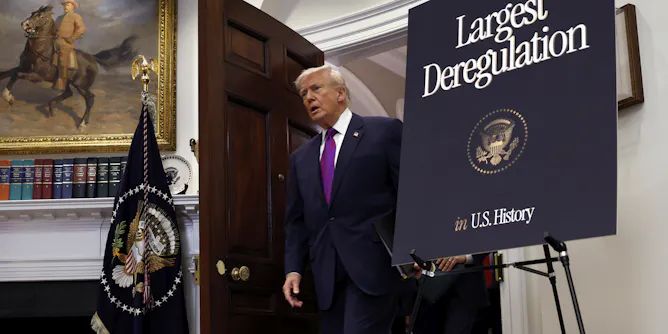
When Trump, a climate denier, announced the change, he said fossil fuels have “saved millions of lives” all over the world.
Articles on US climate policy
Displaying 1 - 20 of 21 articles

The new federal law favors energy technologies that are already profitable and increase global warming over cleaner approaches that could use the investment support.
Some technologies could rapidly cut emissions, while others do little to fight climate change. The House bill favors the latter while nixing support for the former.
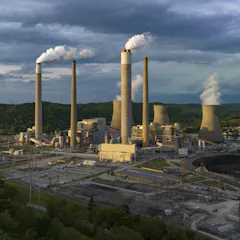
The Trump administration’s goal is to roll back rules limiting planet-warming greenhouse gas emissions from power plants, vehicles and oil and gas production, but it could backfire for industry.
While he hasn’t released an official plan, Trump’s playbook the last time he was in office and his frequent complaints about clean energy offer clues to what’s ahead.
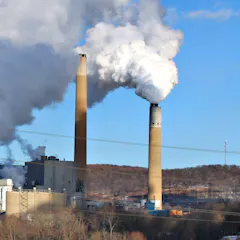
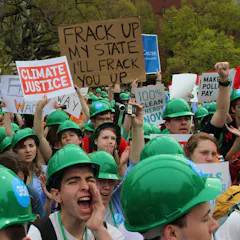
Pollution solutions start with public pressure, often in the face of industry pushback and slow-moving political responses.

Trump has a poor track record on trade, inflation and taxes but the area of biggest economic concern if he is re-elected president would come from his rejection of climate change.
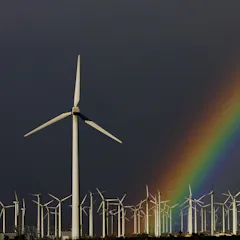
Amid Russia’s war on Ukraine, spiralling inflation and energy shortages, tackling climate change has been central to the recovery plans of the world’s biggest economies.

Start high, drop fast and avoid the free-riders: How to design subsidies that can boost clean energy in the US and elsewhere.

The current energy crisis is an opportunity to accelerate the transition towards clean energy – but some countries are better than others at pursuing major energy reform.

Much of the debate regarding the environmental cost of childbearing is underpinned by one influential study. Given the global commitment to net zero, should this be revisited?

A new study shows what it would mean for Europe and China, and why the US might not be too excited about the idea.
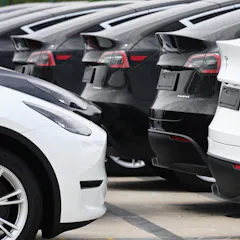
No electric vehicle maker currently meets all the bill’s supply chain requirements, not even Tesla. One big reason: China.

Only 13% of US solar industry jobs are currently in manufacturing. The Biden administration hopes the sector will grow fast, but that might not be so simple.
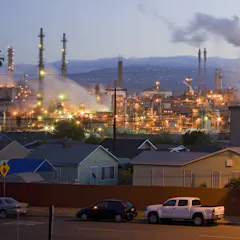
It isn’t just the effects of climate change that could destabilize the financial system, it’s also fossil fuel assets losing value. The good news is that central banks can fix it.

Plus how to interpret the outcome of the pre-COP26 summit.

It’s meant to stop what’s known as ‘carbon leakage’ – when production moves elsewhere to avoid climate policies – but the solution has economic, legal and environmental consequences.
An aggressive US climate policy rollout could provide a much needed dose of reality to the climate discourse in Canberra – and show Australia the transition can be done.
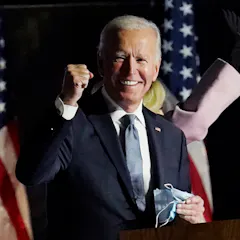
How Joe Biden could unite the US behind plans to tackle climate change.

COVID-19 pandemic has seen the Morrison government abandon long-held dogma on debt and deficits. But on climate and energy, it’s singing from the same old songbook.
Top contributors
-

Professor of Civil and Environmental Engineering, Rice University
-
Graduate fellow, Baker Institute, Rice University
-
Associate Professor of Economics, Georgia State University
-
Chair of Energy and Climate Governance, University of Manchester
-
Fellow in Energy and Global Oil, Baker Institute for Public Policy, Rice University
-
Assistant Professor in Economics, Georgia State University
-
Academic position - Research Associate at the Centre for Resources, Energy and Environmental Law, The University of Melbourne
-
Professor of International Relations, The University of Queensland
-
Research Associate in Energy Systems, The University of Texas at Austin
-
Lecturer in Ethics, University of Bristol
-
Associate Professor of Public Policy, Rochester Institute of Technology
-
Tenure-track Assistant Professor, Universität Wien
-
Adjunct Lecturer, Monash University
-
Assistant Professor of Economics, Georgia State University
-
Professor of International Politics, University of Leeds