

The revised law is targeting not only Westerners working in China, but also Chinese nationals who work for foreign companies or organisations or interact with foreigners in any way.
Articles on US-China relations
Displaying 21 - 40 of 121 articles
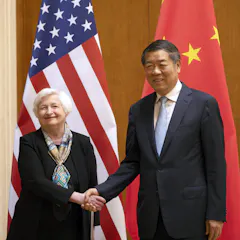
Relations between the U.S. and China have become antagonistic over the last decade. Here’s why the relationship must change.
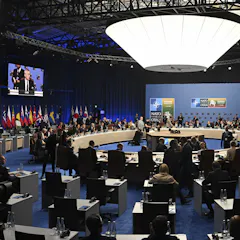
NATO gets the headlines, but the Five Eyes alliance is another close connection between key Western powers, and it may expand.
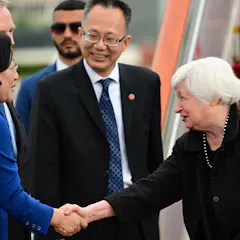
The US and China are talking again, but security issues between the two countries linger.
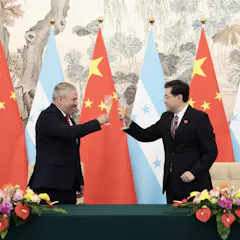
As US influence in Latin America has waned, Beijing has been able to expand business interests in the region on the back of shady practices.
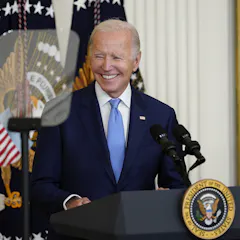
At the end of September, US President Jo Biden will host Pacific leaders at the White House – a sign the US is taking the region, and China’s role in it, more seriously.
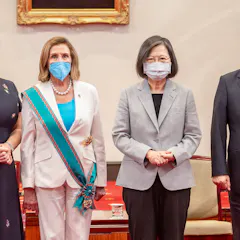
The US speak of the house’s visit to Taiwan has provoked more sabre-rattling from China, but neither China nor the US will want tensions to escalate further.

While there are good reasons not to exaggerate these events, the bad news is these incidents are almost certain to continue. But we shouldn’t frame them as if we’re in the brink of war.

War with China is very likely, but it is avoidable if we take the threat seriously and act now.

Richard Nixon’s visit sparked a new era of collaboration but now the relationship between US and China is beginning to unravel.
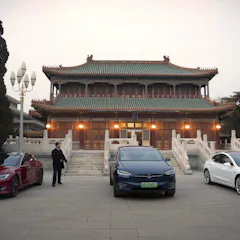
Research suggests that two factors are most important when making decisions on how businesses should respond to the U.S.-China trade war: location and supply chain dependence, and technology.
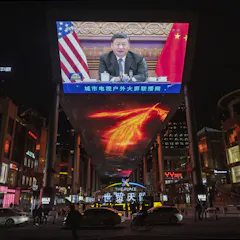
In the past, the lack of a succession plan for China has led to political unrest in the country. If it happens again, it will also affect the world.
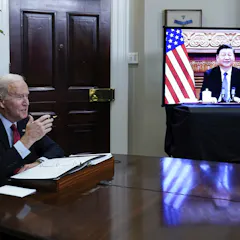
The meeting of the leaders of the world’s most powerful countries hit all the right diplomatic notes, but there are still vast differences and disagreements to work through.
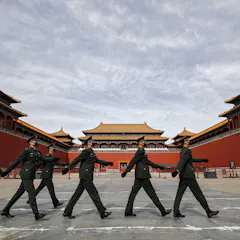
Mao’s Long March has a storied place in Chinese history. There are resonances in China’s current approach to international relations.
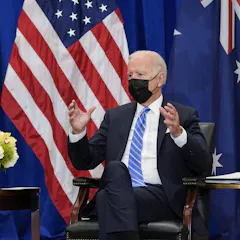
The region is already arming at the fastest rate in the world, but China and other nations can be expected to respond to AUKUS by further expanding their militaries.

Analysis of US survey data finds that white people who hold racist views are more likely than others to favor military action over diplomacy in China and Iran, and to endorse the global war on terror.
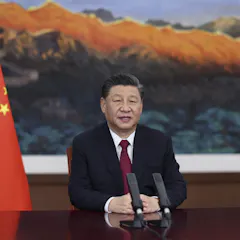
The Chinese president has used a major address to reassert China’s role as a rising superpower and its willingness to be front and centre on major global issues, including climate change.
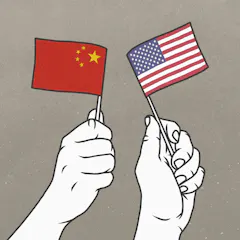
A scholar of global relations says China seems worried about its future. Meanwhile, the US and Europe still treat China as a threat. The clash of world views could be destabilizing.
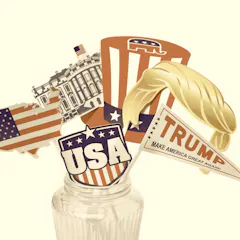
‘America First’ may not be long for this world. Surveys show many GOP members under 35 are closer to Democrats on China, trade and defense spending.

The type and amount of misinformation closely tracks tensions in US-China relations. Effectively countering the misinformation comes down to who does the debunking.
Top contributors
-
 Tony Walker AM is a Friend of The Conversation.
Director, La Trobe University
-
Pro Vice-Chancellor Research and Professor of International Studies, La Trobe University
-
Professor in The Division of Global Affairs and The Department of Political Science, Rutgers University - Newark
-
Associate Professor, Technology and Innovation, University of Technology Sydney
-
Director of China-Indonesia Desk, Center of Economic and Law Studies (CELIOS)
-
Distinguished Professor, Arthur J. Gosnell Professor of Economics, & Head, Department of Sustainability, Rochester Institute of Technology
-
Regents Professor of Law and Communication and Director of the Center for Law and Intellectual Property, Texas A&M University
-
Associate Professor of Political Science, Westminster College
-
Professor of Chinese Politics; Director, Lau China Institute, King's College London
-
Lecturer, University of Aberdeen
-
Professor of History and International Affairs, University of North Carolina at Chapel Hill
-
Deputy Director, Center for Cyber and Homeland Security, Auburn University
-
Senior Lecturer, Strategic and Defence Studies Centre, Australian National University
-
PhD Candidate in the history of US-Chinese relations, University of Sydney
-
Professor of International Affairs, Harvard Kennedy School