

NZ playgrounds are often separated from city life, constraining children’s spontaneous play. Planners can learn from car-free urban spaces where children are free to roam.
Articles on Urban spaces
Displaying 1 - 20 of 23 articles

Infrastructure that links mines to ports isn’t enough – it needs to be accompanied by policies that encourage productive investment in factories.

Where does your city rank?

New virtual realities are changing the way we interact with our urban spaces. How will the metaverse make some urban amenities redundant and others indispensable?

The study aimed to understand if and how wild chacma baboon collective behaviour changes in urban space, and what this means for their management.

Walking all parts of Melbourne before and after the pandemic hit was eye-opening. It brought home just how much change is possible if we wish for a better, more sustainable way of living.

Decades after the Good Friday Agreement, urban space in Belfast is still divided.

City dwellers love their homes but there are different types of love that shape how cities are viewed and how they work.

When urban spaces work well they are highly social spaces. How do we safely manage them and people’s fears about mingling when ‘being together but apart’ is the norm?

Cities can learn from past pandemics to see how communities and lifestyles are shaped by outbreaks.
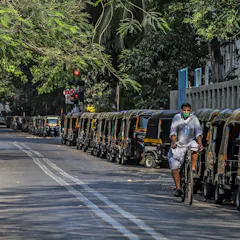
Public spaces are an integral part of everyday life for most Indians. The lockdown could make people appreciate them even more.

Temporary use of land and buildings plays a role in the aftermath of crisis.

The demands of gentrification in some neighbourhoods are proving deadly for some independent businesses, including local bookstores, often forcing them to close.

From cobbled laneways to grand buildings, bluestone has a long history in Melbourne – one that starts millions of years ago.

The conservation frontline is not just in remote rainforests. It’s right in our urban backyard.
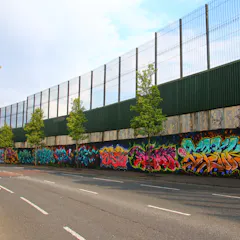
The fault lines between highly segregated neighbourhoods have been linked to higher crime rates and mental health issues.
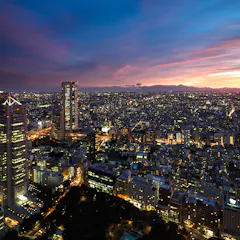
Character, resilience, convenience and sustainability are what make cities great places to live and learn.

Crime is way down in one Flint, Michigan, neighborhood, where locals have teamed up to revamp neglected public spaces. Here, why ‘busy streets’ can prevent violence and save cities money.

Urban planning is not gender neutral. Women deserve to live in cities that treat them equally, respond to their needs and reduce opportunities of violence.
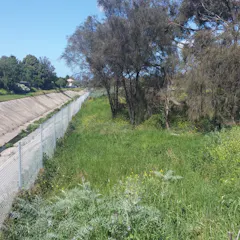
Residents often have concerns about informal green space but some still use it. Work to enhance these areas should aim to resolve these concerns without destroying what residents do value.
Top contributors
-

Professor of Climate Urbanism, University of Sheffield
-
Robert S. Lynd Professor of Sociology, Columbia University
-
Professor of Economics, Department of Economics, University of Sheffield, University of Sheffield
-
Senior Lecturer, Engineering and Innovation, The Open University
-
Professor of Public Health, University of Michigan
-
Emeritus Professor of Environmental Acoustics, University of Bradford
-
Senior Lecturer In Planning, Sheffield Hallam University
-
Professor of Architecture at the Faculty of Architecture, Universidad de Córdoba (Argentina)
-
Research Fellow in Urban Studies, RMIT University
-
Historian and Research Editor, National Centre of Biography, Australian National University
-
Professor of Architecture + Urbanism. Head of School of Natural and Built Environment, Queen's University Belfast
-
VC Senior Research Fellow, RMIT University
-
Senior Lecturer in Urban & Regional Policy and Planning, University of Manchester
-
Ecologist and Researcher, Flinders University
-
Professor, Centre for Urban Research, School of Global, Urban and Social Studies, RMIT University