

Federal Education Minister Jason Clare says, ‘if you don’t think there are challenges in university governance, you’ve been living under a rock’.
Articles on University governance
Displaying all articles

After months of pressure, Australian National University vice-chancellor Genevieve Bell has resigned. This creates a unique opportunity for the federal government.

The solution to mitigating protests should involve giving students a proportionately representative place in university decision-making.

Reports of big university budget surpluses appear to undermine calls for their federal funding to increase. But a closer look at how the surpluses were achieved reveals why change is needed.

Higher education didn’t feature heavily in the election campaign, yet the sector has high expectations of the new government. The key is the idea of an accord and the change in approach it implies.

Universities supposedly have adopted a more corporate approach – but most corporate board members have expertise in the area their company operates in and are more accountable to shareholders.

Facing protests by students and academics over its Liberal Party links and generous funding by the Morrison government, the centre’s most important test will be whether it respects academic freedom.

In a volatile and uncertain world, academic freedom is the foundation of universities’ capacity to be responsive to all of the challenges we face today.
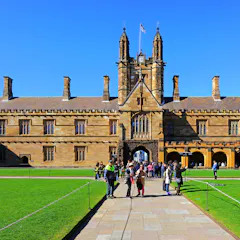
Vice-chancellors’ average remuneration has soared from 2.9 times lecturers’ pay in 1975 to 16 times in 2018. New governance arrangements triggered the trend and might be needed to rein it in.

Ironically, a bit more of the right kind of corporatisation might help remedy the worst aspects of the current model of corporatised universities.
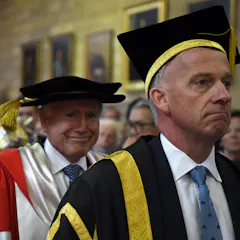
Decades of legislative change made the councils that govern universities more like corporate boards and less accountable to academic communities. The problems this created are coming home to roost.

An open letter, signed by more than 600 academics, is calling on state and federal education ministers to ensure universities change their hierarchical corporate structure.

The government should stop trying to tinker at the edges. Instead it should strengthen internal university administration through shared governance.

Africa’s universities supposedly became more independent after the early 1990s. But it appears they haven’t achieved much more than cosmetic autonomy from political interference.

How can the higher education sector guard against proposed transformation measures being merely superficial quick fixes? At least part of the answer may lie in institutional governance.

There’s been a push recently in university circles for a new body to help govern the sector and act as a buffer between the universities and government. Champions of the idea point to the Universities…
Top contributors
-

Professor in Geochronology and Geochemistry, Southern Cross University
-
Senior Lecturer, Faculty of Business, Law and Arts, Southern Cross University
-
Senior Lecturer, Science and Technology Studies, University of Wollongong
-
Associate Dean (Education), Southern Cross University
-
Adjunct Associate Professor, School of Human Serivces and Social Work, Griffith University
-
Sessional Academic, School of Social Sciences, Macquarie University
-
PhD Candidate, University of Sydney
-
Principal Fellow and Professor of Music, The University of Melbourne
-
Professor of International Higher Education, UCL
-
Programme Officer for Research (Higher Education), Council for the Development of Social Science Research in Africa
-
Distinguished Professor of Accounting, Macquarie University
-
Professor of Cultural Economy, Adelaide University
-
Professor of International Affairs and the Vice-Provost and Associate Vice-President (Academic), Carleton University
-
Professor of Health Equity, Stretton Health Equity, School of Public Health, Adelaide University
-
Senior Lecturer in Design, RMIT University