

Students may think they’re just choosing a maths subject, but they are also shaping the university courses and careers most immediately available after school.
Articles on University courses
Displaying all articles

Recent waves of layoffs shine a light on the systemic issues in the game industry and the post-graduation promises universities are making to students.

The proportion of Australian university students who want to found a business after they graduate is increasing fast and is now around 16%. But most of their courses perpetuate an ‘employee mindset’.

Huge disparities in how much students pay for courses mean graduates of high-fee disciplines will take longer to repay their debts or might never do so. That will ultimately add to government debt.

Without university-level programs to provide teacher training for advanced computer science, states will not be able to offer high-quality computer science education to all students.

We live in a world of spoken, visual and written communication, but the third mode continues to dominate teaching and assessment in university communication courses.

Some promoters of educational technology see COVID-19 as a ‘tech reckoning’ for professors who refused to accept progress. But before the pandemic, many students also preferred in-person classes.

The world today needs a critical understanding of religion, not a return to the historical tradition of universities dominated by faith-based study.

The Job-Ready Graduates policy aims to remove ‘the misalignment between the cost of teaching a degree and the revenue that a university receives to teach it’. But new research challenges its costings.

Although the government has identified a real problem, its heavy-handed regulation would create unnecessary red tape for universities and exclude students who should get a second chance.

How much data are you using when streaming lectures? What camera do you need? And what’s a VPN? Here are some handy tips to be technologically prepared for your virtual university experience.
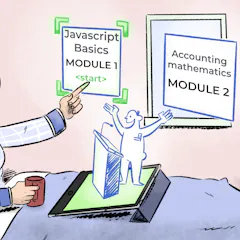
Technology has disrupted the way universities offer courses, the types of skills we will need, and the duration for which we will need them. Here are three things universities must do to survive.

Having a set curriculum for academic courses is leading to poor learning outcomes in students, as students’ needs aren’t being catered to.

If the flagship policy does not end up driving choice or quality, it is hard to see it gaining support.

After almost a decade of failed processes to reform the current funding system, the government must produce a revised system that improves the quality of outcomes for students in all courses.

Students currently pay higher fees for courses that lead to jobs with typically higher wages. But not all students find, or want, a job in their area of study. Should all students then pay the same amount for their university degree?
Top contributors
-

Professor of Higher Education Policy, Monash University
-
Associate Professor, Melbourne Centre for the Study of Higher Education, The University of Melbourne
-
Executive Director, IRU, La Trobe University
-
Pro-VC, Sharda University
-
Senior Lecturer in Mathematics Education, University of Sydney
-
Lecturer in Mathematics Education, University of Sydney
-
Assistant Professor of Educational Psychology and Educational Technology, Michigan State University
-
Professor, Digital Humanities, University of Alberta
-
Professor, Education and Technology, Simon Fraser University
-
Associate Professor, Sociology and Legal Studies, University of Waterloo
-
PhD Candidate in Data Science and ICT Lecturer, Western Sydney University
-
Lecturer of Religion, University of Sydney
-
Associate Professor of Visual Communication & Digital Media, RMIT University
-
Professor of Accounting, Associate Director Centre for Transformative Innovation, Swinburne University of Technology
-
Lecturer in Information and Communication Technologies, CQUniversity Australia