
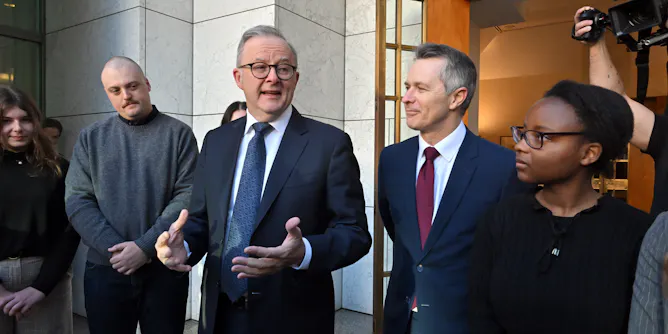
The debt changes will deliver major benefits to recent graduates, but much less to current students and nothing to future students.
Articles on HECS
Displaying 1 - 20 of 38 articles
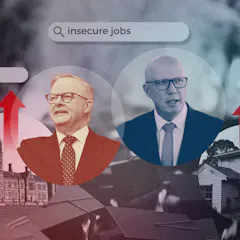
Gen Z and Millennials will outnumber Boomer voters at the election. Does that mean we will see policies to close the growing wealth divide between the generations?

Higher education services – like healthcare, food and roads – do not magically drop out of the sky. It costs money to run university campuses, infrastructure and pay for teaching and research.

Wiping debt will help students and graduates but the changes are not as good as they should be. Particularly if you have a HELP debt and a family to support.
Many of the party’s more ambitious proposals – like free cancer treatment and dental care for pensioners – were abandoned after the 2019 election, and have not resurfaced.

While the iconic ‘budget tree’ has its own narrative it’s now up to Chalmers to weave his budget story and kick some goals for the government.
The new indexation arrangement will be backdated to all HELP, VET Student Loan, Australian Apprenticeship Support and other student support loan accounts operating on June 1 last year.

Australia’s inflation rate has halved, but it’s falling more slowly than it was, and previous high inflation is set to push up student debt.

A few simple changes to Australia’s system of student loans would smooth increases in the amounts owing and make it easier to get home loans.

Reparing farm dams helps farmers – and nature. What if farmers could access loans for nature repair work – and only repay them when revenue is high?

A new student contribution system is likely to be part of Labor’s promised Universities Accord.

Workers could take a 10% pay cut on the condition it’ll be paid back when conditions improve.

Taxpayers, including those paying tuition fees with FEE-HELP loans, can claim a deduction for self-education expenses that relate to the work they do. But graduates with a HECS-HELP debt can’t claim.

This essay explores the way the social contract between universities, society and the state has changed over the course of the 20th century. And how generations of students paid and benefited.

With HELP debt likely to increase to A$75 billion in 2020, research from the US shows offering students financial literacy courses may be a gentler way to combat student debt.
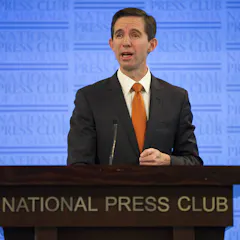
We shouldn’t take the government’s own budgetary savings rationale at face value.

After almost a decade of failed processes to reform the current funding system, the government must produce a revised system that improves the quality of outcomes for students in all courses.

Students currently pay higher fees for courses that lead to jobs with typically higher wages. But not all students find, or want, a job in their area of study. Should all students then pay the same amount for their university degree?
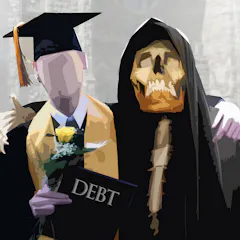
Students rated their financial literacy quite low, which means many students who have managed to secure a place at university don’t believe they understand about debt.

The HECS revolution remains seriously incomplete because it does not extend to many parts of the vocational education and training sector - which still suffers from the scourge, hostility and unfairness of upfront fees.
Top contributors
-

Emeritus Professor, College of Business and Economics, Australian National University
-
Professor of Higher Education Policy, Monash University
-
Associate Professor, Melbourne Centre for the Study of Higher Education, The University of Melbourne
-
Adjunct Professor, Department of Leadership, Higher and Adult Education, OISE, University of Toronto
-
Professorial Fellow, University of Canberra
-
ARC Laureate Fellow, Swinburne University of Technology
-
Honorary Senior Fellow, Melbourne School of Psychological Sciences, The University of Melbourne
-
Mitchell Professorial Fellow, Victoria University
-
Associate Professor in Language, Literacy and TESL, University of Canberra
-
Fellow, Higher Education Program, Grattan Institute
-
Senior Lecturer, School of Accountancy, Queensland University of Technology
-
Associate Professor of Economics, University of Technology Sydney
-
Scientia Professor of Economics, UNSW
-
Senior Lecturer in Political Economy, University of Sydney
-
Executive Director, IRU, La Trobe University