

The controversial policy was a product of the UK’s austerity period.
Articles on Universal credit
Displaying 1 - 20 of 65 articles

The bill passed without its major changes to personal independence payments.

Around 418 million children globally receive a free school meal.

An expert looks at the evidence for a new report from Amnesty International.

Ministers say it’s their ‘moral duty’ to encourage sick and disabled people to work. But is this ‘morality’ driven by genuine compassion or cost-cutting?

Many of the measures already implemented to reduce government spending have actually pushed people further away from the labour market.

The UK’s strict sanctions for welfare claimants can leave many women trapped in “off the books” work.

The government is accused of a ‘hurt first, fix later’ approach to welfare.
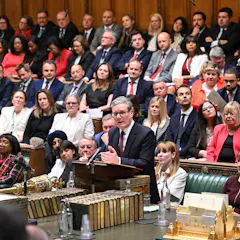
It may have been small but it’s unusual for a government to face rebellion on the contents of its king’s speech.

A trauma-informed approach could be life-changing for a wide range of vulnerable claimants – not just veterans.

The ‘skivers against strivers’ view of welfare keeps people in poverty feeling ashamed and isolated.

Welfare reforms targeted at the sick and disabled won’t boost government coffers. In fact, spending on those who need support and investing in less conditional systems has a real financial return.

The UK benefits system does not systematically cater for the basic household needs of healthy eating and domestic energy.

With stricter conditionality and sanctions, the new plan looks set to limit people’s access to benefits more than it improves their hopes of getting a job

New statistical analysis shows that ethnicity, migration background and discrimination increase a person’s risk of homelessness.

Widening access to free school meals would be an investment in England’s children.

Cuts to public spending do not actually result in efficiency savings because they cause more problems for people than they solve.
Affordability is a question of political and policy priorities. If we want a fair and adequate social security system, we cannot continue cutting the resources of those who already have the least.

Requiring low-paid, part-time workers to increase their hours or take on multiple jobs can have adverse physical and mental health impacts.

The scale of the ‘disability price tag’ means one-off payments will hardly make a dent for many households.
Top contributors
-

Professor of Social Policy, University of Salford
-
Professor in Social Policy, University of Glasgow
-
Professor of Social Policy, Loughborough University
-
Reader in Employment and Head of the Decent Work and Productivity Research Centre, Manchester Metropolitan University
-
Emeritus Professor of Social Inclusion, University of Portsmouth
-
Professor of Social Policy, University of York
-
Lecturer in Sociology and Social Policy, University of Leeds
-
Professor of Social Policy, University of Glasgow
-
Associate professor (Social Policy), Nottingham Trent University
-
Research Associate, Centre for Research in Social Policy (CRSP), Loughborough University
-
Research Assistant, Sustainable Housing & Urban Studies Unit, University of Salford
-
LSE Fellow, London School of Economics and Political Science
-
Professor of Social History, UCL
-
Reader in Economics, Aston University
-
Research Associate. CRESR, Sheffield Hallam University, Sheffield Hallam University