

The limit was introduced to cut the welfare bill, but at what cost?
Articles on UK benefits
Displaying 1 - 20 of 24 articles
The mood music has been set – and it’s gloomy.

The bill passed without its major changes to personal independence payments.

An expert looks at the evidence for a new report from Amnesty International.

Higher living costs, more barriers to work and a large disability pay gap all increase the risk of poverty. Cutting benefits is not a solution.

Mental ill health is rarely the sole factor preventing people from finding and keeping a job.

Labour has vowed to end divisive discourse demonising out-of-work people as ‘scroungers’ - but how does this fit with its tough warnings about people who don’t ‘engage’?

Death admin is a task that no one wants, but knowing what to expect from the process can be helpful.

A trauma-informed approach could be life-changing for a wide range of vulnerable claimants – not just veterans.

The ‘skivers against strivers’ view of welfare keeps people in poverty feeling ashamed and isolated.

The extreme levels of poverty endured by economically inactive people (as highlighted in the government’s own data) are a direct result of deliberate political choices to continually erode benefits.

Private tech companies are increasingly being used to delivery public funds to vulnerable people – and facilitate the government’s hostile environment policies.

The UK benefits system does not systematically cater for the basic household needs of healthy eating and domestic energy.

The film is run through with an unflinching belief in the power communities wield and the tangible limits they face.
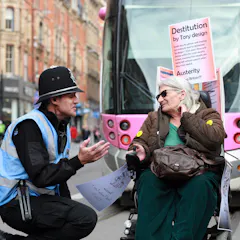
Progressive welfare reform would tackle disablist policies, banning sanctions and raising benefits to reflect true costs of living.
ISAs, benefits and mortgage support are all rumoured to be mentioned in chancellor Jeremy Hunt’s next autumn statement.
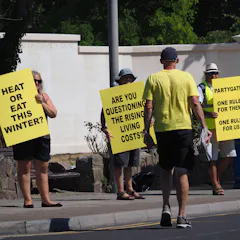
Governmental support is failing the country’s most vulnerable households. Politicians need to act now.
It’s not always the case that poorer citizens want more public spending and richer people want less.

The idea that people are cheating the benefits system has a long history in British society.

To encourage the ‘economically inactive’ back to work, the government is changing pensions, childcare funding and creating more support for people with long-term illnesses.
Top contributors
-

Associate Professor in Journalism Studies, University of Stirling
-
Associate professor (Social Policy), Nottingham Trent University
-
Professor of Social Policy, University of Salford
-
Visiting Academic, The Open University
-
Research Fellow, Sustainable Housing and Urban Studies Unit, University of Salford
-
Research Associate at York Law School, University of York
-
LSE Fellow, London School of Economics and Political Science
-
Reader in Employment and Head of the Decent Work and Productivity Research Centre, Manchester Metropolitan University
-
Professor of Social Policy, University of Glasgow
-
Senior Researcher, Public Health and Society, University of York
-
Professor of Personal Finance, University of Bristol
-
Professor of Sociology, Lancaster University
-
Doctoral Researcher at the Oxford Internet Institute, University of Oxford
-
Senior Research Associate, University of Bristol
-
Lecturer in Marketing, Lancaster University