

Jobs, economic growth, wages growth and even home price growth are likely to look less threatening by the time we are asked to vote.
Articles on Unemployment
Displaying 241 - 260 of 780 articles

October’s employment report was rosy, with more than 500,000 jobs added in the month. There were also signs that the American workforce was heading back to the old normal.
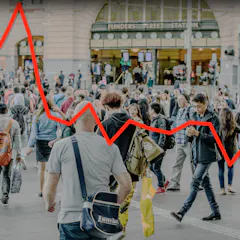
One million Australians quit their jobs in the past year, but there’s nothing new in that, and its down on previous years.

Some in government and industry aim to fill Australia’s skills shortages with migration policies. But VET numbers are up, suggesting many Australians are re-skilling. We could encourage more of this.

A new book tells the story of the offices and frontline staff who work with Australia’s most disadvantaged job seekers.

There’s a crucial need to connect the most vulnerable people with public services in order to tackle systemic poverty and disadvantage. An integrated approach is key.

Job creation might well have slowed, but a deeper dive into employment data suggests the picture is actually pretty rosy.

There’s no convincing evidence that listing on the alternative stock exchange promotes growth and sustainability for small and medium sized firms.

Several groups are going to be disproportionately affected when the £70 billion scheme comes to an end.

South Africa’s youth unemployment tax incentive is effectively a subsidy to the profits of companies.

Corruption and fraud make a few rich households richer. But the already poor and low-skilled lose their jobs and become poorer.

Almost all the people in the study were experiencing feelings like anxiety, worry, anger, boredom or frustration.

Can the structural barriers to low-skilled employment growth be overcome?

Politicians should take into account the psychological impact of being jobless.

Recent developments in the organisation of production have led to the decline of wage employment across much of the world.
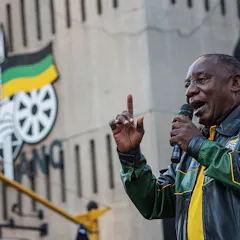
The ANC did not create most of the patterns for which it is blamed. But it has done far too little to change them and often seems happy simply to live with them.

Youth unemployment in Nigeria is a skills mismatch problem – corporations can’t find suitable workers in the midst of a large pool of unemployed workers.

In his new book, Nigeria Democracy Without Development: How To Fix It, international political economist Omano Edigheji explains why democracy has not led to development in Nigeria.

It’s potentially the biggest change to welfare since ACC and would favour those on higher pay – so why does the public know so little about it?

Mass unemployment is not a result of people choosing to remain on welfare. Attempts to close the “employment gap” ignore the real cause: unemployment is structural, not behavioural.
Top contributors
-

Visiting Fellow, Crawford School of Public Policy, Australian National University
-
Scientia Professor of Economics, UNSW
-
Professor of Economics, The University of Melbourne
-
Professorial Fellow, University of Canberra
-
Professor, Crawford School of Public Policy, Australian National University
-
Professor of Social Development Studies, University of Johannesburg
-
Professor of Economics & Business, Allegheny College
-
Professor of Economics, University of Canberra
-
DSTI/NRF Research Chair in Welfare and Social Development, University of Johannesburg
-
Professor, Economics, University of the Western Cape
-
Pro Vice-Chancellor, Climate, Sustainability and Inequality and Director, Southern Centre for Inequality Studies, University of the Witwatersrand
-
Associate professor, University of Johannesburg
-
Research Associate, School of Social Sciences, Monash University
-
Professor of Management, Co-Director of the MIT Sloan Institute for Work and Employment Research, MIT Sloan School of Management
-
Professor of Economics, University of Nebraska Omaha