
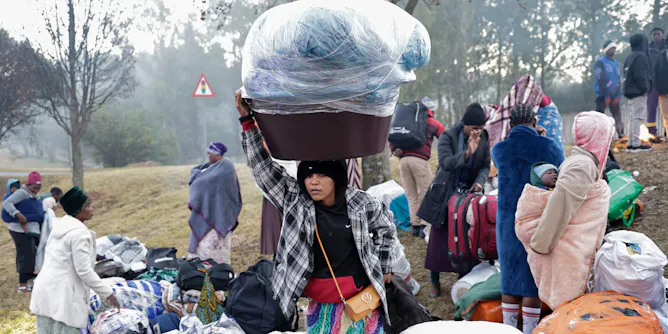
Critics claim the groundbreaking treaty, which turns 75 this month, is no longer fit for purpose. Without it, however, there would be chaos.
Articles on UN Refugee Convention
Displaying all articles
The US is not alone in its attempts to send asylum seekers to countries in Africa.
As long as there is war and persecution, there will be people in need of protection.

A recently signed Australia-Tuvalu citizenship agreement offers people displaced by climate change a chance to ‘move with dignity’. But staying with dignity has to be an option too.
The 1951 convention underpins the human rights of people around the world.
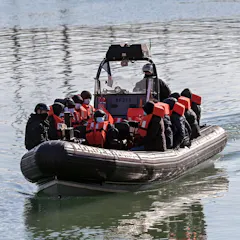
A recap of our expert analysis of the UK’s new migration law.
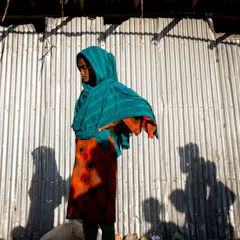
Why the UN Refugee Convention should be updated to protect climate migrants.
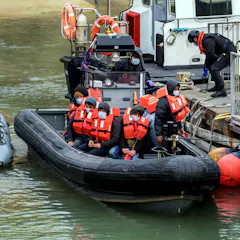
The UK may be setting itself up to detain many people for indefinite periods.

Canadian refugee and immigration policy often leads with the head and the heart — and that works.

Refugee law puts humanitarianism above considerations of state sovereignty.
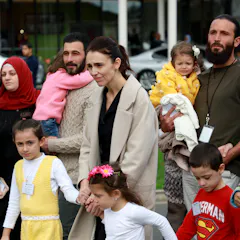
World Refugee Day on June 20 is an opportunity for New Zealanders to reflect on what more could done to protect some of the world’s most vulnerable people.

If Brazil can find an efficient, pragmatic way to welcome, protect and integrate hundreds of thousands of forced migrants arriving at its border, so can more affluent states.
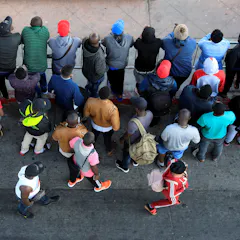
The US is violating its own law governing treatment of refugees.
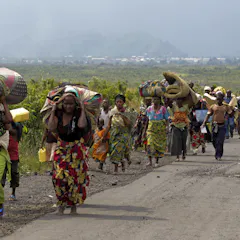
More than two out of three displaced people are not refugees, but remain within their own country.

Because of its geography, the UK must put an end to uncertainty over asylum policy after Brexit.

The ‘centre’ has long been chasing the right on immigration politics.

Indonesia’s decree on refugees honours a customary international law obligation of non-refoulement, or not expelling or returning refugees.

The Federal Government’s proposal to permanently ban asylum seekers and refugees who come to Australia by boat is in direct contravention of the Refugee Convention.
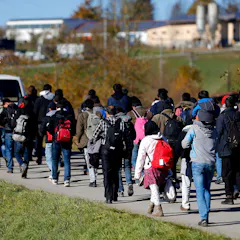
Today’s refugee crisis is not just about the movement of people. It is also about the human immobility that is baked into contemporary laws and politics. What, then, of the code of hospitality?
Top contributors
-

Senior Fellow at the ASEAN Studies Center, Universitas Gadjah Mada
-
Professor, Melbourne Law School, The University of Melbourne
-
Professor of International Relations and Middle East Politics, Loughborough University
-
Professor of Law and Associate Dean of Graduate Studies and International Affairs, Robert H. McKinney School of Law, Indiana University
-
PhD researcher, Trinity College Dublin
-
Senior Lecturer in Law, UNSW
-
Professor of Hispanic, Cultural and Migration Studies, Queen Mary University of London
-
Professor of Social Work, Co-Founder Centre for Asia Pacific Refugee Studies, University of Auckland, Waipapa Taumata Rau
-
Professor, Public and International Affairs, L’Université d’Ottawa/University of Ottawa
-
Associate Professor of Sociology, University of Warwick
-
Researcher, The Migration Observatory, University of Oxford
-
Assistant Professor, Leiden University
-
Senior Researcher, Institute for Environment and Human Security (UNU-EHS), United Nations University
-
Clinical Professor of Law, Vanderbilt University
-
Researcher, Maastricht University and Maastricht Economic and Social Research Institute on Innovation and Technology (UNU-MERIT), United Nations University