
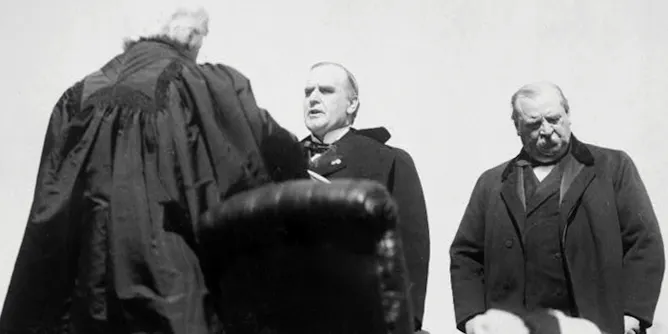
Two 19th-century elections are a reminder that a sizable midterm shift, like the one expected in November, can signal long-lasting changes in American politics that set the country in a new direction.
Articles on Ulysses S. Grant
Displaying all articles

Trump waded intro controversial territory with his comments in Ireland.
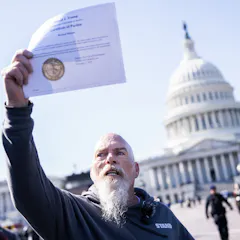
It’s not yet clear whether Trump’s pardons will herald a period of national harmony – as past presidents hoped for – or more incidents of violence, as actually resulted.
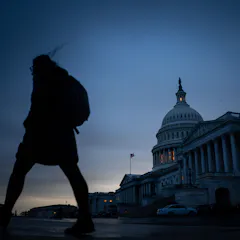
House Republicans have adopted a rule used periodically over the past 150 years that allows lawmakers to speed up and streamline votes to dismantle federal programs and fire federal employees.
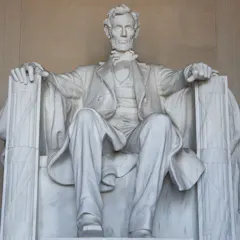
While some Republicans want to put Donald Trump onto Mt. Rushmore, historians often change their views of presidents over time.
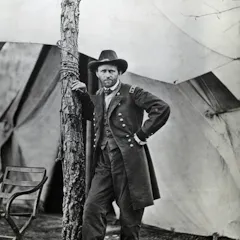
Known as the military leader who saved America, Ulysses S. Grant left a legacy of fighting for the rights of enslaved people during and after the Civil War.
History shows that political contests over the ideological slant of the court are nothing new.

Only one president has done so – Franklin Delano Roosevelt – but others considered it, and even tried.
As Donald Trump prepares to address the Conservative Political Action Conference, known as CPAC, here’s how other former presidents have occupied their time after leaving the White House.
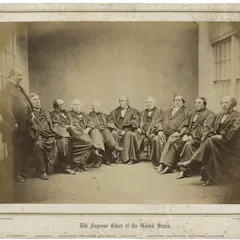
In the 1860’s, the Supreme Court was a ‘partisan creature’ and President Lincoln and the Republican Party remade it so that it reflected the party’s priorities.
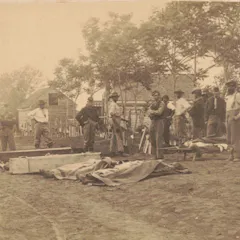
Lincoln’s chances of reelection in 1864 were dim. He was presiding over a bloody civil war, and the public was losing confidence in him. But he steadfastly rejected pleas to postpone the election.

A 21st-century hockey team is connected with Gen. Sherman’s Atlanta campaign and the destructive journey to Savannah.
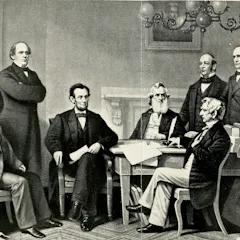
When fighting a lethal foe on home soil, Lincoln expertly managed leading politicians; related well with the people; and dealt clearly with the military.
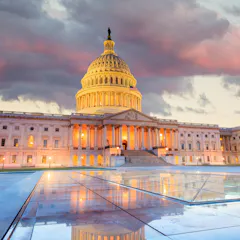
The new Congress is divided into a GOP Senate and Democratic House. History provides a glimpse of what this could mean: Democrats hold the power to investigate, if not to legislate.
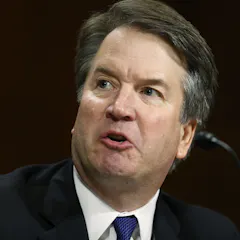
Contentious or politically driven Supreme Court nominations are not new. But US history shows that many of those contested nominees who were confirmed would go on to author controversial opinions.
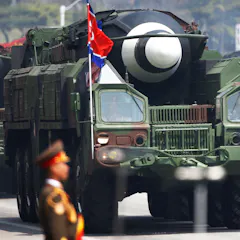
Trump and Kim are due to meet this spring. But if these talks fail could international arbitration provide - as it has in the past - an alternative way out of the North Korean crisis?
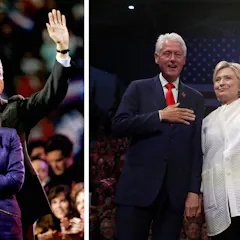
Hillary Clinton’s candidacy has revived an old controversy in a new way: presidential third terms. It is, as one historian explains, a controversy as old as the nation itself.

In 1872, free traders split with the young Republican Party, ran a third-party candidate against Ulysses S. Grant and sparked 100 years of GOP protectionism. Is history repeating itself?
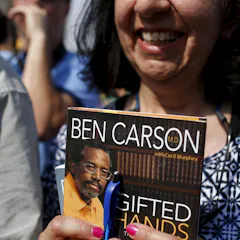
Candidates beware! History suggests that book writing presidents are not necessarily the best presidents.
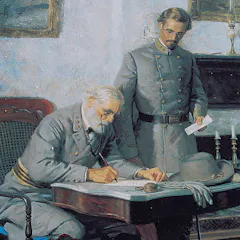
It officially ended 150 years ago on April 9 in Appomattox with General Lee’s surrender, but the deep divisions that produced the Civil War still roil our national psyche.
Top contributors
-

Professor of History, Arizona State University
-
Lecturer in History, University of Exeter
-
Professor of History and Michael Douglas Dean of Humanities and Fine Arts, University of California, Santa Barbara
-
Professor of History and Law Faculty, The Ohio State University
-
Global Scholar at Woodrow Wilson International Center for Scholars, Washington, DC and Hopkins P Breazeale Professor, Manship School of Mass Communications, Louisiana State University
-
Professor of Law, University of Baltimore
-
Masters degree student, Manship School of Mass Communication, Louisiana State University
-
Assistant Vice Chancellor for Academic Affairs, Director of the Center for Innovation and Scholarship in Teaching and Learning, and Professor of History, Indiana University
-
Associate Professor of History, Mississippi State University
-
Professor of Chinese Foreign and Security Policy, Bush School of Government and Public Service, Texas A&M University
-
Foundation Professor of History, Arizona State University
-
Professor in Leadership Studies, University of Richmond
-
Senior Lecturer in Government, Texas A&M University
-
Professor of Political Science, University of Connecticut
-
Teaching Assistant Professor, Arizona State University