
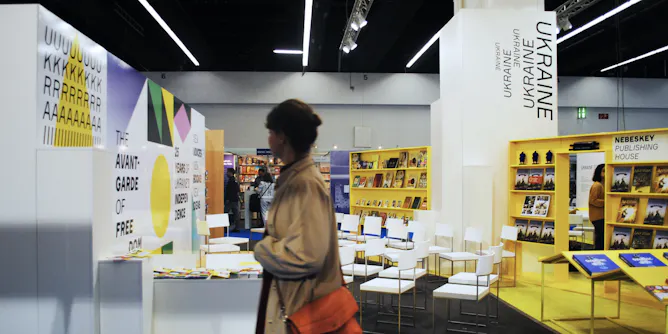
Translation of Ukraine’s literature serves as a means of cultural resistance by preserving and promoting knowledge of Ukraine.
Articles on Ukrainian language
Displaying all articles
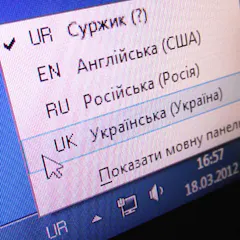
Once reviled as a ‘humiliating’ Russified form of the language, now Surzhyk is emerging as a tool for Russian speakers to identify as Ukrainians.
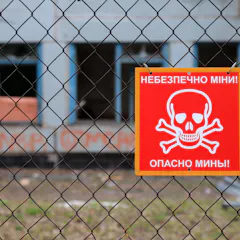
Many Russian-speakers in the war-torn country are opting to speak Ukrainian instead.
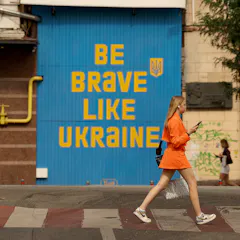
Ukrainians are safeguarding their language and cultural identity in the face of Russian attempts to erase it.
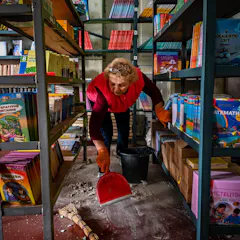
Schools are a key battleground in the Ukrainian resistance against Russia’s invasion.
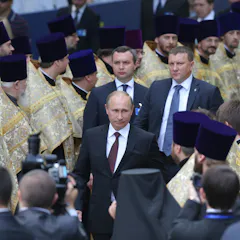
Ukrainians have a long history of speaking Russian in parts of the country.
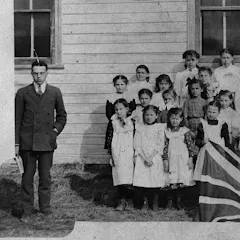
Ukrainian language education in the Canadian Prairies was shaped by shifting policies governing non-English immigrant settler language instruction in a larger settler colonial context.

It’s common for people to live near others who speak a different – but similar – language. But generally, they handle their differences without violence.
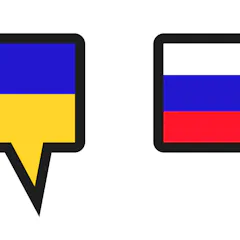
The difference between a language and dialect is just as much about politics as it is linguistics.
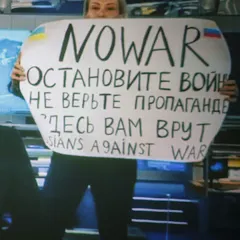
‘Vranyo’ is the Russian word for a lie that you tell to make yourself look good, whether people believe it or not.
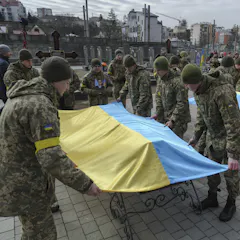
Plus, a rare archive of Ukrainian dissident literature from the Soviet era is now in danger. Listen to The Conversation Weekly.
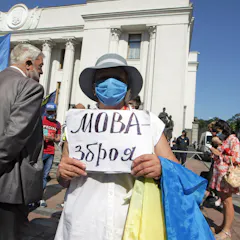
To Russian nationalists, if the Ukrainian language is classified as a derivative of the Russian language, the invasion looks less like an act of aggression and more like reintegration.
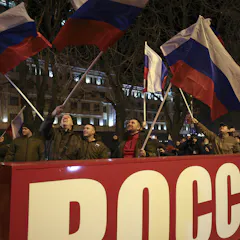
History has many uses, and not all of them are noble. That’s very much the case as the public gets a crash course from politicians about Ukrainian history.
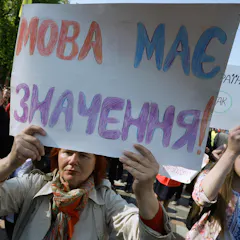
Ukraine is struggling to assert its national identity and unite against pressure from Russia.
Top contributors
-

PhD Candidate in Linguistics, Lancaster University
-
Associate Professor of Dance, Environmental Studies and Education Studies, Wesleyan University
-
PhD, Department of Government and International Relations, Sessional Teacher and Student Writing Fellow, University of Sydney
-
Dag Hammarskjold Professor in International Affairs Emeritus, University of South Carolina
-
Professor of Russian and Slavonic Studies, University of Sheffield
-
Head Research Fellow at the Institute of Political and Ethnic Studies, National Academy of Sciences of Ukraine
-
Host, The Conversation Weekly Podcast, The Conversation
-
Senior Lecturer in Politics, University of Manchester
-
Postdoctoral Fellow, University of Warsaw
-
Professor of Language and Literacies Education, University of Regina
-
Associate Science Editor & Co-Host of The Conversation Weekly Podcast, The Conversation
-
Associate Professor of Political Science, Westminster College
-
Honorary Research Fellow in Philosophy, University of Aberdeen
-
Professor of Linguistics, University of South Carolina
-
Ph.D Student in Historical Syntax, University of South Carolina