
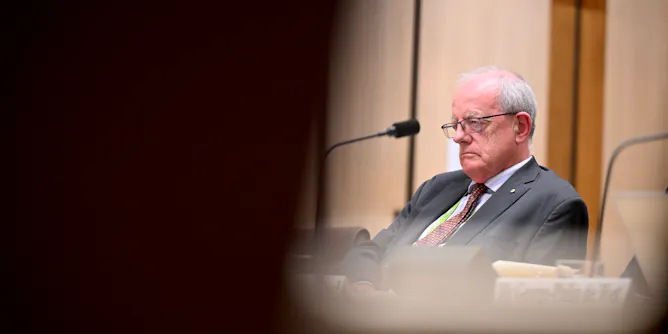
Paul Brereton’s ongoing conflict of interest woes threaten public trust in the National Anti-Corruption Commission. He urgently needs to change tack.
Articles on Trust in government
Displaying 1 - 20 of 26 articles
Juries now decide only a tiny share of civil and criminal trials in the US – and that hurts democracy.

Democracy is fragile. As a federal election approaches in Canada, it’s important to know the warning signs of extremism and anti-democratic practices that are now routine in the U.S.
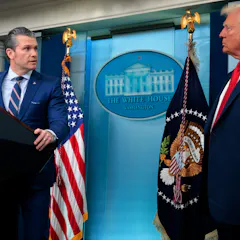
When common sense is promoted as a virtue, it’s not just to celebrate how regular people understand the world. It promotes a worldview that rejects empirical facts and paves the way for propaganda.
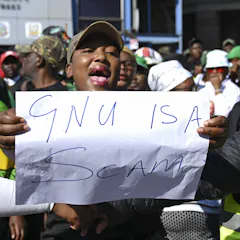
Poor governance and incompetence plague South Africa’s public administration, particularly at the local level.

A major takeout from the inquiry into the national response to COVID is that a lack of trust would likely mean a less cooperative public during a future pandemic.

By failing to investigate Robodebt, the National Anti-Corruption Commission forgot its purpose. Now it’s reconsidering its decision.

The commission’s inspector found NACC Commissioner Paul Brereton had not adequately excused himself from the decision not to investigate the six Robodebt referrals.

When government responses to a natural disaster do not address the specific needs and vulnerabilities of women and girls, women tend to lose trust in the institutions.
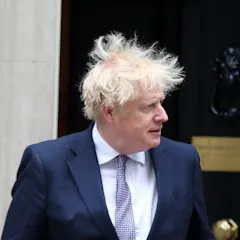
The government’s handling of the Northern Ireland protocol could spell trouble for the UK’s post-Brexit trade negotiations.

Your willingness to get a vaccination is tied to your political party. And that may have deadly consequences.
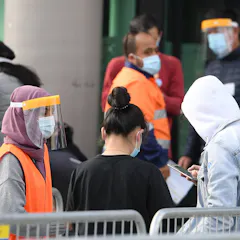
Recent surveys of refugees in NSW show high levels of trust in the government and police — counter to recent suggestions that people in western Sydney haven’t built up trust in government.
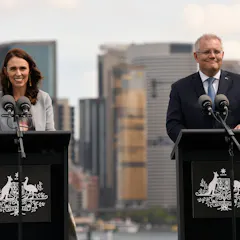
New research finds Australians and New Zealanders show high levels of trust in political leaders and in science. This in part explains the strong compliance with successful pandemic measures.

Government conspiracy theories are without merit, but their growing prevalence should ring alarm bells about the parlous state of civics education in this country.

Americans are mad – fist-fighting, protesting mad. And that’s just how politicians want voters in election season. But the popular anger stoked by candidates doesn’t just dissipate after the campaign.
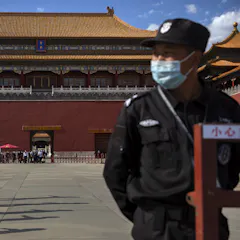
According to a recently conducted survey, Chinese citizens hold very high levels of satisfaction with the performance of their national government during the pandemic.

We will trade, but take more account of our interests than before, and we will trust government more.
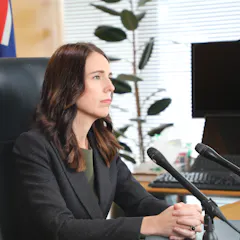
Ardern’s handling of the COVID-19 crisis has inspired high trust in the state but by the time the country goes to the polls later this year, the outbreak’s social and economic damage may change that.

When a government’s health messaging during a crisis is inconsistent or unrealistic, it engenders the kind of confusion, misinformation and non-cooperation seen in the US and UK.

The cynicism of political lies and the fear of losing control by opening up the corridors of power can’t last.
Top contributors
-

Professorial Fellow, University of Canberra
-
Associate Professor of Public Law, The University of Melbourne
-
ANZSOG WA Government Chair in Public Administration and Policy, Curtin University
-
Professor of Political Science, Fordham University
-
PhD Candidate in Political Science, University of Iowa
-
Professor, Curtin University
-
Associate Professor of Law, Adelaide University
-
Associate Professor of Political Science, University of Missouri-St. Louis
-
York Research Chair and Associate Professor, York University, Canada
-
Emeritus Professor in Law and Criminal Justice, Adelaide University
-
Professor of Global Health, American University School of International Service
-
Professor of Politics, Te Kunenga ki Pūrehuroa – Massey University
-
Senior Lecturer, Curtin Law School, Curtin University
-
Assistant Professor of Political Science, Indiana University
-
Research Associate, Public Policy Institute, University of Auckland, Waipapa Taumata Rau