
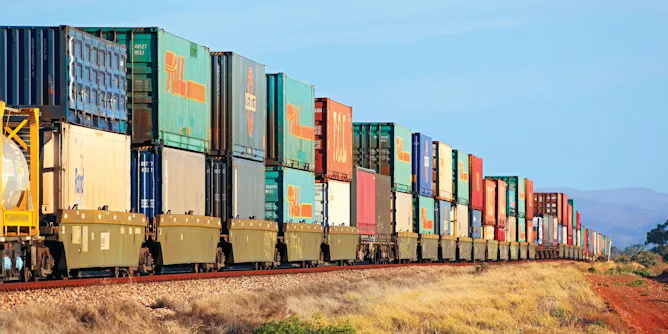
Inland Rail was meant to take 200,000 trucks a year off our roads – but it’s now been cut in half. Why is rail freight shortchanged compared to roads and city rail?
Articles on Trucks
Displaying 1 - 20 of 31 articles
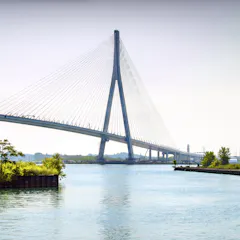
As the immense bridge was built, the neighborhood of Delray lost residents and landmarks.
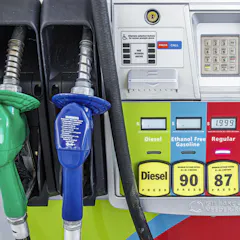
Both gasoline and diesel fuel are refined from crude oil, but they are good for different things and can’t be used interchangeably.

For decades, big-box retailers have evaded federal regulation of the pollution their operations generate. But a new air emission rule in Southern California could become a model for state controls.

While barriers still remain, the benefits of electrifying the transport sector are clear for both society and individual firms.

Trains once carried most of our freight. Could a return to rail help us meet our emissions cutting goals?

Both major parties are promising major road projects this election. Meanwhile, the potential for passenger and freight rail to help meet the country’s climate goals seems stuck at the station.

Long-haul truckers often work grueling schedules with few breaks and face pressures that place their safety and that of others at risk.
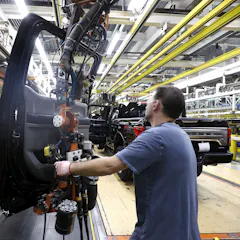
Results already in from the first direct leadership election in the UAW’s 88-year history present a sharply divided leadership.
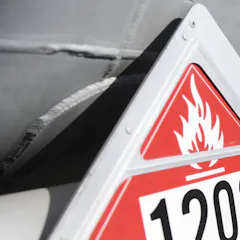
Transportation Secretary Pete Buttigieg is looking into new rules for trains. Trucks, however, are involved in thousands more hazmat incidents every year in the US.

Converting to electric cars is going to take time. With transport being Australia’s fastest-growing source of emissions, action on all fronts – road, rail, sea and aviation – is needed.
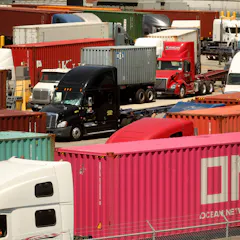
As California goes on regulating air pollution, other states often follow – including the Golden State’s ambitious goals for cleaning up emissions from trucking.
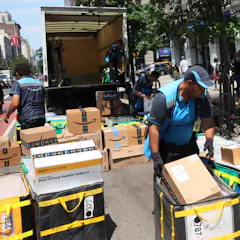
The rise of e-commerce means billions of packages are delivered in the US each year. That creates traffic and pollution, but urban freight researchers are finding better way to get goods to customers.
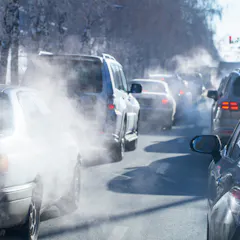
Air pollution from traffic causes the deaths of thousands of Australians. A swift transition to electric vehicles will save lives – and save households and businesses money in the long run.

The movie franchise ‘Mad Max’ contains a cautionary tale about our over-reliance on fuel for vehicles. This dependence has been highlighted by the ‘freedom convoy’ and its relationships with fuel.
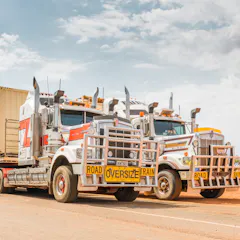
Large numbers of trucks not only add to road construction and maintenance bills, they also make our roads less safe and more congested and add to noise and air pollution.

Ford’s electric F-150 pickup won’t roll off assembly lines until early 2022, but the company has received thousands of preorders already for a vehicle aimed at the mass market, not eco-buyers.
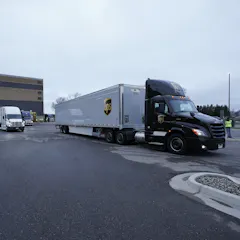
COVID-19 vaccines have very specific storage requirements that make shipping a difficult task. Two ideas – fulfillment centers and cross-docking – could help overcome some distribution challenges.
We’re on the road again. Getting enough COVID-19 vaccine to where it’s needed in a given time frame is the next logistical hurdle.

The cold supply chain keeps vaccines fresh during distribution, but the current system is nowhere near large enough to distribute the billions of COVID-19 vaccines that the world needs.
Top contributors
-

Honorary Principal Fellow, University of Wollongong
-
Professor of Civil and Environmental Engineering and Director, Supply Chain Transportation and Logistics Center, University of Washington
-
Professor, Economics, Wayne State University
-
Professor of Marketing, UMass Lowell
-
Associate Professor of Supply Chain Management, University of Agder
-
Professor, School of Engineering, RMIT University
-
Vice Chancellor and Chief Executive Officer, Torrens University Australia
-
Emeritus Professor of Industrial Relations, UNSW
-
Associate professor, Swinburne University of Technology
-
Senior Research Fellow, University of the Sunshine Coast
-
Professor, Director of the Centre for Robotics, Queensland University of Technology
-
Lecturer, Supply Chain Management, RMIT University
-
Assistant professor, Economics and School of Public Policy, University of Calgary
-
Professor of Housing Economics, UNSW
-
Senior Research Fellow, Monash University Accident Research Centre, Monash University