

Indigenous forest management practices can help control wildfires’ frequency and severity, while also restoring people’s connections to the land.
Articles on Tribal sovereignty
Displaying all articles

Tribal governance takes a long view based in Native peoples’ deep history with these lands.
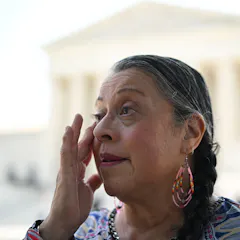
A Supreme Court ruling has upheld the right of Congress to pass laws about Native American tribes’ rights to self-government.
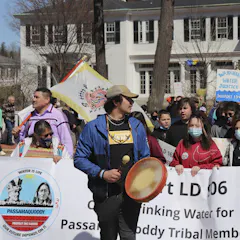
After 40 years living under a federal law that denied Maine’s Wabanaki Nations the ability to govern themselves, the tribes have been left out of the prosperity other tribes have attained.
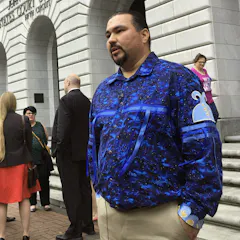
A case before the Supreme Court will determine whether a federal law meant to protect Native American children from being forcibly removed from their families is constitutional.
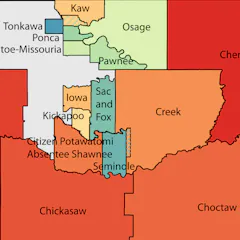
Local governments in Oklahoma are adapting to a 2020 Supreme Court ruling, but state officials have chosen a different path.
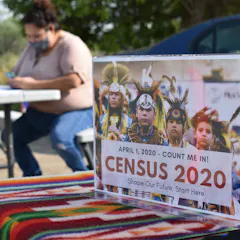
They’re called ‘pretendians’ – people who long identified as white but are now claiming to be Native American. In the last US Census, the number of Native Americans almost doubled because of them.
With the reauthorization of the nation’s landmark anti-domestic violence law, there’s the chance that more cases of violence against Indigenous women will be prosecuted.
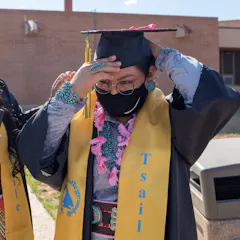
President Biden wants more funding for Tribal Colleges and Universities. An Indigenous scholar and professor of education explains why that’s critical for these schools to survive and thrive.
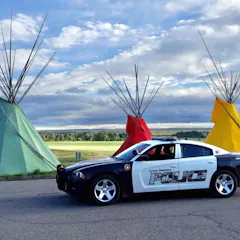
A defendant who is not a Native American claimed tribal police had no power over him, even on tribal land. The Supreme Court disagreed.
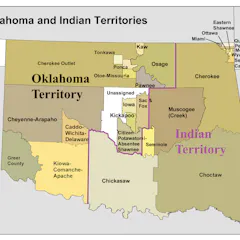
Land in what is now eastern Oklahoma, which was granted to the Creek Nation by Congress in 1833, is still under tribal sovereignty, the Supreme Court ruled.
Top contributors
-

Professor of Law and Adjunct Professor of Political Science, Wayne State University
-
Associate Professor of Criminology and Criminal Justice, University of Nebraska Omaha
-
Research fellow at the Harvard Project on American Indian Economic Development, Harvard Kennedy School
-
Independent Consultant, Colorado State University
-
Graduate Assistant, University of Nebraska Omaha
-
Professor of Anthropology, The University of Texas at Austin
-
Ford Foundation Professor of International Political Economy, Emeritus, Harvard Kennedy School
-
Professor of Criminology and Criminal Justice, University of Nebraska Omaha
-
Assistant Professor of History, University of Idaho
-
Professor of Native American Studies, University of California, Davis
-
Research Affiliate with the Harvard Project on American Indian Economic Development, Harvard Kennedy School
-
Researcher in Native American Studies, University of California, Davis