
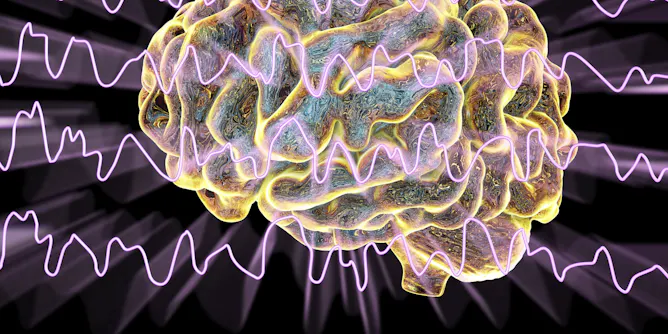
What do we know so far about this promising form of treatment and how it might help people with a range of neurological conditions? And is it living up to its promise for people with depression?
Articles on Transcranial magnetic stimulation
Displaying all articles
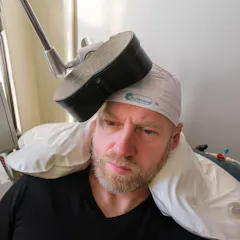
Transcranial magnetic stimulation is a safe, well-tolerated way to treat depression.
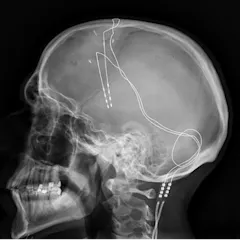
Deep brain stimulation and trasncranial magnetic stimulation treat mental illness by sending electrical currents into parts of the brain. Every new patient provides researchers with a wealth of information. Listen to The Conversation Weekly podcast.
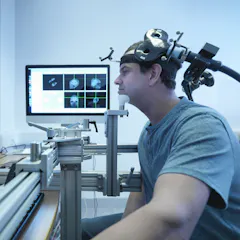
Patients who undergo transcranial magnetic stimulation say it’s painless, with few to no side effects. The treatment isn’t yet widely accessible, but for those who use it, the effects can be profound.
In this week’s federal budget we heard how this non-drug treatment for depression will be available on Medicare for people who’ve not responded to antidepressants.

Excessively eating junk foods during adolescence could alter brain development, leading to lasting poor diet habits. But, like a muscle, the brain can be exercised to improve willpower.
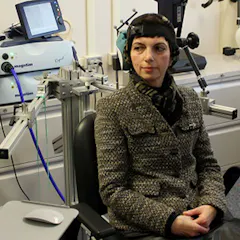
When Zahra Moussavi’s mother developed Alzheimer’s, the scientist pursued a technology that directly stimulates the brain with electromagnets to mitigate the effects of the disease. It worked.

The Antill 7: On belief
The Conversation, CC BY-ND46.9 MB (download)
Four stories on belief: from the allure of cults and conspiracy theories, to the effect of trauma on faith, to the way dogma has influenced science – and if technology can actually shift our beliefs.

People who electrically stimulate their brains at home need more information to do it safely… and neuroscience needs to find out more about how and why they do it.
How will neurotech evolve? An NAS workshop this week focuses on social and ethical opportunities and challenges we face both now and down the road.
Fresh hope for sufferers of mental illness.
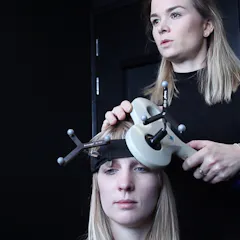
Repetitive transcranial magnetic stimulation is an approved treatment for depression. A new study suggests that it may be effective at treating anorexia too.
Top contributors
-

Director School of Medicine and Psychology, Australian National University
-
Professor of Advanced Technology Transitions, Arizona State University
-
Senior Lecturer in Bioethics, Australian National University
-
Professor of Philosophy of Science, King's College London
-
Professor of Biomedical Engineering, University of Manitoba
-
Director, The Brain Dialogue, ARC Centre of Excellence for Integrative Brain Function, Monash University
-
Research Scientist, UCLA Center for Behavior, Evolution, & Culture, University of California, Los Angeles
-
Senior Clinical Research Fellow, Department of Psychiatry and Faculty of Philosophy, University of Oxford
-
Psychologist and Programme Leader, University of Salford
-
Chair of Cognitive Psychology, University of Bristol
-
Professor Emeritus of Cognitive NeuroImaging, Aston University
-
Researcher, King's College London
-
Psychologist and Programme Leader, University of Salford
-
Professor of Neuroscience, Durham University
-
Associate Professor and Vice Chair of Clinical Services, Florida International University