

His return follows the trail of another American president who rebounded from defeat to victory and then four years of unchecked power.
Articles on Trail of Tears
Displaying all articles

From the 19th to 20th century, Native children were physically removed from their homes and put into boarding schools. A scholar asks if that was genocide.

Much like the history of the US, Joel Roberts Poinsett, after whom the poinsettia is named, had a complicated and troubling history.
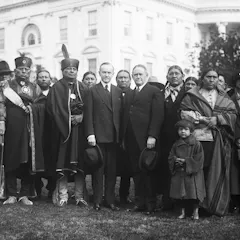
The Osage murders of the 1920s are just one episode in nearly two centuries of stealing land and resources from Native Americans. Much of this theft was guided and sanctioned by federal law.
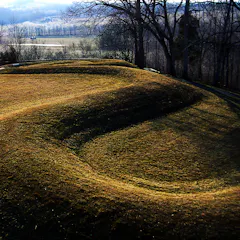
An Indigenous sacred site, Hopewell Ceremonial Earthworks has served as a military barracks, a fairground and, more recently, a golf course.

Danielle Smith’s grasp of Indigenous issues seems rooted not in genuine allyship and justice but in the appropriation of Indigenous experiences to advance white grievance politics.
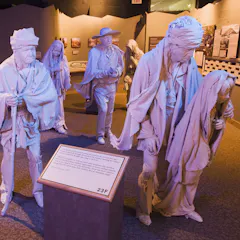
The right is explicitly laid out in the same treaty that led to the Trail of Tears.
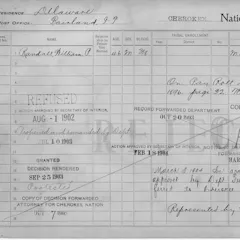
When the Cherokee Supreme Court ruled that tribal elected officials no longer had to be Cherokee “by blood,” it was the latest chapter in a long-running fight over who controls tribal citizenship.
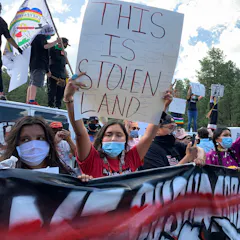
Renaming a national holiday to celebrate Native culture is one thing, but many Indigenous peoples are looking for greater recognition of the land grab that deprived them of ancestral homes.
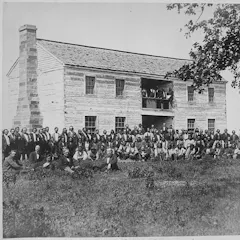
The Supreme Court’s July 9 ruling that half of Oklahoma belongs to the Muscogee Nation confirms what Indigenous people already knew: North America is ‘Indian Country.’
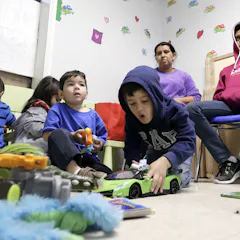
The US has a long history of separating families. Research shows the long-term effects of that trauma.
Top contributors
-

Executive Director, The Florida Institute for Child Welfare, Florida State University
-
PhD Candidate, Religion Department, Syracuse University
-
Professor of History and Program Coordinator, Native American and Indigenous Studies, University of Iowa
-
Indigenous Governance Program Manager and Professor of Practice, University of Arizona
-
Associate Professor in History, Penn State
-
Assistant Professor of Race, Ethnicity, and Indigenous Studies, Colorado College
-
Cherokee Nation citizen, Professor of Critical Indigenous Studies and English, University of British Columbia
-
Associate Professor of History, Miami University
-
Postdoctoral Scholar, School of Civic and Economic Thought and Leadership, Arizona State University
-
Professor of History, University of Illinois Urbana-Champaign
-
Assistant Professor of Political Science, Auburn University