
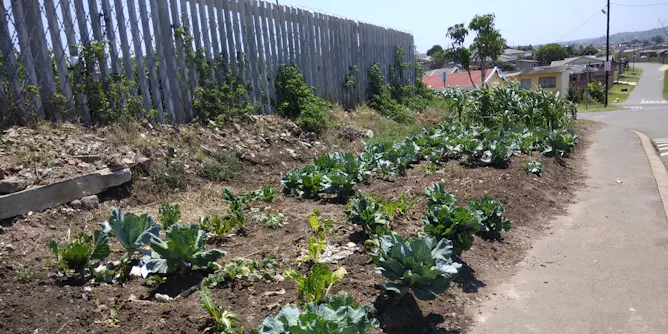
South African cities could create dedicated spaces where picking indigenous plants is safe.
Articles on Tragedy of the commons
Displaying all articles

The Enclosure Acts allowed fencing of common lands that villagers had used for generations. Something similar has happened in the digital space.
When forest communities have secure rights and tenure, the results can be miraculous.

At the Learning Planet Institute, an initiative launched with UNESCO, we’ve seen many programs that foster the ability and motivation to learn, act and lead for a better world.

The role of government should be to improve and reorganise this sector to address the needs of users. The proposed national operational subsidy is an opportunity to do precisely that.

Faced with uncertain and anxious times, brains send out instructions to start stockpiling supplies – whether you’re a person facing a pandemic, or a rodent prepping for a long winter.
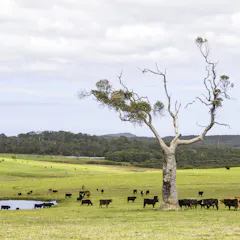
Since the feudal ages, fences have become a symbol of separation and ownership. Now, sensors and technology allow for a system of pooling resources which is not only sustainable but also productive.

A Nobel Prize-winning political economist found a way to promote good governance and protect users without the need for heavy-handed government regulation.

New study proves that asking doctors to prescribe fewer antibiotics won’t work.
Bankrupt oil and gas companies must clean up old wells, yet taxpayers are still stuck with the bill for abandoned mines.

In the space beyond Earth’s atmosphere, countries are focusing on nationalist pursuits and ignoring the consequences for the rest of humanity. How can we keep the peace and build a sustainable future?

New research shows that children as young as six have the social skills necessary to cooperate and sustain a shared resource.

When it comes to socially responsible behaviour, letting companies do as they see fit would be such a bad thing – providing they’re correctly organised.

An evolutionary psychologist’s perspective on Brexit.
Top contributors
-

Professor of Business Law and Ethics, Indiana University
-
Wellcome Trust Fellow, Brunel University of London
-
Président (Chief Exploration Officer), Learning Planet Institute (LPI)
-
Canada Research Chair in Stressed Aquatic Systems, Laurentian University
-
Executive Vice President, Learning Planet Institute (LPI)
-
Professor of Agriculture, CQUniversity Australia
-
Lecturer on Sociology, Harvard University
-
Professor of Psychology, University of Leicester
-
Professor of Psychology, University of Michigan
-
Head of Partnerships at LearningPlanet Alliance, Learning Planet Institute (LPI)
-
Postgraduate Researcher, Climate Adaptation, University of Manchester
-
Lecturer in Psychology, University of Dundee
-
PhD Researcher, Centre for AI-Driven Digital Content Technology (Adapt), Trinity College Dublin
-
Associate professor, ESCP Business School
-
Postdoctoral research fellow, University of KwaZulu-Natal