
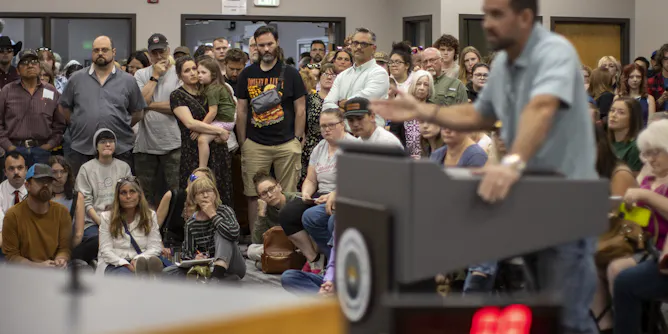
Local needs, political tensions and corporate power all get involved in the democratic processes by which Americans govern their communities.
Articles on Technology backlash
Displaying 1 - 20 of 29 articles

Like their predecessors in the 19th century, digital Luddites are fighting oppressive technology. Will they succeed?

Insights of neuroscientist Ian McGilchrist, philosopher Nel Noddings and physicist Ursula Franklin help centre students and our collective future in debates about education and technology.

E-scooters and e-bikes are coming to Britain’s streets, but it may be a bumpy ride.

New technologies and services aren’t creating irreversible damage, even though they do generate some harms. Preemptive bans would stifle innovation and block potential solutions to real problems.

Legal bans and moratoriums on other emerging technologies need not be permanent or absolute, but the more powerful a technology is, the more care it requires to operate safely.

Advocates and opponents of breaking up Facebook, Google and other technology giants are falling prey to some serious misconceptions.

A Nobel Prize-winning political economist found a way to promote good governance and protect users without the need for heavy-handed government regulation.
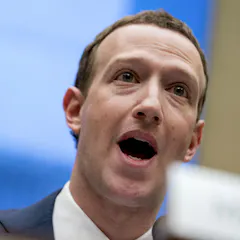
Facebook has been acting irresponsibly and selfishly, and promising to do better without actually improving. But that’s not the whole story: The company has some positive qualities, too.

Whether a technology helps or hurts people depends not on how much time they spend with it, but how they use it.

Scholars and skeptics warned about Facebook long before its founder was even born. Technology companies keep asking for more and more data and proving they can’t be trusted.

Amazon, Facebook and Google have lofty goals for their effects on global society. But people around the world are still waiting for the positive results. Here’s what the tech giants could do.
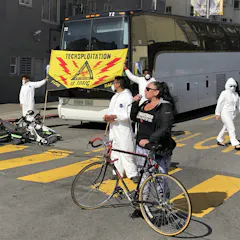
Big technology firms are becoming known for mistreating workers, customers and society as a whole. Is an economic powerhouse about to collapse like Detroit did years go?

Facebook says it’s going to continue to respond to widespread concerns about its practices and role in society. Researchers of privacy and online trust offer ideas for immediate action.

The current reckoning with data has been a long time coming, a historian of privacy in the US writes.

People in Appalachia are skeptical and cautious around technology – and how they think can be useful and instructive for living in a tech-centric world.

An email from Aleksandr Kogan sheds light on exactly how much your Facebook data reveals about you, and what data scientists can actually do with that information.
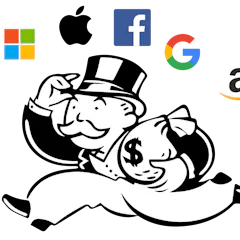
When thinking about regulating them, it’s useful to know Facebook, Amazon, Google, Apple and Microsoft have some similarities. But generally they’re not competing with each other – or anyone else.

As the internet-connected world reels from revelations about personalized manipulation based on Facebook data, a scholar of virtual reality warns there’s an even bigger crisis of trust on the horizon.

The problem isn’t kids owning smartphones. But when daily use exceeds two hours a day, mental health issues start to crop up.
Top contributors
-

Dean of Global Business, The Fletcher School, Tufts University
-
Professor of Communication Studies, American University School of Communication
-
Faculty member & Research Group Leader, Max Planck Institute for Software Systems
-
Assistant Professor of Communication, Wayne State University
-
Ph.D. Student in History and Sociology of Science, University of Pennsylvania
-
Professor of Public Administration and Policy, American University School of Public Affairs
-
Dean, College of Arts & Sciences; Professor of History, SUNY Polytechnic Institute
-
Visiting Scholar in Anthropology, New York University
-
Assistant Professor of Science and Technology Studies, Virginia Tech
-
Professor of Journalism, USC Annenberg School for Communication and Journalism
-
Professor of Media and Public Affairs, George Washington University
-
Visiting Scholar, Vanderbilt University
-
Ph.D. Candidate in Communication, USC Annenberg School for Communication and Journalism
-
Professor of Media Studies, Queensland University of Technology
-
Professor of Psychology, San Diego State University