
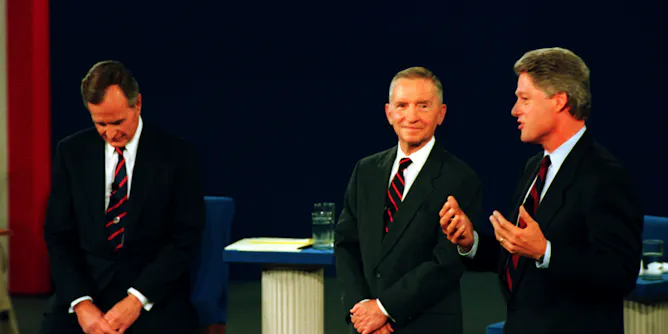
As the US prepares to replace NAFTA, a labor scholar who was critical of Perot but shared concerns about the deal revisits the claim that helped him become the most successful third-party candidate since Teddy Roosevelt.
Articles on Trade deals
Displaying 21 - 40 of 64 articles

Properly executed, government intervention can provide a real economic boost.
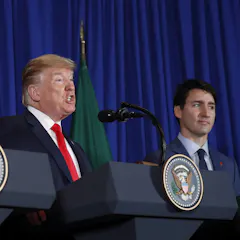
The collective public health of Canada, the United States and Mexico will take a hit if the new NAFTA becomes law.

Cities have not been central to public policy discussions on trade growth and diversification that are typically centred on trade pacts between countries. But cities are now driving a lot of trade.

These are the five options for Brexit: Theresa May’s withdrawal agreement, staying in the customs union, staying in the single market, the so-called Common Market 2.0 idea or a no-deal Brexit.
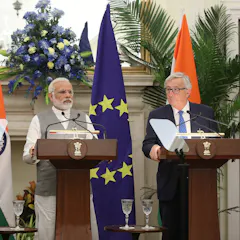
Despite growing trade between the EU and India, talks stalled in 2013 after 16 rounds, only resuming in 2018. Some in Brussels blame Britain.
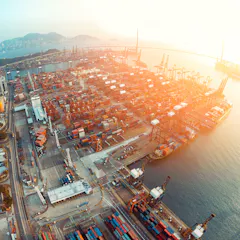
Despite the growing role of data and technology in the world economy, there are very few rules to govern digital trade.

America’s objectives for a trade agreement with Britain spell out a stark Brexit future.
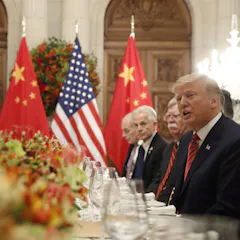
America may have missed a window of opportunity to curb China’s rise when it pulled out of the Trans-Pacific Partnership.
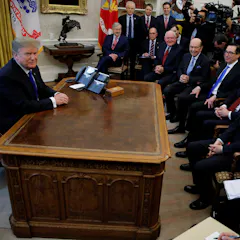
American and Chinese trade negotiators are pushing hard to get a deal, but a major sticking point remains: ensuring China honors any promises it makes.

What Brexit means for future UK-Japan business.
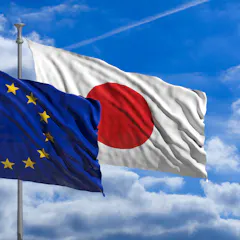
The EU and Japan’s economies together account for about a third of global GDP.
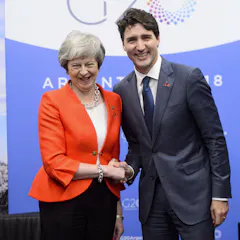
As 2019 dawns, a worldwide circular economy could be created through international trade and trade agreements like the one that could be forged between Canada and the U.K., post-Brexit.

Ukraine shows how it’s possible to have single market access, while maintaining control of your borders and staying out of the European Court of Justice.

Canada needs to diversify its trade beyond the United States and increase links to rapidly growing emerging market economies, particularly in Asia, despite the “anti-China” clause in the USMCA.

Countries that have phased out supply management systems in the dairy industry have seen an initial spike in production, then a steady decline. That’s why Canada should protect its dairy farmers.
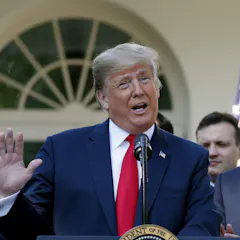
The USMCA, if ratified, will fundamentally alter North America’s political and economic structures, increasing American dominance over its neighbours.
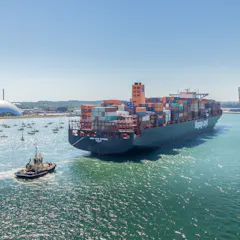
Brexit has not happened yet but the uncertainty unleashed by the vote to leave the EU is already taking its toll.
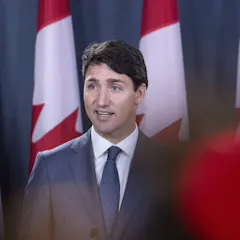
The USMCA, while imperfect, is overall a positive development for Canada. It has a number of structural elements that may very well leave us stronger when negotiating trade pacts in the future.

The relief that the U.S. didn’t make things even worse for Canada in the new NAFTA should be tempered by the realization that the moment of reckoning hasn’t passed; it’s only been postponed.
Top contributors
-

Senior Lecturer in Law, University of Westminster
-
Senior Lecturer in International Relations, University of Bath
-
Associate Professor of Political Science, Brock University
-
Associate Professor of Political Science, Georgia State University
-
Professor of International Economic Law, City St George's, University of London
-
Reader in Economics, University of Westminster
-
Professor of International Trade Policy, Aston University
-
Hurst Senior Professorial Lecturer, Co-Director Transatlantic Policy Center, American University School of International Service
-
Professor, Economics, University of Calgary
-
Associate Professor of Agri-Food Trade and Policy, University of Guelph
-
Professor of Intellectual Property Law, City St George's, University of London
-
Senior Lecturer in Economics, Aston University
-
Assisstant Professor, University of Macau
-
Senior Lecturer in Economics, Loughborough University
-
Visiting Fulbright Fellow at Centre for International and Defence Policy, Queen's University, Ontario