

The white-backed swallow survives the extreme temperatures of inland Australia by reducing its body temperature to save energy.
Articles on Torpor
Displaying all articles
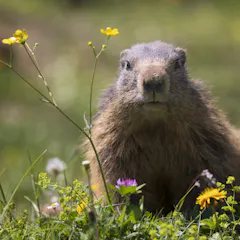
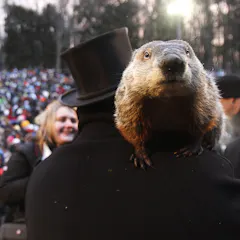
Groundhogs predict spring with the same accuracy as flipping a coin. But they’re vital to their ecosystems, feasting through summer to store enough fat to last through their winter hibernation.
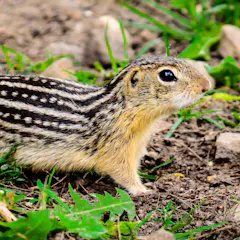
Months not eating or moving don’t result in muscle wasting and loss of function for animals that hibernate. New research found gut microbes help their hosts hold onto and use nitrogen to build proteins.
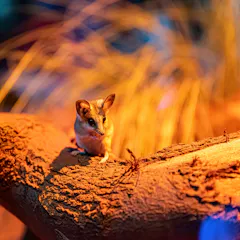
Once thought to occur only in birds and mammals in the Northern Hemisphere, due to the more pronounced winters, we now know torpor is widespread in small Australian mammals.
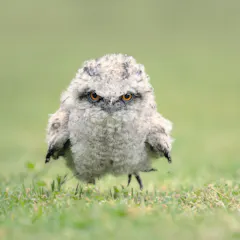
Breeding pairs spend a great deal of time roosting together and the male often gently strokes the female with his beak.
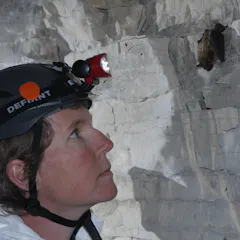
Researchers are puzzled by a fungus that is killing millions of bats.
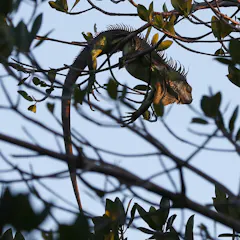
Green iguanas are an invasive species that seem to be spreading and proliferating in Florida. Used to warmer temps, they switch into torpor mode when the mercury drops.
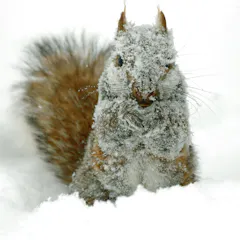
When you’re warm and cozy inside, it can be natural to wonder if the animals you see outside your window this winter are doing OK. Don’t worry – they’re doing better out there than you would.

The European Space Agency is exploring what we can learn from animals about long-term deep sleep.
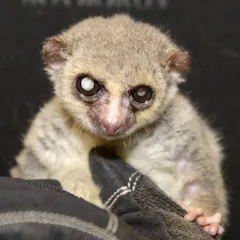
A new study looking at a long-lived lemur species attributes it to their frequent hibernation-like state. But what lessons can humans learn from this?
It’s all about mating success.
Top contributors
-

Research Assistant Professor in Wildlife Ecology and Conservation, University of Florida
-
Emeritus Professor of Biology, Penn State
-
Professor of Sleep Physiology, University of Oxford
-
Lecturer in Biomedical Science, Lancaster University
-
Postdoctoral Research Fellow - School of Environmental and Rural Science, University of New England
-
Professor Emeritus of Comparative Biosciences, School of Veterinary Medicine, University of Wisconsin-Madison
-
Associate Research Professor of Ecology and Evolutionary Biology, University of California, Santa Cruz
-
Professor, University of Florida
-
Director of the Hefner Museum of Natural History, Miami University
-
Assistant Professor of Biological Sciences, Université de Montréal
-
Professor, Southern Cross University
-
Associate Professor, School of Science and the Hawkesbury Institute for the Environment, Western Sydney University
-
PhD Candidate, Hawkesbury Institute for the Environment, Western Sydney University