

‘Matcha mania’ shows no signs of slowing, with global demand pushing supply chains to the brink. It’s marked quite the rise for a drink long met with skepticism in the West.
Articles on Tokyo
Displaying 1 - 20 of 21 articles
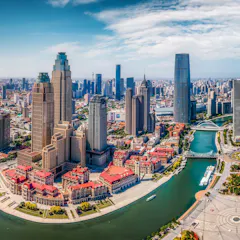
Cities can take action to stop subsidence – or else they need to adapt.
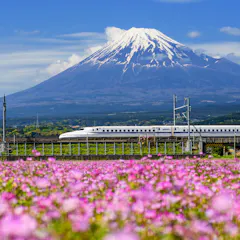
The Shinkansen bullet train is symbolic of Japan’s position as a railway superpower.
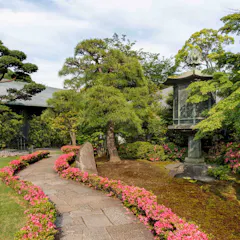
A vast estate in metropolitan Tokyo, this museum and garden in the former home of businessman and philanthropist Nezu Kaichirō is a place of calm beauty.

The economic benefits of the Olympics are in question like never before.

It’s easy to call Australian Olympians who receive their COVID shot early ‘queue jumpers’. But the argument for them having early access to the vaccine is more nuanced. Here’s why.
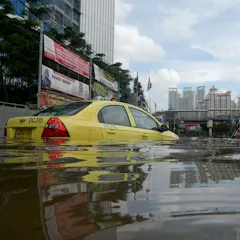
Sinking land plus rising seas are putting hundreds of millions of people at risk.

As COVID-19 vaccines roll out, a debate about whether athletes should be prioritized over more vulnerable populations has emerged.
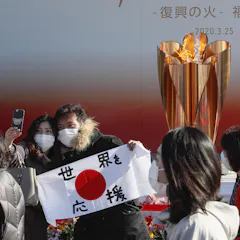
The event may have been postponed until July 2021 because of the coronavirus pandemic, but there is already a big cultural legacy to Tokyo 2020.
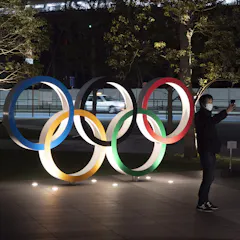
The decision to reschedule the Olympic and Paralympic Games was the right move. But how should we decide whether and when the Games should now be held?

Rapidly growing metropolises like Beijing, Jakarta and Ho Chi Minh City are struggling to protect residents against tobacco. Life-saving policies in rich countries may be partially to blame.

The day and a half it takes to get from New York to Singapore and back offers plenty of time to ponder the economics of ultra-long-haul flights – and wonder why we’d want to make it any longer.
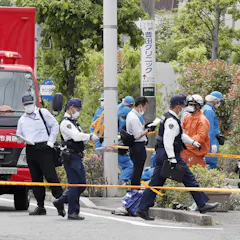
Despite low crime rates, indiscriminate mass stabbings aren’t unheard of in Japan. But unlike recent mass killings in Western countries, they aren’t motivated by right-wing ideology.
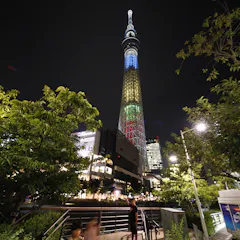
Athletes and spectators are likely to encounter dangerously hot temperatures when Tokyo hosts the 2020 Olympic games. With two years to go, there’s still time to take protective measures.

Planners have long tried to determine the ideal city size, and ideas have evolved with changing circumstances. But a good city depends more on the way it’s managed than on how many people it holds.
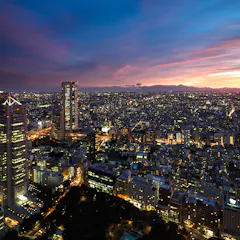
Character, resilience, convenience and sustainability are what make cities great places to live and learn.
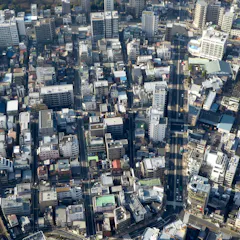
Tokyo has experienced extraordinary population growth but is among the world’s most liveable cities. Just how has it managed the pressures of growth?
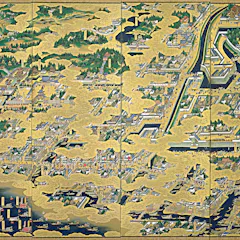
Edo, which gave rise to Tokyo, was also the world’s largest city three centuries ago. Facing ecological collapse, Edo developed a culture and practices that supported sustainable living.
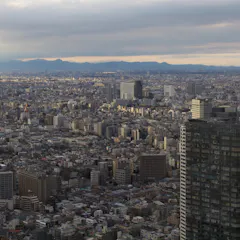
The concept of living heritage can help us make decisions that go beyond preserving historical facades to protect and add to, rather than freeze, the stories and layers of the past.

As models hit the catwalk for London Fashion Week, how do these trends actually relate people on the streets?
Top contributors
-

Professor of International Planning, Centre for Urban Research, RMIT University
-
Adjunct professor, School of Media and Communications, RMIT University
-
Lecturer in International Relations, Loughborough University
-
Professor of Climate Adaptation, University of East Anglia
-
Research fellow, Adelaide University
-
Lecturer in Japanese Studies, University of Sheffield
-
Professor of Architecture + Urbanism. Head of School of Natural and Built Environment, Queen's University Belfast
-
Senior Lecturer, Engineering and Innovation, The Open University
-
Professor & Director, School of Kinesiology, Western University
-
Object-based Learning Co-ordinator, The University of Melbourne
-
Lang Chair in Sport Management, Lang School of Business and Economics, University of Guelph
-
Professor, Director of the Institute for Crime and Justice Policy Research, Birkbeck, University of London, Birkbeck, University of London
-
Associate Professor of Business, Boston University
-
Director, Global Strategy Lab and Professor of Global Health, Law, and Political Science, York University, Canada
-
University visitor, University of Southampton