

Hilary McPhee co-founded McPhee Gribble, the legendary Australian publishing house responsible for Monkey Grip, Puberty Blues and Cloudstreet.
Articles on Tim WInton
Displaying all articles

This clear-eyed adaptation makes the most of its literary roots while also piecing together a unique theatrical language.
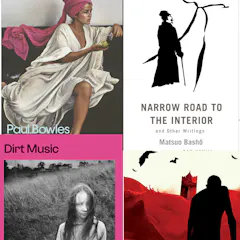
Reading, writes Edwina Preston, is a way of journeying on the wings of others without moving from the armchair (or bed). Here are some books to transport us.

Reading rates in Australia are falling – and price might be less of a factor than we think. We look at how Australia compares internationally, and what other countries are doing to boost reading.
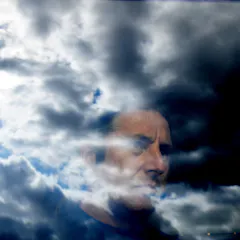
Juice is a radical departure that asks readers to think differently about the future.
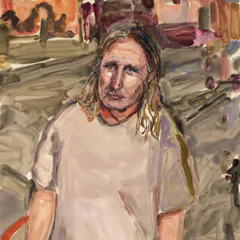
This year’s Archibald Prize-winning painting by Laura Jones is of an angst-ridden Tim Winton, contemplating the degradation of our planet

Authors are furious about finding their works on pirated dataset Books3. Copyright is the usual avenue for redress, but while AI moves at speed, the law is slow – and not designed to combat AI issues.
In her essay on the work of Tim Winton, Geraldine Brooks is looking for a punch-up with academics and critics.
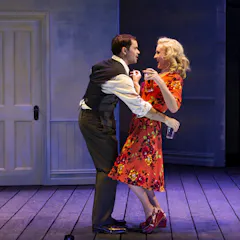
A new production of Cloudstreet - the play adapted from Tim Winton’s literary epic - is visually arresting. But despite a diverse cast, Indigenous characters remain spectral and peripheral.
Kangaroos are a national icon, but Australian authors seem determined to kill them off.

While tourism campaigns often portray the beach as an idyllic, isolated haven, many of our beach stories depict it as a darker, more complex place. Here are ten worth reading.
Tim Winton’s latest novel, The Shepherd’s Hut, pushes the author’s classic themes to the extreme.
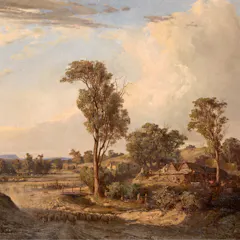
White settlers and authors once saw the bush as an alien, despairing place. But writers from Tim Winton to Rachael Treasure now portray the land in complex and optimistic ways.
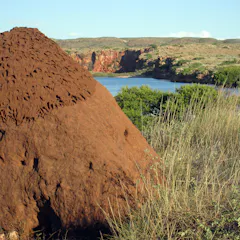
With its dramatic landscape, relative isolation and vibrant counter culture, Western Australia has a thriving writing scene. But government funding cuts are biting.

With roots in post first world war paintings of empty European cities, magical realism has evolved into a heavily, and ironically, political literary form.
When Richard Flanagan’s The Narrow Road to the Deep North was published last year, one reviewer proclaimed he had just read the winner of the 2014 Miles Franklin Award. Flanagan’s novel has now got as…
Top contributors
-

Associate Professor, English and Creative Writing, Edith Cowan University
-
Lecturer in Academic Communication, La Trobe University
-
Associate Professor in Creative Writing and Literary Studies, Deakin University
-
Lecturer in Creative Writing, and Editor of Westerly Magazine, The University of Western Australia
-
Researcher, The Australian Centre, The University of Melbourne
-
Joanna Mendelssohn is a Friend of The Conversation.
Honorary Senior Fellow, School of Culture and Communication, The University of Melbourne
-
Personal Chair, Literary Studies, Deakin University
-
Deputy Dean (Research), School of Education & the Arts, CQUniversity Australia
-
Interim Pro Vice-Chancellor (Regional & Metro), University of Wollongong
-
Senior Lecturer, Professional Writing and Publishing, Curtin University
-
Professor of Publishing and Audience Studies, Edith Cowan University
-
PhD Candidate, Creative Writing, The University of Melbourne
-
Associate Professor of Theatre Arts, Curtin University
-
Emeritus Professor of Australian Literature, University of Sydney
-
Visiting Fellow, School of Literature, Language and Linguistics, Australian National University