

Beijing’s cyber operations are largely conducted in the shadows. But a recent leak has shed light on how the state is working with private companies to target online activism.
Articles on Tiananmen Square
Displaying 1 - 20 of 31 articles
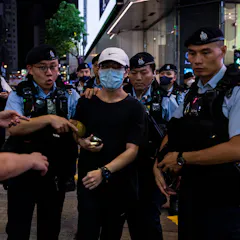
Freedom of speech and expression has been destroyed, despite Beijing’s promises they would be upheld.

Jiang oversaw China’s reemergence on the global stage, and sustained growth at home. But his policies also set the scene for excess and the growth of President Xi Jinping.
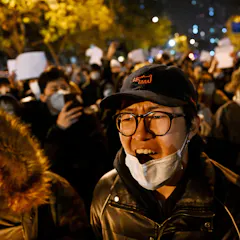
Comparisons have been made to the 1989 demonstrations that led to the Tiananmen Square massacre. An expert on Chinese protests explains why that is half right.
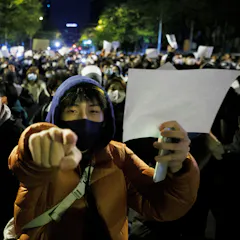
It started with the deaths of ten people in a locked-down apartment, but is not a widespread demonstration of unrest across CHina.
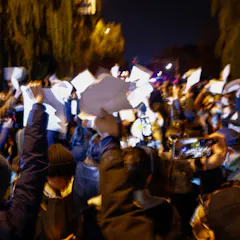
Young people are angry at COVID restrictions, but also poor job prospects and China’s heavy-handed suppression of free speech.

A scholar of philosophy and foreign policy explains why Cardinal Zen poses a threat to the Chinese Communist Party as a competing source of political authority.
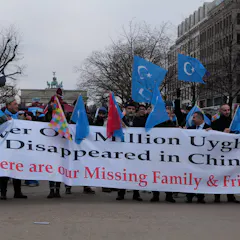
Is history really a triumphant march of progress? It depends on your point of view.

China’s staggering growth over the past 40 years is due to the force of personality and risk-taking of a man who stood barely 1.5m tall.
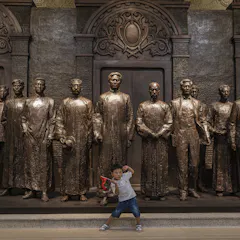
As it celebrates it’s 100th birthday, the Chinese ruling party’s latest programme of education aims to harness the power of youth in its own interests.
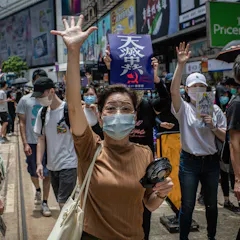
The cherished legal rights that Beijing seeks to suppress in Hong Kong were established, in part, by Vietnamese asylum-seekers who fought for their freedom in court in the 1980s.
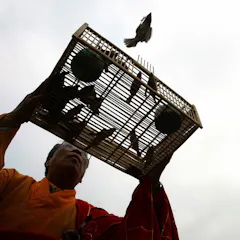
Hong Kong protesters deeply identify with nature, a reference to the current environmental crisis but also a fluid conception of collective action that is inscribed in ancient Chinese tradition.
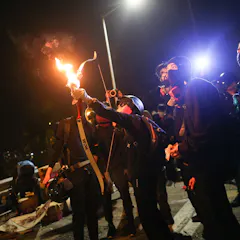
How the protest movement in Hong Kong moved onto university campuses – by two researchers who have witnessed the unfolding events.
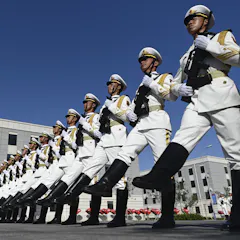
What 70 years of mass military parades reveal about the Chinese Communist Party’s rule.
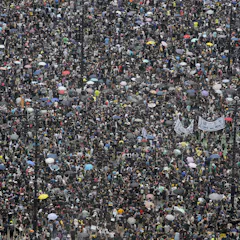
While the political and long-term consequences of the protests are still impossible to know, Hong Kong is already experiencing some short-term economic impacts.
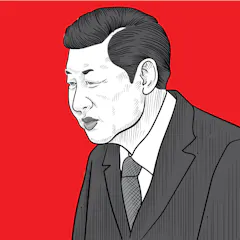
There is growing concern that China is trying to use universities to silence its critics in the West.
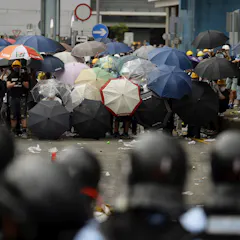
Why protests have returned to the streets of Hong Kong.

The Chinese government tightly controls all mention of the 1989 pro-democracy protests, but in recent days, it’s been very open with its justifications for the brutal crackdown.
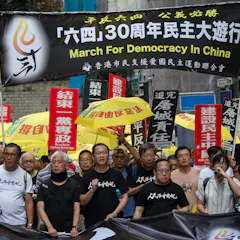
Back in 1989, workers joined students in pro-democracy protests. Now students are joining workers agitating for better conditions.

Today’s urban public spaces tend to represent governments and cities rather than people and citizens. Architects and urban designers should contribute to shaping spaces for freedom and interaction.
Top contributors
-

Senior Lecturer, School of Arts & Humanities, Nottingham Trent University
-
Professor of Politics, University of Sydney
-
Lecturer and Teacher, Department of Politics and International Relations, Cardiff University
-
Adjunct Professor, Australia-China Relations Institute, University of Technology Sydney
-
Associate Professor in Audiovisual Journalism, The University of Melbourne
-
John Rennie Short is a Friend of The Conversation.
Professor Emeritus of Public Policy, University of Maryland, Baltimore County
-
Professor of Formal Philosophy / Director of Center for Information and Bubble Studies, University of Copenhagen
-
Postdoctoral Research Fellow, School of Computing and Information Systems, The University of Melbourne
-
Academic Fellow & Lecturer in Architecture and Cultural Heritage, Nottingham Trent University
-
Lars Laamann is a Friend of The Conversation.
Lecturer on the History of China, SOAS, University of London
-
Reader in Political Economy, Brunel University of London
-
Researcher and Teaching Assistant, Sociology Department, Chinese University of Hong Kong
-
Associate Professor of Political Science, Brock University
-
Professor of Political Science, California State University, Long Beach
-
Researcher, The University of Queensland