

Louis Theroux (perhaps unintentionally) shows us that a traditional TV documentarian like him no longer holds the power.
Articles on The Matrix
Displaying all articles
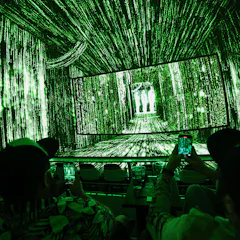
The technology that has helped propel the simulation theory may be new, but the questions it explores are ancient.
Plenty of movies have explicitly religious themes, but some of the most interesting examples of faith or transcendence on screen are much more subtle.

If the average amount of information conveyed by an event is always decreasing, it could mean we live in a computer program.
The image of the red and blue pills is central to the movie’s narrative but has been co-opted by hate groups who want adherents to think only they know the ‘truth’.

Plus, a philosopher explains the history of the idea that we might all be living in a simulation. Listen to The Conversation Weekly podcast.

It would be easy to interpret the Wachowskis’ films as innately trans, but in doing so, we might be relying too heavily on auteur theory.

You might have the impression they’re bad but give them another try and you might be surprised.
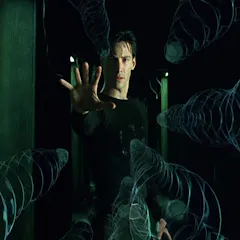
Cult film The Matrix was released 20 years ago this month. From Plato to Baudrillard, the film explored philosophical dilemmas we are still wrestling with today.
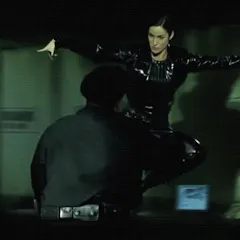
When it was released in 1999, The Matrix introduced a new type of image: bullet-time. Bruce Isaacs explains why it has become one of the most influential special effects in the history of cinema.
Top contributors
-

Associate Professor, Film Studies, University of Sydney
-
Associate Professor in Physics, University of Portsmouth
-
Associate Science Editor & Co-Host of The Conversation Weekly Podcast, The Conversation
-
Acting Executive Dean, Faculty of Theology & Philosophy, Australian Catholic University
-
Host, The Conversation Weekly Podcast, The Conversation
-
Professor of Religious Studies, Michigan State University
-
Academic Tutor in Media and Communications, Swinburne University of Technology
-
PHD Candidate, York Law School, University of York
-
Senior Lecturer in Philosophy and Ethics, Nottingham Trent University
-
Professor of Law, University of East London
-
Assistant Professor, Smith School of Business, Queen's University, Ontario
-
Assistant professor in media studies, Utrecht University
-
Faculty Associate, PhD Candidate in Human and Social Dimensions of Science and Technology, Arizona State University
-
Lecturer in Film and Media Studies, University of Cape Town