

It is often said that Transnistria will be “the next domino” that Moscow will try to knock down, after Crimea and Donbass. However, the famous domino theory has its limits.
Articles on The Conversation France
Displaying 61 - 80 of 1097 articles

Since the major demonstrations organised in Madrid (COP25) and Glasgow (COP26), young people seem to have less and less of a voice at the UN’s major climate conferences. Why?
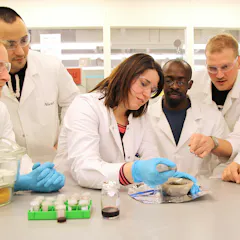
New research reveals star scientists contribute surprisingly little to scientific discovery.

As #Metoo continues to unfurl in France, men are now also speaking up against abuse they experienced. The Conversation sat down with the country’s first sociologist researching this phenomenon.

Mangrove forests are shrinking due to human activities, yet they’re essential for shoreline protection and carbon sequestration. Ongoing research explores the concept of “floating” mangrove forests.

If you’re lucky enough to be able to teach your child several languages, don’t hesitate!

Contrary to popular belief, only a minority of Bordeaux vineyards bought by Chinese investors have had a negative outcome.

Endemic to Madagascar, voatsiperifery is one of the secrets of the world’s top chefs. But it has to be grown in a way that preserves its environment and guarantees producers a fair income.

With the pressure of China’s “three-child policy”, many women are motivated to achieve work-life harmony by merging the identities of motherhood and business ownership.

Christopher Nolan’s historical drama took home seven Oscars, but the film conspicuously avoids Oppenheimer’s intimate involvement in how his diabolical weapon was used – and where.

Despite being a central concept in the digital age, mental workload remains difficult to define and study in real-life situations.

While electric cars have significantly lower emissions over their entire lifecycle, research shows that owners of older cars can experience mobility in a more restrained way.

Let’s delve into the three super-senses of dolphins: magnetic perception, electrical perception and echolocation.

Tardigrades are tiny animals known for their extraordinary survival skills, but are they tough enough to survive a space-probe crash and conditions on the Moon?

German banks located outside of areas regulated by a key financial watchdog sharply increased business with sanctioned countries.

Traditionally dominated by the use of centralised, resource-intensive servers, machine learning is being democratised with the growth of “TinyML”, distinguished by its small size and low cost.

When Elon Musk took control of Twitter, many were concerned about the reappearance of extremist accounts. In retrospect, X has shown itself to be selective.

It has long been thought one couldn’t bend one’s intuition. Recent research reveals it is in fact possible to reduce bias through training.

The concept of “coercive control” reframes domestic violence as an attack on human rights and resources rather than an assault.

Some countries have managed to elevate nature and ecosystems to the status of legal entities. Do these innovations really help to protect the environment?
Top contributors
-

Spécialiste de la politique américaine, Sciences Po
-
Rédacteur en chef, coordination internationale et technique, The Conversation France
-
Dean of Programs, EM Lyon Business School
-
Professor of Economics and Senior Researcher, Princeton University
-
Professor in department Law, Managment, and Social Sciences, EM Lyon Business School
-
Professeur, UMR ISYEB (Institut de Systématique, Évolution, Biodiversité), Muséum national d’histoire naturelle (MNHN)
-
Professor of Energy Economics, co-coordinator of the Chaire Européenne de la Transition du Territoire, GEM
-
non-resident senior fellow Center for European Policy Analysis
-
Associate professor, GEM
-
Lecturer in Management, Employment and Organisation, Cardiff University
-
Director of UWA Centre for Software Practice, The University of Western Australia
-
Directeur de la Recherche et des Formations Doctorales, Directeur adjoint, Télécom SudParis – Institut Mines-Télécom
-
Professeur / Professor, Audencia
-
Professeur d’économie, Mines Paris - PSL
-
Gilles Pison is a Friend of The Conversation.
Anthropologue et démographe, professeur émérite, Muséum national d’histoire naturelle (MNHN); Ined (Institut national d'études démographiques)