
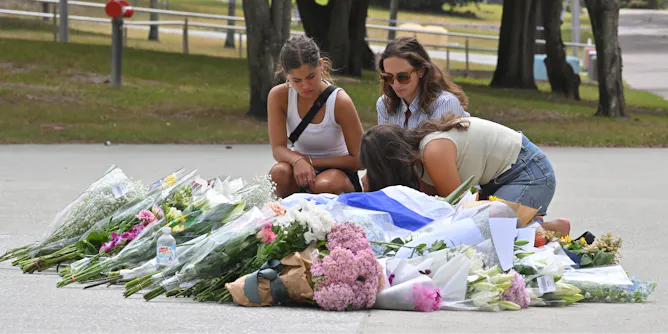
This research – which is in the early stages and yet to be peer reviewed – has recorded a significant increase in antisemitic sentiment after October 7.
Articles on Terrorism risk
Displaying 1 - 20 of 30 articles

Fireworks in public displays are very safe. But being in a dense crowd can have risks, so know what to look out for.

The complex task of tackling online terror needs human eyes as well as artificial intelligence.

Media houses fined recently by Nigeria’s Broadcasting Commission for documentaries on terrorism should approach the courts for redress.
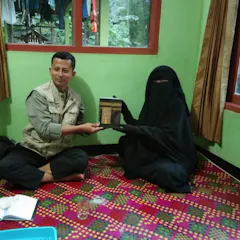
The US gives money to help Indonesia and other countries fight terrorism. But research shows that this money might not be effective, unless it directly reaches former extremists.

It is often difficult to place an imminent terrorist attack in a location or time.

Addressing American domestic radicalism will require new ways of thinking about the nation’s problems, and new ways of solving them.
From terrorism to drug smuggling and theft, the hostile insider is an often overlooked threat to airport security and safety.

Space terrorism and testing of space tourists are theoretical problems today. But let’s have conversations right now to make sure they don’t become real problems in the future.
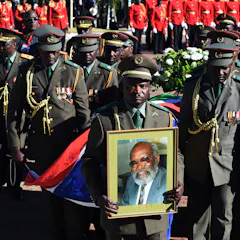
Namibian hero and former Robben Island prisoner Toivo ya Toivo was part of a generation who contributed to the struggles against apartheid and colonialism in the region.
People suffering from autism could be far more vulnerable to falling under the spell of terror organisations on the look-out for new recruits.
Security guarantees are impossible, but too many dangerous individuals are falling through the cracks.
An attack at Manchester Arena has sent shock waves around the world, and again raised questions about safety in public places.

The U.S. is considering expanding a ban it imposed in March on several Middle Eastern countries to all flights from Europe. A close look suggests the meager benefits just aren’t worth the high costs.
Trying to reintegrate foreign fighters who return home shouldn’t be considered the soft option. Governments in countries like Morocco and Tunisia need to respond realistically to a complex problem.
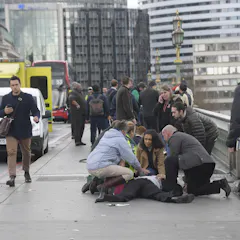
Was the London attacker acting alone? Was he really a soldier of the Islamic State? Research on the nature of jihadism in the West reveals possible answers.

The ban on electronic devices in cabin luggage overlooks the airports that would be least likely to detect a bomb.
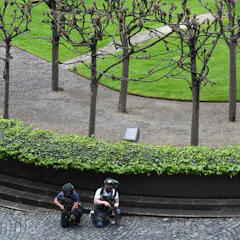
In recent years, anti-terrorism defences have become more subtle. That might be about to change.
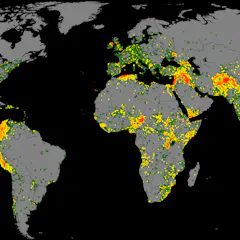
President Trump has asserted that media coverage of terrorist attacks under-represents their actual extent. Analysis of 50 years of news coverage answers this question, and raises others.
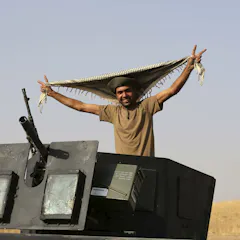
What happens to the Islamic State if it loses the battle for territory in Iraq and Syria? Here’s a list of ways it might go down.
Top contributors
-

Visiting Fellow, Department of Political and Social Change, The Philippines Institute, Australian National University
-
Senior research Fellow, Leeds Beckett University
-
Professor of Law and Director of the Center for Intellectual Property Law, Hofstra University
-
Professor of Law and Director of the Center for Professional Ethics, Case Western Reserve University
-
Professor of Modern Middle Eastern History, University of California, Los Angeles
-
Adjunct Professor at the School for Conflict Analysis and Resolution, George Mason University
-
Lecturer in Airport Security Management and Policing, School of Forensic and Applied Sciences, University of Lancashire
-
Instructor of International Studies, Louisiana State University
-
Military Space Bioethicist, UNSW
-
VIsiting Professor, Coventry University; Glasgow Caledonian University
-
Professor of the Practice and Faculty Director of the Master's in Applied Intelligence, Georgetown University
-
Assistant Professor of Political Science, Louisiana State University
-
Professor of Architecture, Director of the Metropolitan Design Center, and Dayton Hudson Chair in Urban Design, University of Minnesota
-
Professor, Université Sidi Mohammed Ben Abdellah
-
Professor of Public Policy and International Affairs, George Washington University