
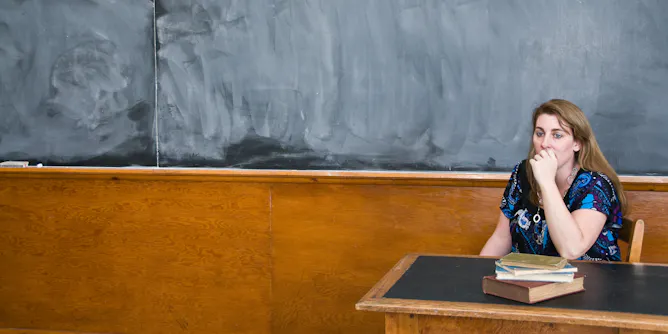
The pandemic led many teachers to leave their jobs − a trend that could continue if education leaders don’t address issues that affect morale.
Articles on Teacher Stress
Displaying all articles

In the academic year 2021-22, 39,930 teachers in England quit.

Calls for tougher laws against assaults on teachers have been thwarted by efforts to keep kids in school.
Looser requirements for teacher certification don’t fix teachers’ problems, which are low pay, high workload and lack of respect.
Three years observing in a public school has given one scholar a close-up look at the sweeping challenges in public education.

A new study finds a three-year trial of the ‘reflective circles’ approach to peer support offers a way forward for teachers whose already stressful jobs have become even tougher during the pandemic.

With teachers reporting record-high levels of burnout, and more burnout than any other profession in the US, scholars examine what’s going on and what it may mean for education.

High-stress schools undermine teachers’ commitment and risk losing even more from the profession at a time of growing staff shortages. But schools can take steps to reduce the causes of stress.
Interviews and surveys with hundreds of teachers and school administrators reveal the effect of persistent staffing shortages on school personnel – and on students.

Many teachers are sick of pretending they are “doing OK”. They feel pressured to be unrealistically positive in the face of irrefutable evidence that everything is not great.

Newly qualified teachers who aren’t involved in a good induction program are more likely to leave the profession within their first five years of teaching. And most don’t get these inductions.

Workplace stress among academics has long been higher in Australia and New Zealand than overseas, and research suggests the flow-on impacts on students could fuel a vicious cycle of negative feedback.
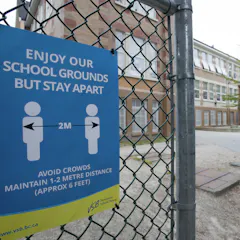
Addressing children’s and youth’s needs requires the expertise and support of educational assistants, school psychologists and all workers who collaborate to build caring school communities.
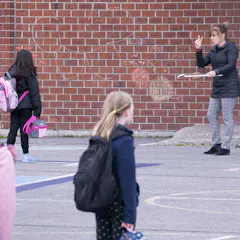
A cross-Canada survey of teachers shows teachers say one of the most stressful aspects of their jobs now is their concern for vulnerable students.

Teachers are increasingly being encouraged to take mindfulness courses so that they can begin teaching it to pupils.

Math instruction is stuck in the last century. How can we change teaching methods to move past rote memorization and help students develop a more meaningful understanding – and be better at math?

Leaving teachers to deal with challenging behaviour on their own can be unproductive and stressful.
Top contributors
-

Postdoctoral Fellow in International Issues and Sustainable Development, Indiana University
-
Assistant Professor in Educational Leadership, Concordia University, St. Paul
-
Associate Professor of Education, Concordia University, St. Paul
-
Professor of Learning Sciences, Monash University
-
Executive Dean, Faculty of Education, Philosophy and Theology, University of Notre Dame Australia
-
Professor and Director, Centre for Research in Educational and Social Inclusion, Adelaide University
-
Associate Professor of Education, Iowa State University
-
Associate Dean and Associate Professor, Faculty of Education, University of Winnipeg
-
Lecturer in Inclusive Education and Trauma, La Trobe University
-
Associate Professor, School of Education and Professional Studies, Griffith University
-
Director, Field Experience (Community-Based), Werklund School of Education, University of Calgary
-
Research Fellow, Adelaide University
-
Postdoctoral Associate, University of Maryland
-
Associate Director of the Office for Education Policy, University of Arkansas
-
Postdoctoral Fellow, Saint Louis University