

Donald Trump’s false claims about the Iran War, Epstein files, tariffs and inflation have left some supporters who have traditionally believed all he says feeling duped and abandoned. Why now?
Articles on Tariffs
Displaying 21 - 40 of 367 articles

It may seem tempting to try to match the UK’s zero-tariff deal. But here’s why it’s not worth compromising on what Australians pay for essential medicines.
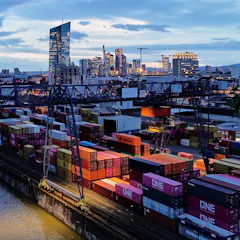
Companies that had sued for tariff refunds are taking different approaches to getting their money back – or quitting the effort.
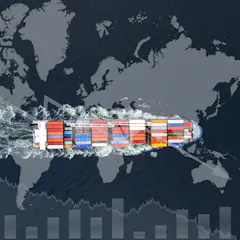
Changes to fundamental World Trade Organization rules are being driven by the US and EU. This week’s meeting in Cameroon could see developing nations lose out.
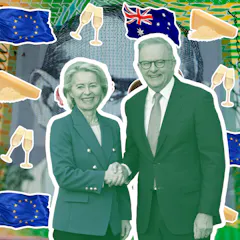
Australian producers will still be able to use terms like prosecco, kransky and parmesan – but there’s a catch.
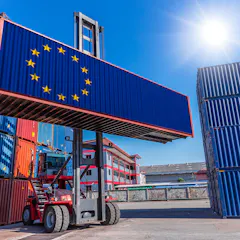
As new targets designed to help the EU economy work towards autonomy are unveiled, Europe’s “old growth” model and its R&D multinationals’ reliance on foreign markets come under review.

Australia’s best defence isn’t to retreat from open trade, but to strengthen and diversify the rules-based system that supports it.
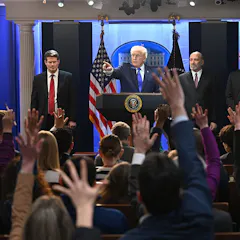
Agoa’s effectiveness was limited even before US tariffs started changing unpredictably.
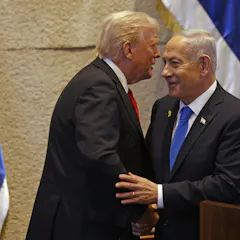
Courts have pushed back against attempts by leaders to bypass the legislature outside the US too.
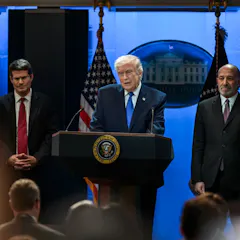
For the foreseeable future, the only certainty in US trade is uncertainty.
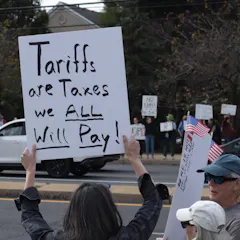
Donald Trump’s approval ratings could slip even further.
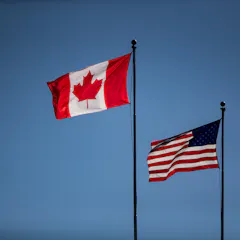
Canada can draw lessons from its centuries-long coexistence with an often-erratic neighbour to successfully navigate the economic volatility of the present era.
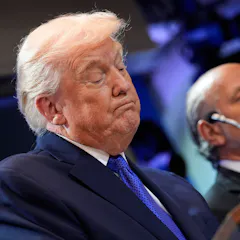
On Friday, Trump said ‘great certainty’ had been brought back to the United States and the world. In truth, the uncertainty is far from over.
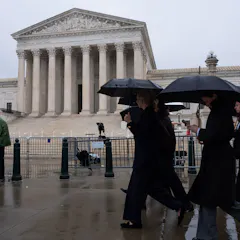
The ruling strikes down most of the Trump administration’s current tariffs, with more limited options to replace them.

Chinese consumer habits are changing, but heritage and soft power mean there’s still a huge opportunity for Scotch.
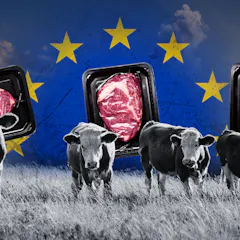
A landmark trade deal is within reach - but could still fall over if one quota can’t be agreed.

Businesses have been making short-term adjustments to absorb tariff shocks – it’s not an approach that can last forever.

Global political turmoil has fed into the dramatic price swings.

The new agreement will affect the lives of 2 billion people across economies representing about a quarter of global GDP.
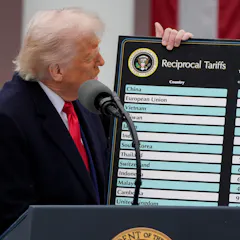
The use of tariffs to try to rebalance trade has been a central plank of Trump 2.0 economic policy. But has it worked?
Top contributors
-

Professorial Fellow, University of Canberra
-
Professor, and Executive Director: Institute for International Trade, and Director of the Jean Monnet Centre of Trade and Environment, Adelaide University
-
Associate Professor of Political Science, Georgia State University
-
Senior Research Fellow, Institute for International Trade, Adelaide University
-
Distinguished Professor, Arthur J. Gosnell Professor of Economics, & Head, Department of Sustainability, Rochester Institute of Technology
-
Professor of Trade Law and Taxation, Queensland University of Technology
-
Associate Professor of Economics, University of South Carolina
-
Emeritus Professor of Law, University of Auckland, Waipapa Taumata Rau
-
Professor of Economics, University of Minnesota Duluth
-
Associate Professor of Agri-Food Trade and Policy, University of Guelph
-
Professor of Economics, Auckland University of Technology
-
Honorary Research Fellow, City Political Economy Research Centre, City St George's, University of London
-
Professor Emeritus of Economics, Babson College
-
Senior Lecturer in Economics, Bournemouth University
-
Professor of Law and Director of the UOW Transnational Law and Policy Centre, University of Wollongong