

The 2026 Afcon’s on-field disturbances should not take away from its accomplishments.
Articles on Tanzania
Displaying 21 - 40 of 351 articles
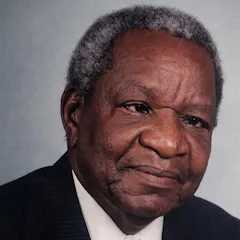
Edwin Mtei, Tanzania’s first central bank governor, showed that people can hold different views without enmity.
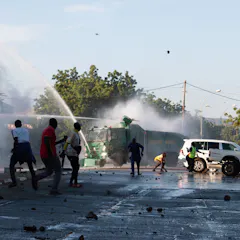
The countries, whose respective leaders recently won widely disputed elections, offer contrasting examples in how autocracies operate, evolve and change.
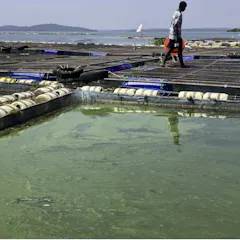
Lake Victoria’s aquaculture industry holds promise for improving food security and livelihoods in east Africa.
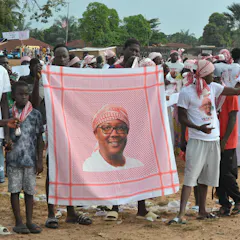
What’s at stake in Guinea-Bissau’s election is a wider regional crisis in which incumbents erode legitimacy.
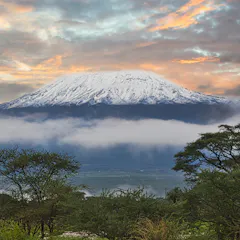
75% of Mount Kilimanjaro’s indigenous plants have been wiped out over the last century.

The regime once seemed untouchable. Now anything feels possible.

Without market data, countries can’t address hunger and food insecurity.
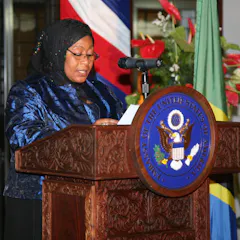
President Samia Hassan is relying on repressive tactics to eliminate her most significant competitors from the 2025 presidential race.

Tanzania’s avocado boom wastes 30%-50% of produce, hitting smallholder farmers hardest. Better training, fair prices, quality standards and storage can cut losses.

After a hiatus, the World Bank returned to dam building, but has anything changed?
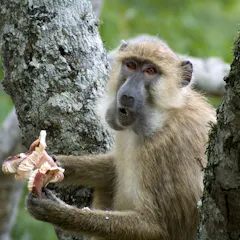
Mushrooms make up a crucial part of some monkeys’ diets, offering insights into the past.

Appropriate interventions are needed to increase the use of long-acting reversible contraceptives in sub-Saharan Africa.

There were several times in Swapo’s exile history when internal critics were silenced.

Eventually, I found his famous novels in a souvenir shop in his home town that mostly sold skin-care products.
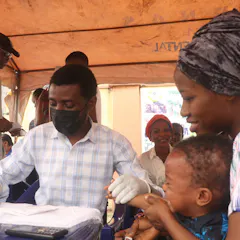
A recently approved drug for malaria treatment offers hope to millions of children who suffer from the disease in Africa.
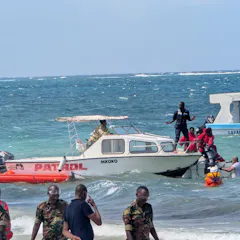
A security specialist in the Western Indian Ocean sees how countries work together to counter the threat of a massive oil spill.
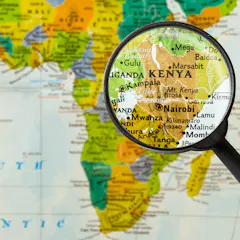
The East African Community has been ambitious in creating a regional common market. This includes making it easy for people to move between countries.
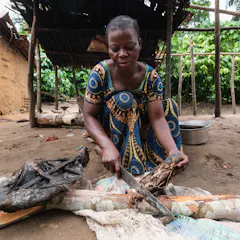
As many as three-quarters of emerging infectious diseases originate from wildlife.
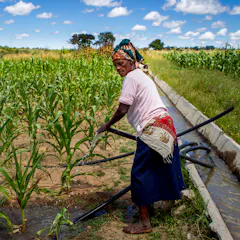
Small-scale irrigation schemes in southern Africa can produce more food, support more jobs and be more profitable for the local community.
Top contributors
-

Researcher, United States International University
-
Lecturer, Tumaini University Makumira
-
Assistant professor, University of Sussex
-
Post-Doctoral Research Fellow, SARChI in Higher Education and Human Development Research Group, University of the Free State
-
PhD Candidate, Department of Political Science and Public Administration, University of Nairobi
-
Senior Lecturer in Politics and International Relations, University of East London
-
Professor of Democracy, University of Birmingham
-
Research Associate Plant Systematics, Bayreuth University
-
Associate Professor of International Studies, University of Nottingham
-
Lecturer in Wildlife Conservation
-
Professor of French and Critical Disability Studies, Lancaster University
-
Asso. Professor in Anthropology, University College London, UCL
-
Professor of Disease Ecology and Public Health, University of Glasgow
-
Senior Lecturer in Social Work, Australian Catholic University
-
Researcher, SAMRC/Centre for Health Economics and Decision Science- PRICELESS SA, University of the Witwatersrand