

Our bodies primarily rely on sunlight to produce vitamin D.
Articles on Sunscreen
Displaying 21 - 40 of 68 articles
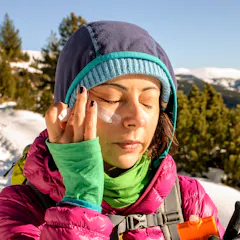
Regular sunscreen use over many years is shown to be effective at preventing skin damage, photoaging and skin cancers.

A tattoo can be a large investment in time, money and pain. Here’s how to look after yours this summer.

Early products focused on tanning. Others roasted you like a chicken. Which of these claims can you remember?

Not all sunscreens work the same way and some might irritate people with sensitive skin.
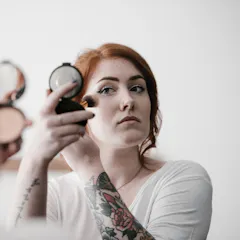
Does SPF in makeup and moisturisers provide effective sun protection?

Widespread screening for skin cancer may not be necessary, but it is important to understand the risks behind UV overexposure and to get checked early if you have concerns.

Spending too long in the sun can damage your DNA. But what about if you retreat back to the shade? How long does it take to get back to normal?
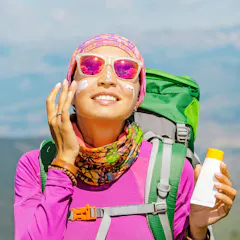
Sunscreen is one of the most important ways to protect yourself from skin cancer – but to be reliable, it has to be tested on brave volunteers.

Our ancient ancestors didn’t have clothes or houses – but that constant exposure to the sun helped their skin protect itself from the worst sun damage.
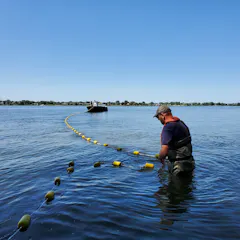
UV absorbents and industrial antioxidants are used in many household goods to protect them from UV radiation. They can have an adverse impact on ecosystems.
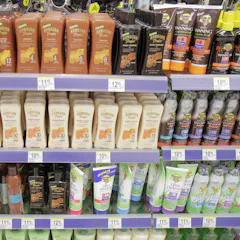
Rising concern about possible environmental damage from the active ingredients in sunscreens could have ripple effects on public health if it causes people to use less of them.
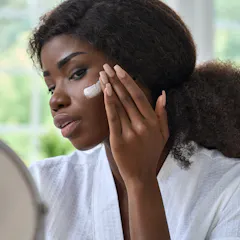
It’s thought that up to 80% of skin ageing is the result of sun exposure.

After the announcement of President Biden’s heat initiative, The Conversation revisits stories on high summer temperatures and human health.

While sunscreen has the potential to reduce skin cancer for light-skinned people, it has never been shown to do the same for Black people. Yet that distinction is lacking in public health messaging.

What you need to know about blue light protection lotions.
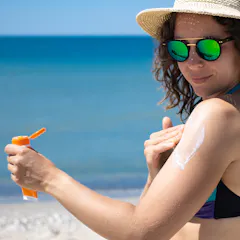
Different sun creams work in different ways and protect against different ultra violet rays.

Researchers have long suspected that an ingredient in sunscreen called oxybenzone was harming corals, but no one knew how. A new study shows how corals turn oxybenzone into a sunlight-activated toxin.

Laboratory studies suggest sunscreen chemicals are dangerous to coral reefs. But in real world conditions, that’s not true. Bleaching must have another cause.

A trip to the beach is a perfect opportunity to explore the peculiar properties of some fascinating fluids.
Top contributors
-

Postdoctoral Researcher, Dermatology Research Centre, The University of Queensland
-
Research fellow, King's College London
-
Adjunct Professor, School of Psychology, Curtin University and College of Health and Medicine, Australian National University
-
Associate Professor in Pharmacy and Pharmaceutical Sciences, The University of Queensland
-
Assistant Professor of Internal Medicine (Division of Dermatology), The University of Texas at Austin
-
Professor and Senior Group Leader, QIMR Berghofer
-
Professor of Pharmaceutical Chemistry, Macquarie University
-
Senior Lecturer Princess Alexandra Hospital Southside Clinical Unit and Casual Research Assistant, The University of Queensland
-
Professor of Experimental Photobiology, King's College London
-
Reader, Department of Pharmacy & Pharmacology, University of Bath
-
Professor in Behavioural Science, The University of Queensland
-
Adjunct Professsor, School of Psychology, Faculty of Health and Medical Sciences, Adelaide University
-
Senior Lecturer in Pharmacology, Adelaide University
-
Associate Professor of Immunotoxicology; Co-ordinator of Nanosafe Australia and Asia Nano Safe research networks, RMIT University
-
Professor of Quantum Physics and Quantum Technology, University of Sydney