
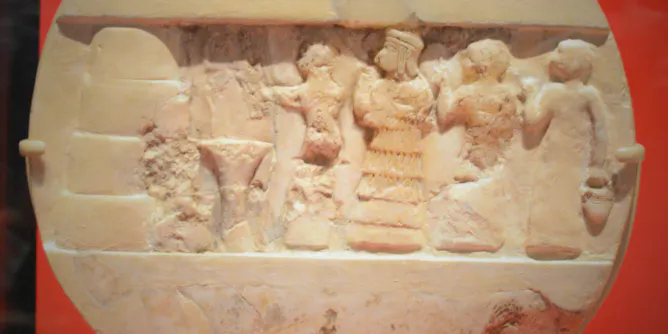
What should we call the words that this ultramodern technology produces? For clues, a professor looks to some of the world’s earliest authors.
Articles on Sumerians
Displaying all articles

Ancient evidence tells us these people held positions of power because of their gender ambiguity, not despite it.

Cylinder seals were intimately tied to their owner, showcasing their identity, beliefs and social status.

Some of popular culture’s most famous ghosts and demons have roots in ancient Mesopotamia. What did ancient humans believe about the supernatural? And what stories did they tell?

A scholar of the ancient Near East explains how loan forgiveness was handled thousands of years ago in the Bible and royal decrees.
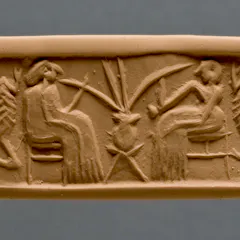
Beer was extremely popular in ancient Mesopotamia. Sipped through straws, it differed from today’s beer and was enjoyed by people from all walks of life.
Ennigaldi-Nanna is largely unknown in the modern day. But in 530BC, this Mesopotamian priestess worked to arrange and label various artefacts in the world’s first museum.
Looting of Iraq’s national museum began on April 10, 2003. At least half of the artefacts taken remain missing and disturbingly, the illegal trade in stolen antiquities has grown in the years since.
Top contributors
-

Honorary Research Associate, Department of Classics and Ancient History, University of Sydney
-
Head, Public Engagement, Chau Chak Wing Museum, University of Sydney
-
PhD Candidate; Assyriologist, Macquarie University
-
Assistant Professor of History, North Carolina State University
-
Assistant Professor of Art History, Macalester College
-
Assistant Professor of Writing, USC Dornsife College of Letters, Arts and Sciences
-
Associate professor of Ancient History, University of Minnesota