
European leaders are learning they cannot rely on Washington, and that the US will act against their interests and at their economic expense.
Articles on Suez Canal
Displaying 1 - 20 of 28 articles
Gallipoli was a hastily launched military campaign over a maritime choke point – and has parallels with the Strait of Hormuz.
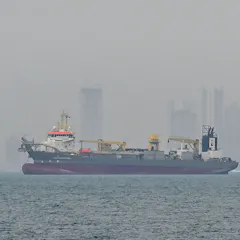
Dangerous events forcing shipping companies to sail along the Cape sea route are increasing in frequency.

Houthis pledge to halt attacks on Red Sea vessels, but shipping companies remain unconvinced.

The New York Times, dismayed by wayward polls in the 1952 presidential race, sent teams of reporters across the country to assess public opinion in the 1956 campaign. Its effort was no rousing success.

What is happening in Gaza is not simply a settlement issue. There are Israeli economic interests at stake.

Tea supplies are under threat as a shipping crisis continues in the Red Sea.
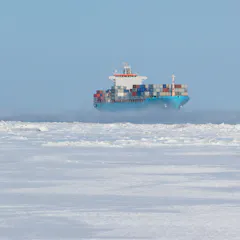
Houthi attacks on ships in the Red Sea have disrupted trade between Asia and Europe – could ships cross the Arctic instead?

EV manufacturers pause production in Europe as the Red Sea shipping crisis deepens.
With the Panama Canal in drought and the Strait of Hormuz also vulnerable to Iran, global trade routes are under severe pressure.
The Iran-backed Houthi rebels have the power to significantly destabilise global trade by endangering maritime activity in the Red Sea.
An Iran-aligned group has attacked ships in the Red Sea that it believes are heading to Israel, causing several companies to pause or divert shipments.
Notable events — including the COVID-19 pandemic — have revealed the weaknesses in global supply chains. Companies need to ensure the resiliency of the manufacturing and distribution systems.
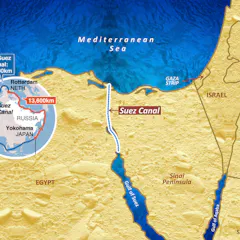
CC BY-NC-ND8.48 MB (download)
The Suez Canal’s history has been forged over a century by multiple entities and people. Its past has been marked by colossal stumbling blocks.
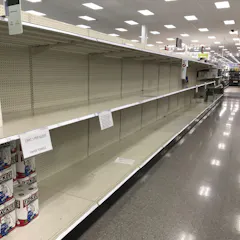
Modern supply chains have become very efficient, but that means disruptions of any kind can lead to delays and shortages.
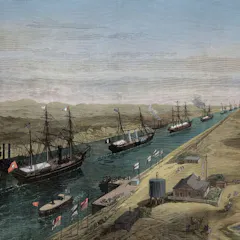
Prior to the mid-19th century, the Isthmus of Suez – the 125km strip of land that lies between the Mediterranean Sea and the Red Sea – was a quiet spot.
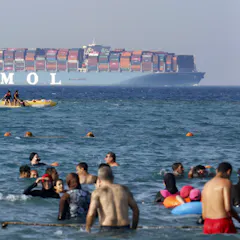
Before the container was standardized, loading and unloading goods was very labor-intensive, inefficient and costly.
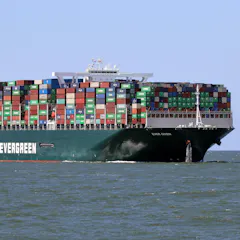
Driven by the promise of efficiency, container ships have grown to monstrous proportions over the past 15 years.
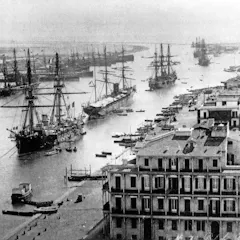
Britain’s preoccupation with the canal was as much about controlling Egypt as it was about global trade.
Direct implications for maritime security are unlikely. But there will be ripple effects in the shipping industry and in many commercial sectors.
Top contributors
-

Lecturer in Sustainable Freight Transport and Logistics, University of Leeds
-
Assistant Professor, Texas Tech University
-
Professor of Modern History, University of Leeds
-
Senior Scientist, Israel Oceanographic and Limnological Research
-
Lecturer in the Department of Politics and International Studies, University of Cambridge
-
Reader, History, Glasgow Caledonian University
-
Professor of Maritime Fluid Dynamics, University of Southampton
-
Associate Professor in Cyber Security, University of Plymouth
-
Executive Dean, Faculty of Science and Engineering, University of Plymouth
-
Professor of Ports and Maritime Logistics, University of Sydney
-
Professor of International Security, School of Global Affairs, Lancaster University
-
Professor of Modern British History; Director of Studies in History and Politics, Pembroke College, University of Cambridge
-
Dosen Prodi Hubungan Internasional, Universitas Darussalam Gontor
-
Senior Lecturer in Operations and Supply Chain Management, Anglia Ruskin University
-
Assistant Professor of Operations Management, University of Manchester