
EV manufacturers pause production in Europe as the Red Sea shipping crisis deepens.
Articles on Ever Given
Displaying all articles
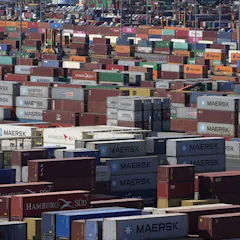
Before the container was standardized, loading and unloading goods was very labor-intensive, inefficient and costly.
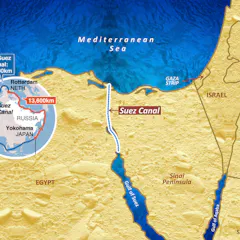
CC BY-NC-ND8.48 MB (download)
The Suez Canal’s history has been forged over a century by multiple entities and people. Its past has been marked by colossal stumbling blocks.
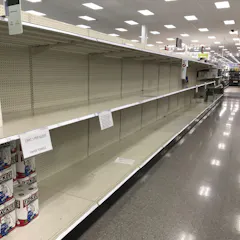
Modern supply chains have become very efficient, but that means disruptions of any kind can lead to delays and shortages.
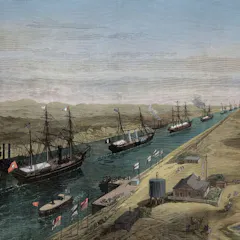
Prior to the mid-19th century, the Isthmus of Suez – the 125km strip of land that lies between the Mediterranean Sea and the Red Sea – was a quiet spot.
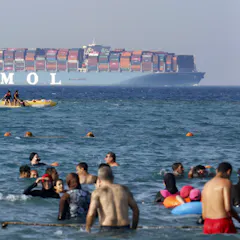
Before the container was standardized, loading and unloading goods was very labor-intensive, inefficient and costly.
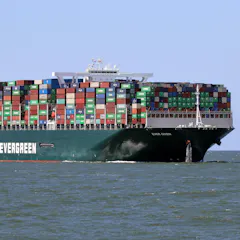
Driven by the promise of efficiency, container ships have grown to monstrous proportions over the past 15 years.
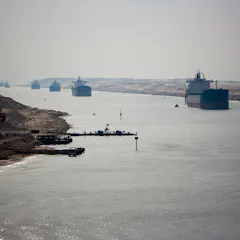
Direct implications for maritime security are unlikely. But there will be ripple effects in the shipping industry and in many commercial sectors.
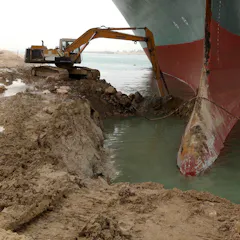
A bottleneck in the global shipping network will accelerate the move to more local production and shorter supply chains.
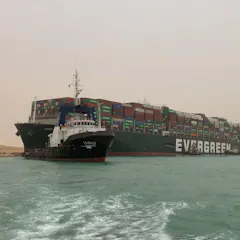
The Suez Canal is the ideal target for causing maximum disruption to global trade.
Top contributors
-

Assistant Professor, Texas Tech University
-
Eugene M. Isenberg Chair in Integrative Studies, UMass Amherst
-
Senior Lecturer in Operations and Supply Chain Management, Anglia Ruskin University
-
Professor of Ports and Maritime Logistics, University of Sydney
-
Professor, Naval Architecture, Ocean and Marine Engineering, University of Strathclyde
-
PhD (Maritime Security)
-
Executive Dean, Faculty of Science and Engineering, University of Plymouth
-
Associate Professor in Cyber Security, University of Plymouth
-
Industrial Researcher, University of Plymouth
-
Distinguished Professor of Supply Chain Management, Northeastern University