
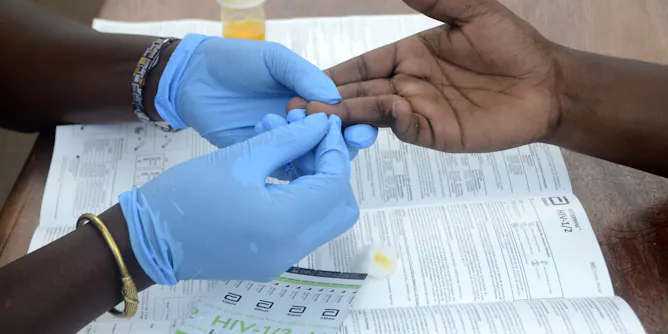
Adolescent girls and young women are at the heart of the HIV epidemic in sub-Saharan Africa. They need to know their HIV status.
Articles on Sub Saharan Africa
Displaying 1 - 20 of 26 articles

A new study explores the genetics of chronic kidney disease across diverse African populations.

Ageing with HIV is now a global public health reality, especially in sub-Saharan Africa, and the response must evolve to reflect that.
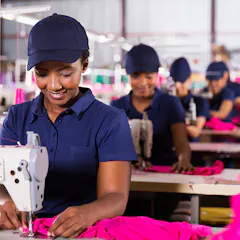
A review of scholarly articles shows Agoa benefits are uneven across sub-Saharan Africa.

Through collaboration and resource sharing, smallholder rice farmers can enhance their productivity and achieve a fully mechanised farming system.

Sickle cell disease causes lower oxygen levels and abnormal blood flow in the brain, which can lead to a stroke. New research into noninvasive screening methods could help reduce the risk.
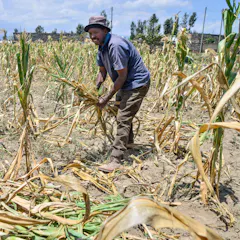
Smallholder farmers are bearing the brunt of climate change in sub-Saharan Africa. Deliberate steps are required to support them and boost agricultural output,

Agoa should be extended by another 20 years and membership expanded to cover north Africa
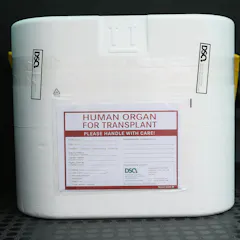
Demand for human organs has surpassed supply. This is leading to serious problems including a flourishing black market for organ trafficking.

The number of elderly people in need of support in Africa is projected to grow at annual rates above 3% up to 2050.
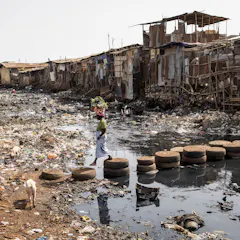
Although there is strength in diversity, members of ethnic groups in power distributing resources to members of their ethnic group at the expense of national growth entrench poverty in Africa.
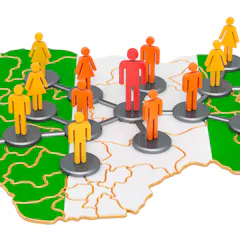
Social scientists in Nigeria communicate their research results more among themselves than they do to policymakers and the general public.
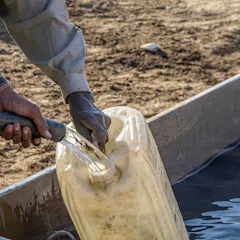
Groundwater has the potential to support broad economic, humanitarian and social development in sub-Saharan Africa, as it has in other regions globally.

The answers to Nigeria’s poor social science research output seem to lie in quantity and quality of personnel, time available for research, funding, support institutions and policy.
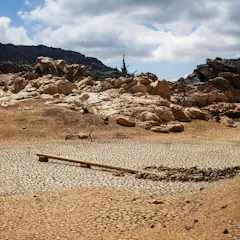
A consequence of a warming world is prolonged dry spells and periods of drought that can lead to infectious diseases like cholera.

Civil society can play a role by holding political authorities accountable.
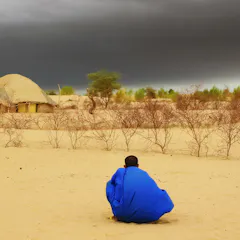
Without financial support that helps communities adapt to climate impacts, climate change is projected to push tens of millions more Africans into extreme poverty by 2030.
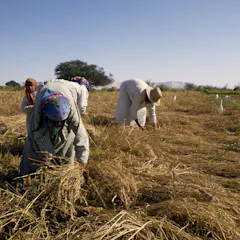
Smallholder rice farmers in Ghana should be supported by the government to access finance needed to adopt modern technologies for greater productivity.
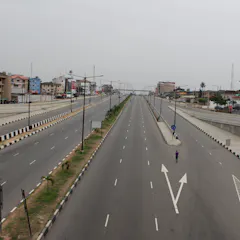
Almost all the people in the study were experiencing feelings like anxiety, worry, anger, boredom or frustration.

Even though parts of the global tourism sector have started recovering from COVID-19 restrictions, tourists may still feel that home is safer than abroad. This can be beneficial for domestic tourism.
Top contributors
-

Senior lecturer, Business Management, De Montfort University
-
Researcher, National Centre for Technology Management (NACETEM)
-
Senior Lecturer, Hospitality and Tourism Management, University of Cape Coast
-
Professor, University of South Africa
-
Director of the Arrell Food Institute and Professor in the Dept. of Geography, Environment and Geomatics, University of Guelph
-
PhD candidate, Chalmers University of Technology
-
Research fellow, Western Sydney University
-
Professor of Biostatistics and Global Health, Western Sydney University
-
Associate Professor, Stellenbosch University
-
Ass. Professor, University of Maryland Eastern Shore; North-West University
-
Doctoral Candidate, Geography and Development Studies, University of Minnesota
-
Associate Professor of Supply Chain & Analytics, University of Missouri-St. Louis
-
Professor of History, Cardiss Collins Professor of Arts and Sciences, Northwestern University
-
Researcher,School of Commerce, Adelaide University
-
Professor in practice and strategic director at the Firoz Lalji Institute for Africa, London School of Economics and Political Science