

Workers in industries like railways and air travel have significant structural power and can use their leverage to win favourable contracts because of the amount of economic disruption they can cause.
Articles on Strikes
Displaying 21 - 40 of 205 articles
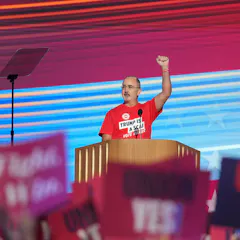
It’s too reductive to simply smear scabs as sellouts. It’s important to understand why some workers might be motivated to weather scorn, rejection and even violence from their peers.

The bill gives the administrator sweeping powers, and the minister significant discretion to move the CFMEU into administration without going through the usual parliamentary scrutiny.

Some of the most essential but least protected workers in a $200 billion industry want to ensure that AI won’t do away with their jobs.

Argentine society is responding strongly to Javier Milei’s radical policies.

Because the economy gained 3 million jobs in 2023, unions had to draw hundreds of thousands of new members just to hold their ground.
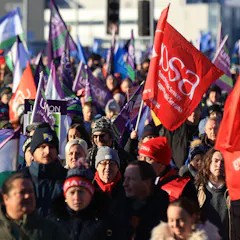
The record strike action comes amid an ongoing political crisis in Stormont.

Chronically underfunded classrooms with fewer supports to meet student needs is a core issue for Saskatchewan teachers.

Two labor scholars argue that the balance of power between workers and employers, which has been tilted toward employers for nearly a half-century, is beginning to shift.

It’s been a big year for industrial action but what’s in store for 2024?

Wooing those workers will be expensive and require a lot of creativity, since many of them are employed in ‘right-to-work’ states.

The rise in union support can be explained by the growing recognition people are having of their own disadvantages, and the anger they feel about it.

Unions have long advocated for a ban on replacement workers, arguing their use unduly shifts power to employers and gives the boss an unfair advantage in collective bargaining.

The picket lines have brought surprising levels of success.

Longstanding concerns like the gender wage gap remain important but second-wave feminism must listen and evolve to continue to protect and promote women’s concerns.
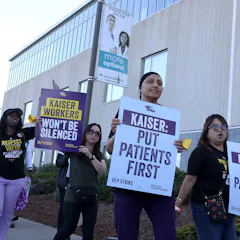
Beyond higher wages and improved benefits, the terms of the Kaiser settlement would ensure better staffing, which the unions have argued is critical for providing quality patient care.

The companies are making more generous offers, and the union is commanding support from the general public and the president of the United States.

Workers are objecting to staffing levels they say endanger patient care and are refusing their employer’s offer that includes raises that they say are too low due to inflation.

History suggests that there’s risk of overplaying one’s hand when new technology is lurking.

Workers’ power is being recast as precarious workers in Africa experiment with new ways of organising in the digital age
Top contributors
-

Associate Tutor, University of Surrey
-
Affiliate Research Associate, School of Political and Social Sciences, University of Glasgow
-
Professor, Labour Studies, Brock University
-
Associate Professor, Labour studies, Brock University
-
Associate Professor of Employment Relations, GEM
-
Professor Emeritus of Business, Wayne State University
-
Professor of Sociology, University of Texas at Arlington
-
Associate Professor of Supply Chain Management, Michigan State University
-
PhD candidate, Labour Studies, McMaster University
-
Lecturer, University of Lagos
-
Lecturer in Politics, Edge Hill University
-
Professor, Political Studies, University of Saskatchewan
-
Professor of Labour Law, University of Sydney
-
Lecturer in Politics, Te Kunenga ki Pūrehuroa – Massey University
-
Professor of Labour Law, University of Bristol