

The adolescent brain is particularly vulnerable to experience. Puberty is is the time brain networks are hardwired around milestone events. We should help teenagers make meaning of the pandemic.
Articles on Storytelling
Displaying 61 - 80 of 120 articles
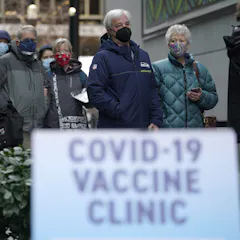
How will governments convince enough people to get vaccinated to achieve herd immunity?

The 45th president of the United States used a specific technique to tell different versions of the very same story, of a nation under threat and a man working to save it.
Hollywood continues to dramatically exaggerate the medical risks associated with abortion while downplaying barriers to access.

Renting locations, hotel rooms, offices and cast trailers can eat the lion’s share of a budget. We rented an off-season summer camp and won best feature film at the Chicago Comedy Film Festival 2020.

A new series has been announced by Netflix but the last time the game was adapted it wasn’t exactly a success. The lack of coherent narrative within the expansive gaming world may be to blame.

In the age of fake news and deep fake videos, how can documentary making be used for research and other purposes that demand authenticity and credibility?

Now, more than ever, we need to share stories that build relationships, community connections and self-esteem, especially with our children.
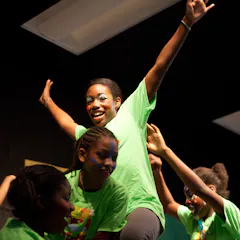
An ongoing study shows that storytelling can positively increase self-awareness in young people, especially if they can relate to the stories. But in Africa access to story platforms is limited.

Talking about energy transitions could help overcome the impasse we seem to have reached on climate change.

Through choose-your-own-adventure stories, perpetrators of domestic abuse can challenge and understand their behaviour.
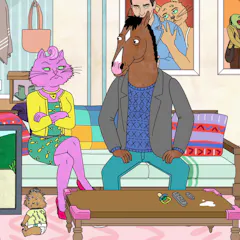
Since medieval times, animals have been used by storytellers to teach humans about themselves.

As we get older, our eyesight may dim and our recall may falter. But our linguistic abilities don’t seem to erode.

Studios are starting to realize that diverse casts and diverse stories have a massive earning potential.

Sexual violence is a global phenomenon that’s been around for centuries.

Writing episodic TV, scriptwriters traditionally work from a principle of having three stories woven together through an episode. These are known as the A story, the B story and the C story.

Stephanie Bishop’s latest novel demonstrates a sophisticated approach to the relationship between time and narrative: novelists and aspiring writers would do well to look closely at her achievement.

The Merger draws on the conventions of the sports film to explore and challenge attitudes towards refugees in Australia.
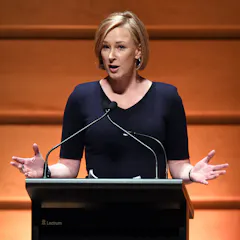
Part memoir, part investigation, Leigh Sales’s recent book Any Ordinary Day provides rare insight into the journalistic craft.

It is plausible to suppose that human memories of long-extinct creatures today underpin many stories we have generally regarded as fiction.
Top contributors
-

Dean of Research (Creative), Adelaide University
-
Professor of Persuasive Language and Storytelling, SKEMA Business School
-
Professor of Sustainable Practice, University of Southampton
-
Senior Lecturer in Digital Media Production, University of Westminster
-
Associate Professor, Department of Language and Literacy Education, University of British Columbia
-
Professor of Psychology, University of Otago
-
Professor of Language and Literacy Education, Georgia State University
-
Investigator, University of North Carolina at Chapel Hill
-
Associate Professor in Arts and Sustainability, University of Portsmouth
-
Lecturer in Environmental Geography, University of Stirling
-
Professor of Creative Writing and Digital Media, Bath Spa University
-
HHMI Professor of Biomedical Engineering and International Health, Boston University
-
Professor in Public History, University of Technology Sydney
-
Professor of Marketing and Media Research, University of Münster
-
Senior Lecturer, Australian National Centre for the Public Awareness of Science, Australian National University