

China, which once processed much of the world’s scrap, has slashed imports of “foreign garbage.” What can the US do to step up recycling at home?
Articles on Steel
Displaying 41 - 60 of 82 articles
Far from being wiped off the map as was once predicted, Whyalla is coming back in an unlikely way, as potentially Australia’s biggest steel producer powered almost entirely by renewable energy.
Trump has started a trade war with China and much of the world. Here’s what you need to know.
If the US were to stop dumping these valuable metals in landfills and to cease exporting them as cheap scrap, its imports could fall, and there would be less of these metals being made from scratch.
US tariffs could potentially benefit some EU firms that rely on steel and aluminium.
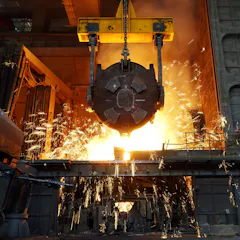
This speed read explores why it’s hard to stop manufacturers in specific countries from dodging trade barriers by pretending that their goods come from somewhere else.
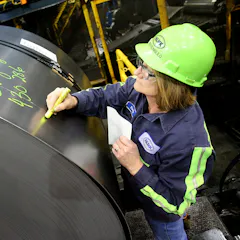
President Trump’s new tariffs suggest he doesn’t understand why American steel and aluminum have been hurt in the first place.
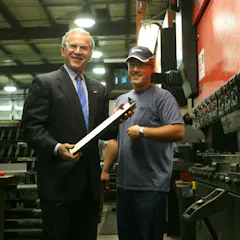
President Trump slapped steep tariffs on steel imports, echoing protectionist measures taken by Bush in 2002.
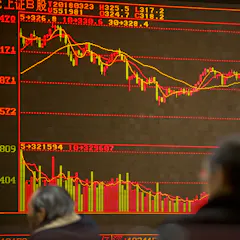
President Trump says ‘trade wars are good,’ but history tells a very different story.
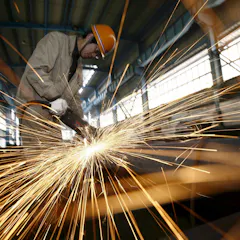
China supplies just 2% of America’s steel, while Canada and Europe have sizeable shares and Australian steel producers depend on access to US markets.
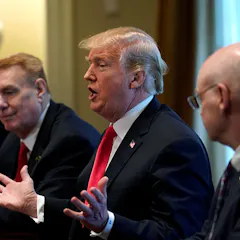
The president’s tariffs on steel and China mirror the misguided trade policies that helped precipitate the Great Depression.

On March 1, Donald Trump imposed a series of steel and aluminum tariffs. To understand their potential impact, it’s instructive to look at what happened after George W. Bush enacted similar measures in 2002.
The CO2 we produce when we put up buildings is large and virtually unregulated.
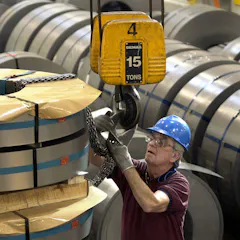
The president has promised to put a stop to foreign companies ‘dumping’ steel on US markets. Former President Bush tried the same thing, and here’s what happened.
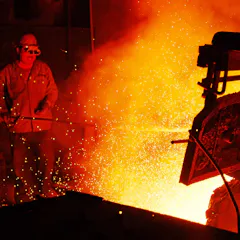
Politicians in Europe, the US and the UK have blamed steel industry woes on artificially cheap imports.

Pittsburgh’s post-industrial economic resurgence is promising, a historian of the region writes, but there’s a reason President Trump highlighted the area in his speech exiting the Paris climate deal.
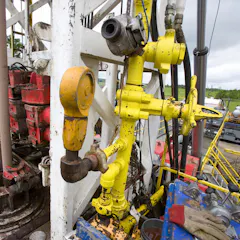
Carbon capture and storage gets a bad rap from its associations with ‘clean coal’. But the technology could prove vital in cutting emissions from other industries like steel, cement and chemicals.

Forget the sunset pictures that accompanied so much media coverage of the steel crisis. Steel is an industry of the future, not the past.

Changes to construction material requirements from negotiations on the ABCC will give Australian steelmakers a chance to step-up.
An industry in crisis needs a government that can deliver help where it’s needed.
Top contributors
-

Professor of Engineering, Swinburne University of Technology
-
Professorial Fellow, University of Canberra
-
Senior Lecturer in Economics, UNSW
-
Associate Professor of Economics, University of South Carolina
-
Professor of Business Economics, University of Birmingham
-
Professor of Industrial Strategy & Regional Development, Co-Director Centre for Governance, Regions and Industrial Strategy (CGRIS), University of Bath
-
Lecturer in International Business, University of Stirling
-
Associate Professor in Industrial Relations and Human Resource Management, University of Leeds
-
Associate Professor of History, Shippensburg University
-
Lecturer Human Resources, University of Leeds
-
Director, Australian Industrial Transformation Institute, Flinders University
-
Assistant Professor of Mechanical Engineering, University of Michigan
-
PhD Candidate in American History, University of Oxford
-
Professor of Economics, Manchester Metropolitan University
-
Professor of AI and Public Policy, University of Salford