

Public support for trans and gender-diverse people is declining, and that decline is being driven by political and media discourse.
Articles on Statistics Canada
Displaying all articles

Trans people are consistently undercounted in data thanks to flawed practices in collection, analysis and sharing. And if we don’t fix this, policy and advocacy will fail to address their needs.

Canada does a poor job of gathering labour relations information. In a period of rising inequality and renewed workplace conflict, stakeholders need better data.
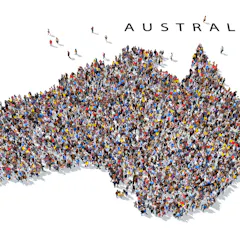
Census testing begins next month ahead of the 2026 official headcount. National census are under threat overseas, threatening the collection of quality data.

Recent data from Statistics Canada shows crime rates in Canada rising. Crime has become a hot-button political issue in Canadian cities. But what does the data actually mean?

Canada’s population is more diverse than ever, with many different languages represented. Government policy must reflect that diversity and offer meaningful support to minority languages.

Inflation is driving up food prices and could have a severe impact on the health of Canadians. When the cost of food increases, it restricts the availability of nutritious foods for low-income people.

As the conversation about race and diversity becomes more common, why haven’t we updated our census to reflect that?
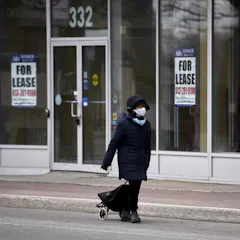
The difficulty governments have had in meeting the needs of Canadian workers impacted by the coronavirus crisis has exposed holes in our social safety net and the inadequacy of existing labour laws.

Statistics Canada has been tone-deaf in its push for the financial data of Canadians from banks, but that data is essential to forming good public policy.
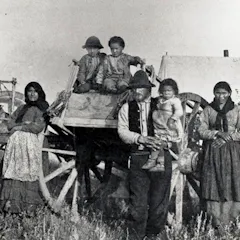
New census data sheds light on the country’s Indigenous population. In Eastern Canada, the rise in people claiming to be “Métis” is a controversial case of “settler self-indigenization.”
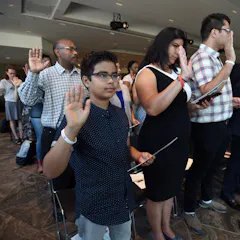
New census data provides a chance to understand why immigrants earn lower wages than Canadians who have been here for many generations. Whether immigrants speak English at home may be a clue.
Top contributors
-

Assistant Professor, Labour Studies Program, University of Manitoba
-
Professor of Economics, University of Calgary
-
Associate Professor of Economics, University of Manitoba
-
Assistant Professor, Faculty of Native Studies and Department of Political Science , University of Alberta
-
PhD Candidate, Faculty of Law, L’Université d’Ottawa/University of Ottawa
-
Associate Professor of Law and former Director of the Human Rights Research and Education Centre (2014-2025), L’Université d’Ottawa/University of Ottawa
-
Professor, Labour Studies, Brock University
-
Professor of Criminology, Simon Fraser University
-
Professor, Department of Anthropology, Economics, and Political Science, MacEwan University
-
Dalla Lana Fellow, University of Toronto
-
Demographer, POLIS Centre for Social Policy Research, Australian National University
-
Professor, Women's and Gender Studies, Mount Royal University
-
Professor in the Faculty of Business & Communication Studies, Mount Royal University
-
Assistant Professor, political studies, Queen's University, Ontario
-
Assistant Professor, political studies, Queen's University, Ontario