
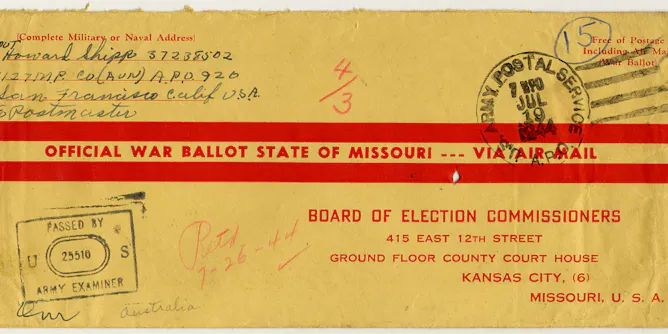
29 states allow mail-in ballots postmarked by Election Day to be counted days after an election. A case before the Supreme Court could take that decision away from the states.
Articles on States rights
Displaying all articles

All presidents should expect to be sued early and often by state attorneys general of the opposite party.

There was one central reason the Civil War happened.

Abortion rights were on the ballot in five states during the midterm elections – all broke in favor of abortion-rights advocates.
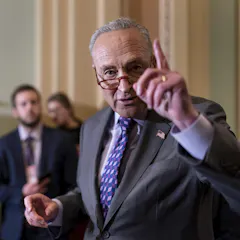
Lawmakers in the US Senate are set to vote on a bill that would enshrine abortion into law. But is there a route to legislation?

President Joe Biden has urged lawmakers to act over abortion rights following the Supreme Court decision to overturn Roe v. Wade. But is there a route to legislation?

Fighting against federal authority is a political tradition in the South – and resisting federal guidance to wear masks in schools is just the latest example, an education policy expert writes.

Each state has its own rules for which vaccines kids must have to attend school and the reasons students can opt out.

Federal authorities have input, but states reign supreme – unless they decide to let local governments make the call.

The 6-3 ruling challenges some common political assumptions about conservatives and liberals.

Distrusting large federal bureaucracies isn’t reserved for conservatives anymore.

The attorney general’s memo portended an end to a hands-off approach to this enforcement conundrum. It could backfire.

The new rules Kentucky and other states want to impose could leave millions of Americans who benefit from this safety net program uninsured – and resorting to the emergency room for their health care.
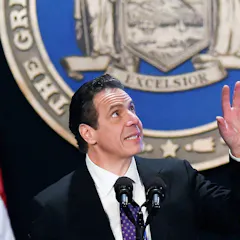
New York, California and other high-tax states are angling to use the charitable deduction and state payroll taxes as workarounds to shield both their residents and their revenue.

A new federalism? Trump’s decision to green-light the Dakota Access Pipeline and early battles with states show a disregard for the sovereignty of domestic government bodies.
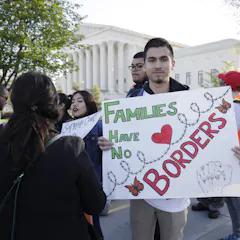
States once used their constitutional authority to argue in defense of slavery. Today, states can make a similar argument to protect immigrants from deportation, writes a legal scholar.
Top contributors
-

Professor of Law, Boston University
-
Assistant Professor of Law and Director, Environmental and Regulatory Law Clinic, University of Virginia
-
Professor of Law, Drake University
-
Associate Professor of Health Policy, Management and Behavior, University at Albany, State University of New York
-
Assistant Professor of Law, University of Chicago
-
Assistant Professor, Management Area, McIntire School of Commerce,, University of Virginia
-
Associate Professor of Public Affairs, Arizona State University
-
Professor and Chair of History Department, Colorado State University
-
Honorary Reader in MIgration and Politics, University of Kent
-
Assistant Professor of Educational Leadership and Policy Studies, University of Memphis
-
Professor of Law and Education Policy, Michigan State University
-
Professor of Health Law and Professor of Law, Boston University
-
Associate Professor of Law, Albany Law School
-
William Nelson Cromwell Professor of Jurisprudence and Political Science, Amherst College
-
Herbert Kurz Chair in Constitutional Rights, City University of New York