

A new bill aims to give the District of Columbia representation in Congress.
Articles on States
Displaying 41 - 56 of 56 articles

Ahead of two state elections, the Grattan Institute Orange Book examines the state of each state and how each can do things better. The good news is that if each copied the best in each field they would do very well indeed.

There are some good explanations for the mismatch between regional support for climate action and the areas where renewable energy is making the biggest inroads.

There are at least 400,000 stateless people living in Thailand – many of them young, like Adul. Here’s what their lives are like.

As states begin to plan budgets, the future of Obamacare is still undecided. A former Ohio state senator explains how budget directors are bracing for billions of dollars in shortfalls.

Given the small percentages involved, South Australia’s bank levy won’t interfere with the federal government’s levy, and would arguably be compatible with it.
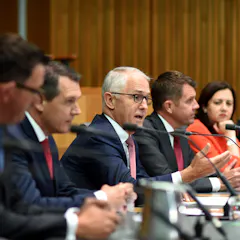
The reason for the constant struggle for funding between the states and federal government relates back to the constitution.

Over the years, Puerto Ricans have in fact been granted three different types of U.S. citizenship, but questions about their rights and equal treatment as citizens still remain.

Federal politicians and the public like the idea of abolishing the states. But consider the likely result: a more powerful Canberra, with regional governments amounting to glorified shire councils.
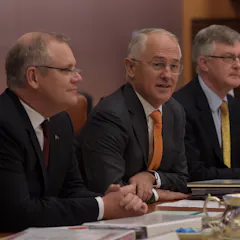
There’s no need to abandon the current tax collection system. Instead we should ensure the voting public understand where their taxes are going.

The states have historically fought to keep their income tax powers so it seems a joke to see a rejection of the Federal Government’s proposal to give these powers back.

What explains the anger behind the Malheur occupation in Oregon, and why does the BLM own so much land in the West?

States and regions are taking the lead on climate change action and, so far, are seeing economic and environmental benefits.

One of the main premises of strict immigration policies is that states have total rights over their territory. That doesn’t make much sense.
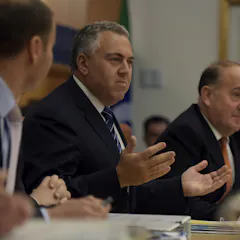
The government’s attempt to engage the States on one hand while whipping them with the other does not augur well for tackling growing health and education costs – or for lasting federal reform.

The federal budget reignited debate over federal-state relations with a decision to cut some $80 billion in funding for the state responsibilities of schools and hospitals over the coming years. So how…
Top contributors
-

Professor of Law, Australian Centre for Health Law Research, Queensland University of Technology
-
Associate Professor of Health Policy and Management, Texas A&M University
-
Associate Dean for Research and Professor of Health Policy and Management, Texas A&M University
-
Distinguished Professor, Professor of End-of-Life Law and Regulation, Australian Centre for Health Law Research, Queensland University of Technology
-
Professor of Public Policy (retired), University of Virginia
-
Professor and Neustadt Chair, Department of Agricultural Economics, Oklahoma State University
-
Distinguished Fellow, Sustainable Solutions Lab, UMass Boston
-
Associate Professor of Law, Adelaide University
-
Vice Chancellor's Fellow at Victoria University and Adjunct Professor of Economics, Victoria University
-
Professor of Political Science, The University of Melbourne
-
Lecturer, Public Sector Finance, University of Canberra
-
Executive in Residence, American University School of Public Affairs
-
Postdoctoral Researcher, Trinity College Dublin, Trinity College Dublin
-
Lecturer in Political Theory, University of Manchester
-
Associate Professor in Law and Public Policy, University of Oxford