
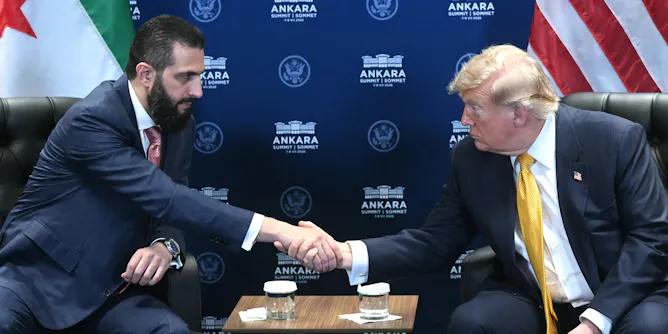
Syria was among the first nations to be added to the State Department’s proscribed list. It has been removed under the rule of a former al-Qaida-affiliated militant.
Articles on State Department
Displaying 1 - 20 of 23 articles

A longtime diplomat explains how the State Department normally encourages and helps Americans to leave countries amid political instability and war – which didn’t happen over the last week.
Family reunification is often framed as a cost, but evidence shows it functions as social infrastructure that supports work, well-being and economic stability.
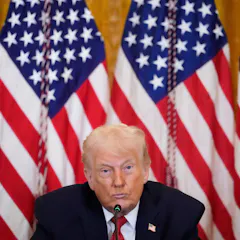
Ambassadors play a middle role between the countries where they serve and the one they represent. Trump insists their loyalty must be to the US.

The Peace Corps isn’t doing the same foreign policy work the State Department carries out. But it still helps the American brand internationally.
In foreign affairs, the national security adviser plays a coordinating role, setting the flow of recommendations to the National Security Council and the president.
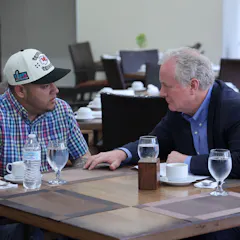
The Trump administration claims that judges’ orders in the cases of immigrants deported to a prison in El Salvador intrude on the president’s right to conduct foreign policy.
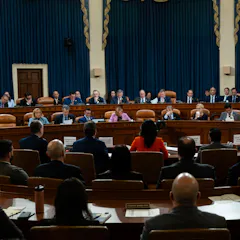
Government officials with classified information clearance typically have a range of secure ways they can view or discuss classified information.
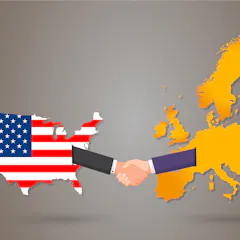
Soft power is a foreign-policy tool to get what a country wants without using force.
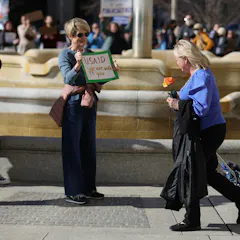
A US district judge says that the Trump administration has to pay USAID the billions it owes in already completed work. The Supreme Court agrees − for now.

Neither Trump nor Biden has marshaled the full force of the nation’s anti-terrorism efforts against right-wing extremist groups.
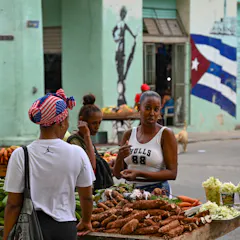
Incoming Trump administration is set to adopt a more hawkish stance on Cuba-US relations – but a more targeted sanctions approach may pressure Havana without hurting the island’s impoverished people.
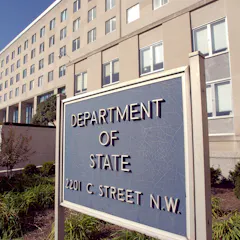
Marco Rubio, Donald Trump’s pick for secretary of state, will begin his confirmation hearing on Jan. 15.
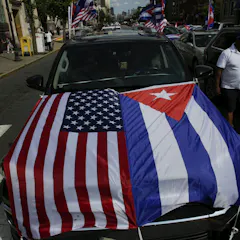
Cuban has yo-yoed on and off the US list of state sponsors of terrorism. Is the Biden administration changing that?
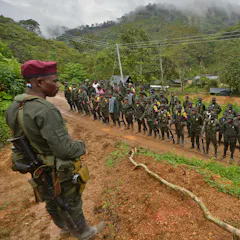
The U.S. State Department rarely removes terrorist groups from its Foreign Terrorist Organizations list. Most terrorist groups, unlike the Colombian FARC, don’t want to put down their weapons.
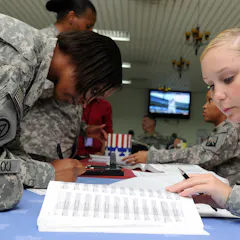
About 2.9 million eligible American voters live abroad, including members of the military and embassy staffers. Just 5% of them cast their ballots in 2018.
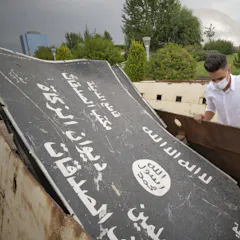
President Trump has claimed the Islamic State was completely defeated on his watch – but an analysis of government maps and other reports shows his administration did only half the work.
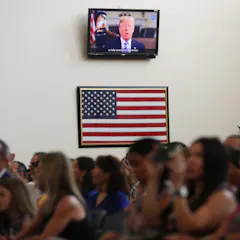
During the Nazi era, roughly 300,000 additional Jewish refugees could have gained entry to the US. But the immigration law’s ‘likely to become a public charge’ clause kept them out.

During the Nazi era, roughly 300,000 additional Jewish refugees could have gained entry to the U.S. But the immigration law’s “likely to become a public charge” clause kept them out.
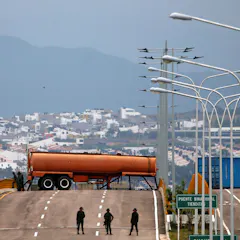
These shipments are rarely just about saving lives.
Top contributors
-

Professor of the Practice and Director of Center on Terrorism, Extremism and Counterterrorism, Middlebury College
-
Associate Professor of Journalism, Northeastern University
-
Shelby Cullom Davis Professor of International Security and Director of the Center for Strategic Studies, The Fletcher School, Tufts University
-
Professor of Islamic History, UMass Dartmouth
-
Professor of Political Science, Baruch College, CUNY
-
Associate Professor of of Family and Consumer Sciences, University of Hawaii
-
Associate Professor of Public Administration, Askew School of Public Administration and Policy, Florida State University
-
Senior Lecturer in Political Science, Auburn University
-
Associate Professor of Law, The Ohio State University
-
Martin Luther King, Jr. Professor of Law, University of California, Davis
-
Professor of Practice in International Relations, USC Dornsife College of Letters, Arts and Sciences
-
Professor of Government and International Affairs, Kennesaw State University
-
Executive Director of the Edward R. Murrow Center and Senior Fellow of Diplomatic Practice, The Fletcher School, Tufts University
-
Professor Emeritus of Public Affairs, The Ohio State University
-
Research Fellow, American University School of Public Affairs