

Your chance to ask a panel of experts about the coronavirus variants at 12.30pm GMT on Wednesday January 27.
Articles on Spike protein
Displaying 21 - 34 of 34 articles
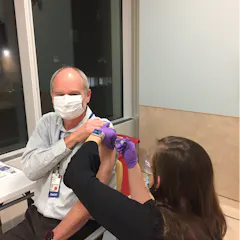
With vaccines forthcoming for most Americans, many groups, including expectant mothers, are wondering if the vaccine is safe for them and their babies. A physician-scientist explains.
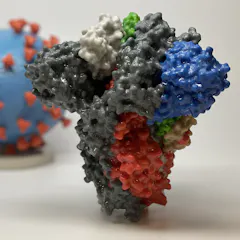
It’s the part of coronavirus that helps the virus get into your cells – and also the target of the leading vaccines.
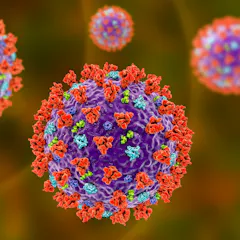
New research shows why the N protein might be a good target.
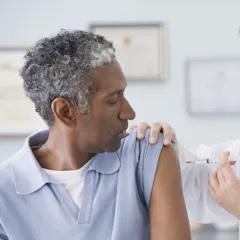
The side effects of new SARS-CoV-2 vaccines are a result of immune system activation. While uncomfortable, they are both normal and expected. They are a sign that the vaccine is working.

In the disturbing scenario of human-to-mink-to-human COVID-19 transmission, the virus may mutate in mink prior to re-infecting people. That possibility makes vaccine design even more crucial.
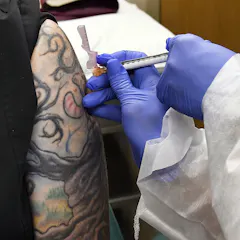
Two pharma companies have announced early COVID-19 vaccine trial results with over 90 per cent effectiveness. What does that mean for getting back to normal?
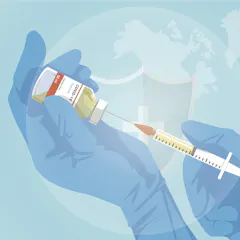
There’s a targeted subunit protein vaccine, an mRNA vaccine, and a needle-free DNA vaccine. Here’s what that all means.
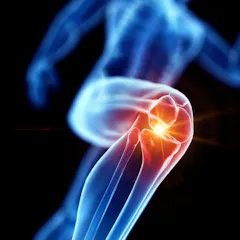
The SARS-CoV-2 virus usually infects the body via the ACE2 protein. But there is another entry point that allows the virus to infect the nervous system and block pain perception.
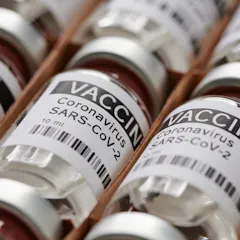
The Australian government is working with two major pharmaceutical companies to facilitate the local production and supply of two different COVID-19 vaccines – if they’re proven to be effective.
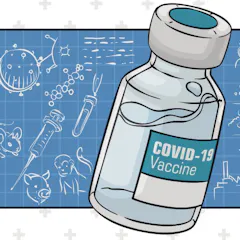
As grim as things are with the pandemic raging in the US and the mounting death toll, there are many reasons to be optimistic there will be a vaccine by early next year.
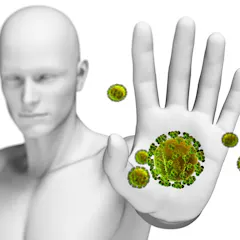
If you have had COVID-19 already, are you protected from another bout of the illness? And is the presence of antibodies in your blood a guarantee of immunity?
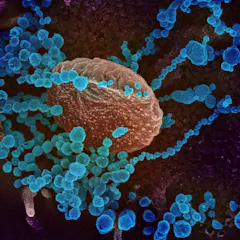
Traditional vaccines can take years to create. Rather than immunizing people with viral proteins, the new approach gives the molecular instructions that allows the body to make its own vaccine.

US researchers have revealed the molecular ‘key’ that allows the 2019-nCoV virus to gain access to our cells. And they found it is many times more tenacious than the previous SARS virus.
Top contributors
-

Professor of Medicine, University of Virginia
-
Instructor of Human Immunology, Emory University
-
Professor of Microbiology, School of Medicine, University of Washington
-
Professor, Infectious Diseases and Microbiology, The University of Queensland
-
Professor of Pharmaceutical Sciences, University of Colorado Anschutz
-
Postdoctoral Scholar in Medicine, University of California, San Francisco
-
Associate Professor of Biology, Rochester Institute of Technology
-
Associate professor, Pathobiology, University of Guelph
-
Professor of Pharmacology, University of Arizona
-
Clinical Research Fellow in Viral Immunology and Veterinary Surgeon, University of Cambridge
-
Assistant Professor/Canada Research Chair in emerging viruses, University of Manitoba
-
Postdoctoral fellow, McGill University
-
Associate Professor and ARC Future Fellow, The University of Western Australia
-
Professor of Biological Sciences, Purdue University
-
Research associate, Warren Alpert Medical School, Brown University, Brown University