
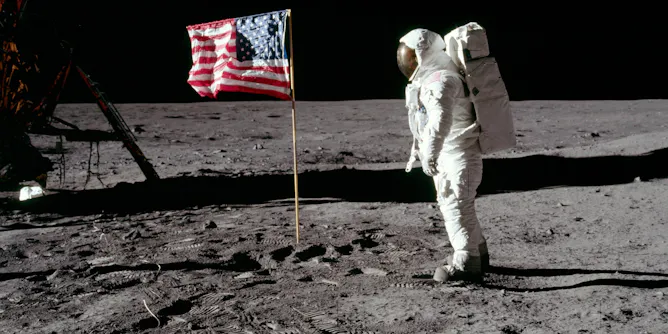
Who cares what happens to bootprints on the Moon? All humans should. And thankfully the US Congress and president agree.
Articles on Space tourism
Displaying 21 - 40 of 46 articles
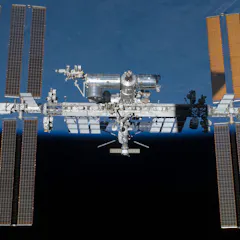
Humans have been living on the International Space Station for two full decades. So what comes next for this ailing technology, and what does it mean for future International ventures in space?

How do people in a special airplane flight get to float like there is no gravity – just like astronauts? An aerospace engineer explains.
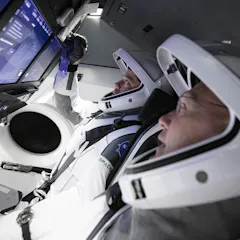
Empathy and scientific knowledge will be key for astronauts looking to travel to Mars.
When it comes to commercial space tourism, suborbital flight are the first frontier. But what are the risks? Are there health requirements? What should you know before taking such a way-out trip?
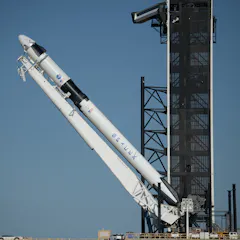
SpaceX’s launch of astronauts to the International Space Station will make it the first private company to launch humans to space. The effort has ramifications for NASA and spaceflight in general.
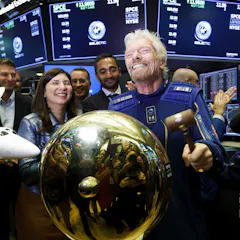
Although it has yet to fly any paying passengers and is currently loss making, Virgin Galactic aims to be profitable by 2021.
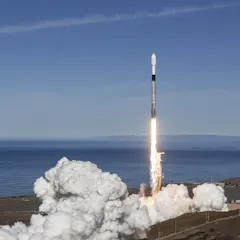
The opportunities in space are limitless. But without a sustainable approach to the space industry, our ability to exploit them won’t be.
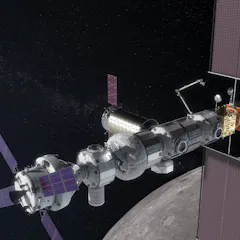
By 2069, we could be seeing the start of regular journeys from the moon to Mars.
CC BY-ND44.7 MB (download)
Episode 3 of the To the moon and beyond podcast takes a look at who some of the key players are in the 21st century space race and what they are competing for.

In the future we might get sick of hearing people tell their stories about going to the Moon. Perhaps the Moon will just be like thinking about today’s Antarctica – a remote but accessible place.
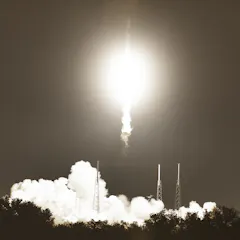
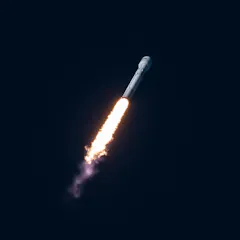
This are looking up when it comes to launching things into space from Australia. The rules on what can be launched are currently under review and open for comment.
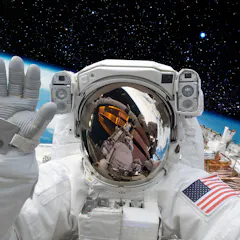
Jeff Bezos plans to charge US$200,000-300,000 for a trip to outer space. And it’s going to cost him an astronomical amount of money.

With any type of human exploration, there are risks as we push boundaries, and there are inevitably mishaps and fatalities as a result. Space tourism is no exception.
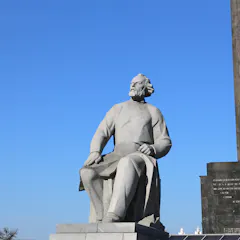
In the early 20th century a Russian scientist – regarded as the father of rocketry – made some novel predictions on where we would be in space in the 21st century. So how accurate was he?
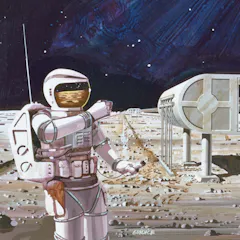
Space terrorism and testing of space tourists are theoretical problems today. But let’s have conversations right now to make sure they don’t become real problems in the future.
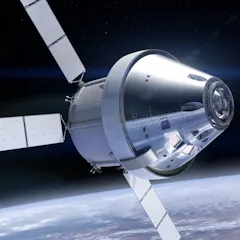
From inflatable space stations to trips to asteroids and maybe even Mars, the next decade of human spaceflight will include many exciting firsts.
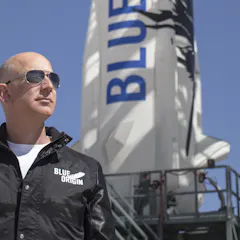
Space is now big business. But is that good – or bad – news for NASA?
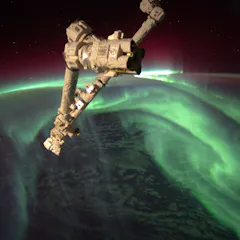
The turbocharged capitalism of private space flight is strangely at odds with the brotherly, generous global consensus that built the legal framework for extra-terrestrial travel.
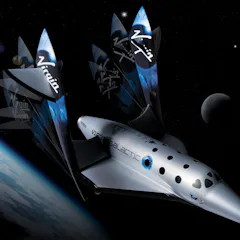
The recent accident involving Virgin Galactic’s SpaceShipTwo – and the tragic death of one pilot and critical injury of another – highlights the dangers inherent in any type of space flight. It has also…
Top contributors
-

Professor of Strategy and Security Studies, Air University
-
Associate Professor in Archaeology and Space Studies, Flinders University
-
Professor of Business Studies, Trinity College Dublin
-
Professor of Strategy, Warwick Business School, University of Warwick
-
Professor of Atmospheric Chemistry and Air Quality, UCL
-
Professor of Planetary and Space Sciences, The Open University
-
Professor of Law, University of Bradford
-
Military Space Bioethicist, UNSW
-
Research Fellow/Reader in Planetary Physics, Lancaster University
-
Associate Professor, University of Texas Rio Grande Valley
-
Professor, College of Public Health, Medical and Veterinary Sciences, Division of Tropical Health and Medicine, James Cook University
-
Professor of Aerospace Medicine and Rehabilitation, Northumbria University, Newcastle
-
Chercheur post-doctorant en stratégie, innovation et entrepreneuriat, Chaire Sirius, TBS Education
-
Lecturer in Digital Cultures, University of Sydney
-
Professor of Astrobiology, UNSW