
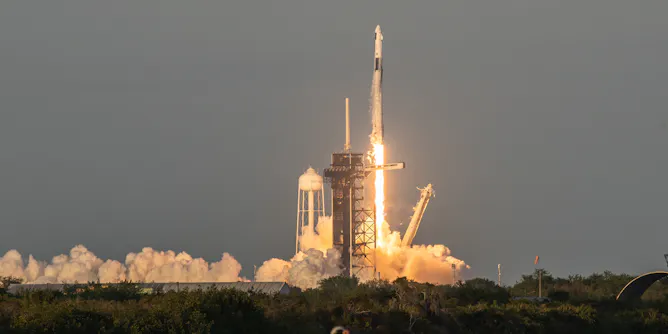
As ‘space tourism’ grows and private companies become more involved in orbital missions, space law has failed to keep up. Urgent reform is called for.
Articles on Virgin Galactic
Displaying 1 - 20 of 26 articles
Sudden changes in space weather, such as solar flares, for example, could have significant health implications for crew and passengers.
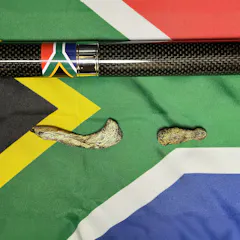
Experts insist there is no scientific reason for allowing these fossils to travel to space.

With commercial space tourism on the rise and NASA planning to return to the Moon, you might think the US space economy is booming – but the data paint a more complex picture.
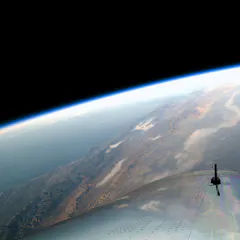
The Overview Effect describes the transformative impact of seeing Earth from space and feeling profoundly connected to our planet and concerned for it. That’s at odds with the impact of space tourism.
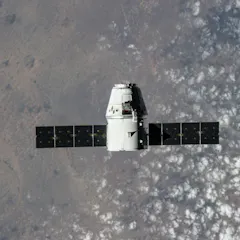
The Inspiration4 mission sent four civilians to space for three days. Though still funded by a billionaire, the mission is a step forward in the nascent space tourism industry.
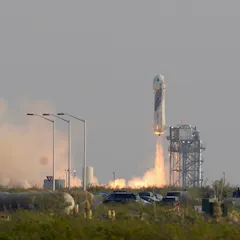
According to a new poll, people across political and demographic lines think the private space race is good for the future but still just an ego trip for the billionaires involved.
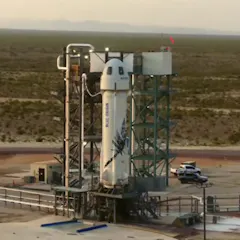
Sure, they’re billionaires, but the exploits of Richard Branson and Jeff Bezos have undeniably brought space tourism a step closer. That raises tricky legal, ethical and environmental questions.
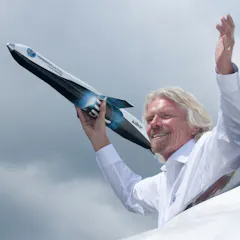
Here’s what a space tourism industry led by Bezos, Branson and Musk might mean for the planet.
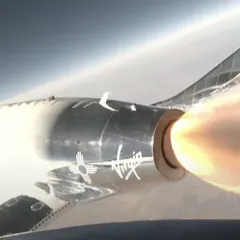
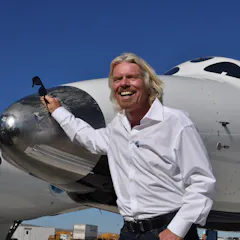
Sir Richard Branson’s successful spaceflight marks the beginning of a new chapter for space tourism.

Both Virgin Galactic and Blue Origin are sending spacecrafts – and their billionaire founders – into suborbital flight. But what differentiates a suborbital flight from a trip around Earth?
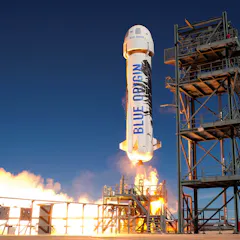
It wasn’t long after Jeff Bezos announced his plans to go to space that Sir Richard Branson joined in, setting a launch date to beat Bezos by nine days.
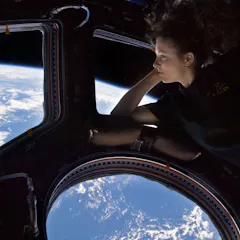
The first space tourist left Earth 20 years ago aboard a Russian rocket. Now, private companies like Jeff Bezos’ Blue Origin are offering trips to the stars for those who can pay.

The first space tourist left Earth 20 years ago aboard a Russian rocket. Now, private companies are on the cusp of offering trips off Earth for those who can pay.
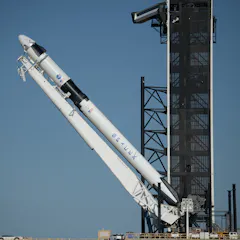
SpaceX’s launch of astronauts to the International Space Station will make it the first private company to launch humans to space. The effort has ramifications for NASA and spaceflight in general.
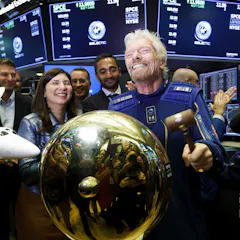
Although it has yet to fly any paying passengers and is currently loss making, Virgin Galactic aims to be profitable by 2021.
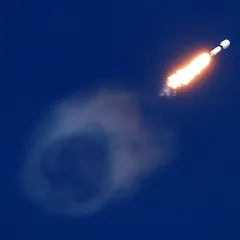
A brief line in the State of the Union address hints at an exciting year for commercial spaceflight companies in the US. After an eight year lull, US rockets will again carry astronauts into space.

With any type of human exploration, there are risks as we push boundaries, and there are inevitably mishaps and fatalities as a result. Space tourism is no exception.
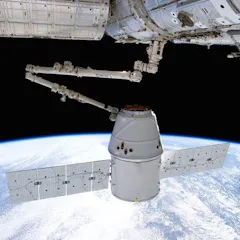
Private companies are increasingly challenging national space agencies in a new space race, which comes with great opportunities but also huge risks.
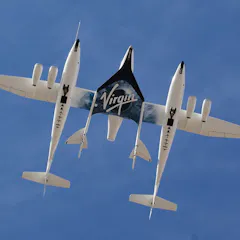
Spaceports will pave the way for spaceplanes, helping scientists access space for medical research.
Top contributors
-

Professor of Strategy and Security Studies, Air University
-
Professor of Business Studies, Trinity College Dublin
-
Professor of Planetary and Space Sciences, The Open University
-
Professor of Mechanical and Aerospace Engineering, The Ohio State University
-
Professor in Robotics, Queensland University of Technology
-
Associate Professor, University of Texas Rio Grande Valley
-
Space Medicine Systematic Review Expert, Northumbria University, Newcastle
-
Former Academic Research Fellow, Khalifa University
-
Associate Professor, University of Texas Rio Grande Valley
-
Associate Professor of Public Relations, University of North Carolina at Chapel Hill
-
Professor of Atmospheric Chemistry and Air Quality, UCL
-
Emeritus Professor of International Law, Western Sydney University
-
Associate Professor of Business, Boston University
-
PhD Candidate in Philosophy, University of Tasmania
-
Lecturer and Topic Coordinator, The University of Melbourne