
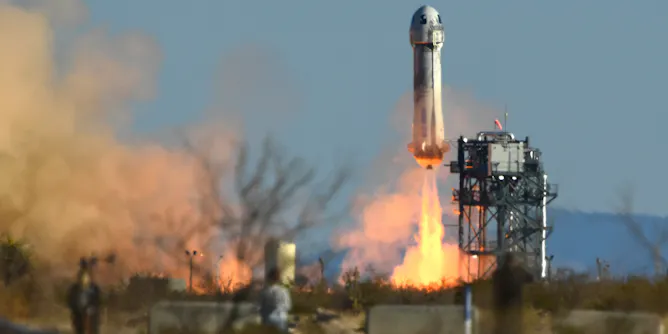
Having its first citizen go into space would demonstrate Nigeria’s capabilities, build expertise, and bring the benefits of space exploration and development.
Articles on Space research
Displaying 1 - 20 of 38 articles
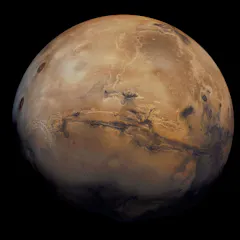
Mars has been a popular destination since space exploration began – and there are plenty of people who’d love to go there.
When most of us left school there were still 9 planets – but we’ve come a long way since Pluto’s demotion. Here’s what’s next on the space agenda.
Astronomers are hot on the search for new exoplanets – planets that lie beyond our Solar System – which might show potential for sustaining life.
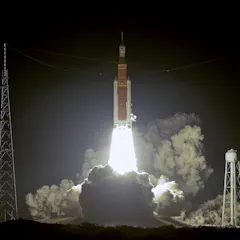
We know going back to the Moon is expensive. Here’s how we could use metals extracted from Moon dirt to save millions of dollars.
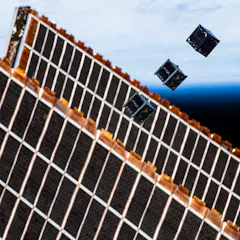
In Western Australia, the first of a series of little satellites just burned up in the sky – exactly as planned.
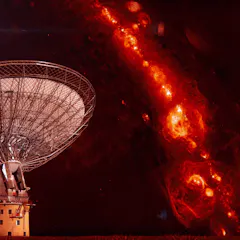
Listening for events like black hole collisions is important in astronomy research – and the technology is only getting better.
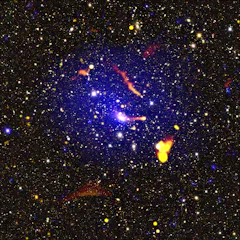
One of the objects is a ‘fossil’ radio source – a leftover from the death of a supermassive black hole that once shot out huge jets of plasma.
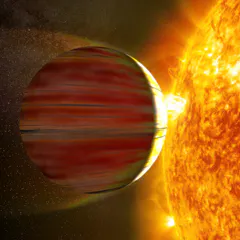
The unusual planetary system has a host star orbited by two giants. One has an incredible odd route around its star. And the other (unlike our own gas giants) is hellishly hot.
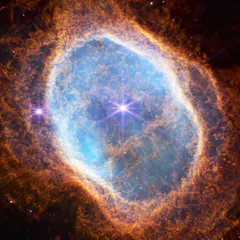
Why is the universe 13.8 billion years old, but 93 billion light-years across? It’s all about how light travels through the cosmos.
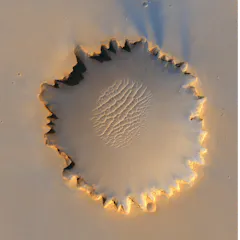
There are many bodies in the solar system we can’t easily access. But observations of their winds and sediments reveal a surprising amount.
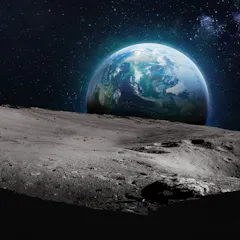
There’s a lot of technological progress required before off-Earth mining operations can be considered feasible.

The pulsar PSR J0523-7125 is more than ten times brighter than any other radio pulsar outside the Milky Way.
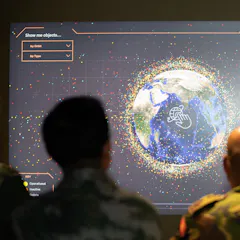
The future of Australia’s space efforts will hinge on coordination between defence, industry and universities.
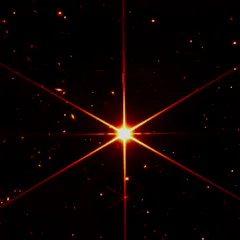
The telescopes primary mirror segments are now working together to provide a single, sharp image.
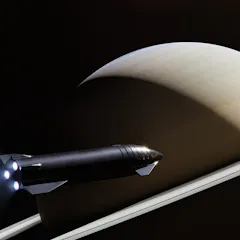
There has never been a dedicated mission sent to the “ice giants”, Uranus and Neptune. But there may be one on the horizon.
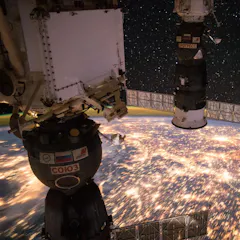
The students produced 33 experiment vials, which were boarded on the SpaceX Crew Dragon 24 and launched in December.
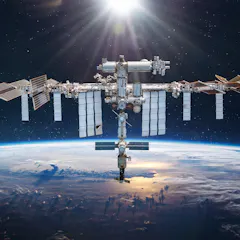
How will they bring the structure back safely? And where will the surviving components crash?
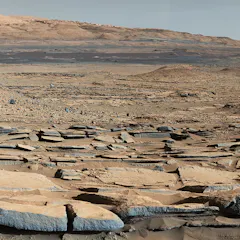
The zircon crystal was found in the NWA 7034 meteorite, dubbed ‘Black Beauty’ – uncovered from the desert of northwest Africa.

A mysterious repeating signal from our galactic backyard is a reminder the universe is full of unexpected surprises, if only we should look.
Top contributors
-

Associate Dean of Innovation and Engagement, Swinburne University of Technology
-
Radio Astronomer, Curtin University
-
Professor of Planetary Sciences, The Open University
-
CSIRO
-
Co-Director Space Technology and Industry Institute, Swinburne University of Technology
-
Spacecraft Engineer, University of Bristol
-
Associate Professor of Computer Science, University of Colorado Boulder
-
Senior Lecturer in Signal Processing, UNSW
-
Academic Fellow, Australian Centre for Space Engineering Research, UNSW
-
Research Fellow in Electronic Imaging, The Open University
-
University of Arkansas
-
Senior Lecturer, School of Earth and Planetary Sciences, Curtin University
-
PhD Candidate - Astrometallurgy, Swinburne University of Technology
-
Associate Researcher, Australian Centre for Astrobiology, UNSW
-
Visiting Fellow (Molecular and Cellular Biology), University of Leeds