

People create their own micronations out of protest, art and eccentricity. For ‘larrikin’ Australians, the prospect is particularly tempting.
Articles on Sovereignty
Displaying 41 - 60 of 86 articles

Intervention in Cabo Delgado is a potentially dangerous move with far-reaching consequences for SADC if its efforts fail, or it becomes a protracted intervention.

When the Cherokee Supreme Court ruled that tribal elected officials no longer had to be Cherokee “by blood,” it was the latest chapter in a long-running fight over who controls tribal citizenship.

Scotland’s renewed push for independence is not only similar to Québec’s — there are also lessons for Scottish politicians in Canadian law on the concept of separation.
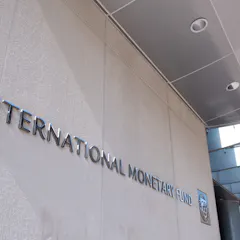
The deal that South Africa will get from the International Monetary Fund will in part depend on how well South Africa’s representatives negotiate.
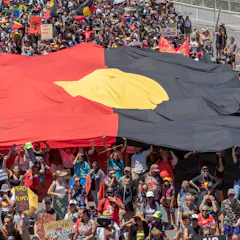
Even by the European-centric standards of 18th and 19th century international law, Indigenous people here passed the test for having sovereignty.
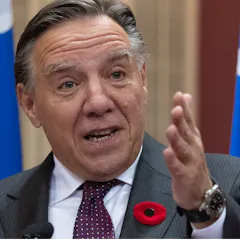
The failure of efforts to reform a Québec immigration program presents a unique opportunity to examine the nationalism that is being promoted in the province.
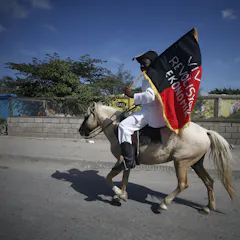
Jean-Jacques Dessalines, who freed Haiti from French colonial rule in 1804, is revered as a spirit in the Haitian religion. Now he’s become an icon of the uprising against President Jovanel Moïse.

Floating cities are back on the agenda, with the UN recently hosting a meeting on the subject. The latest in a long line of proposals since the ‘50s was unveiled, but just how feasible is the idea?

Nation states are covertly working against each other on the very same digital platforms they use to collaborate in areas such as trade and manufacturing.
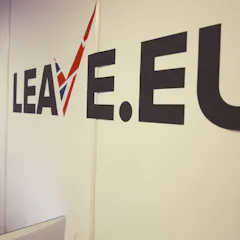
The history of Britain’s vote to exit from the European Union, known as Brexit, is not a tale of populist resentment toward globalization. It is a top-down story of leaders and elite ideology.

Ministers were found in contempt of parliament on December 4 for not publishing the full legal advice on the Brexit withdrawal agreement.

In New Zealand, sovereignty is disputed, but the Maori case for sharing it with settlers underscores the limits of First Nations consultation in Canada.

A federal system could deliver on three of the four key elements of the Uluru Statement. Plus, all the elements already exist or are in the works in Australia.
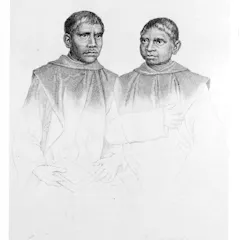
Aboriginal children are rarely named in the colonial archive. But the remarkable story of Dirimera and Conaci reveals two boys who, while removed from their land, had a keen sense of sovereignty.

China is using new ways to undermine Taiwan’s territorial status.

The UK government has consistently pledged freedom from European laws. It’s clear now that the plan is no such thing.

As treaty negotiations begin in Victoria, each party will have to accept the other’s legitimacy; that their own power is not absolute and unconditional.
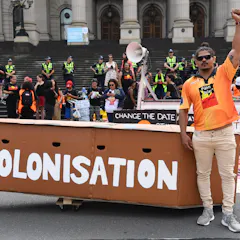
Enthusiasm for Indigenous treaties at the state and territory level is misplaced. The power to bring about real change lies only at federal level.
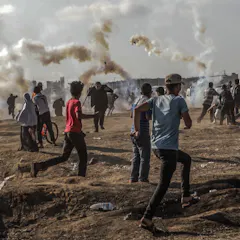
The UN’s Responsibility to Protect framework for safeguarding civilians against atrocities could help resolve the Gaza crisis.
Top contributors
-

Adjunct Professor, Stout Research Centre, Victoria University of Wellington and Auckland University of Technology, Professor of Political Science, Charles Sturt University
-
Honorary Professor of International Relations, University of the Witwatersrand
-
Professeur en sociologie politique, Université du Québec à Montréal (UQAM)
-
Enseignante-chercheuse en Management Stratégique, Montpellier Business School, Montpellier Business School; European Academy of Management (EURAM)
-
Professor/Senior Research Fellow, Centre for Advancement of Scholarship, University of Pretoria
-
Professor of Economics, University of Athens
-
Professor of Sociology and Global and Africana Studies, University of Tennessee
-
SSHRC Postdoctoral Fellow in Sociology, L’Université d’Ottawa/University of Ottawa
-
Associate Professor of Law, Albany Law School
-
Assistant Professor of Law & Co-Director, Margery Hunter Brown Indian Law Clinic, University of Montana
-
Scientia Professor and ARC Laureate Fellow, Kaldor Centre for International Refugee Law, UNSW
-
Professor of Public Policy, University of Michigan
-
Senior Lecturer, UNSW Law, UNSW
-
Doctoral Researcher, EU Fundamental Rights and Health Law, University of Sheffield
-
Professor, RMIT University